After MCP Became the Industry Standard: Can UTCP Break "Path Dependency"?
📖 Glossary
AI Box (also known as Agent Computer / Agent PC), is a dedicated local hardware device that runs AI Agents. Pre-installed with an AI agent management system, plug-and-play, running 24/7. Users can remotely command AI to work via Discord, Slack, Telegram, WhatsApp, and more.
Summary: Anthropic's MCP protocol has become the de facto standard with its "USB-C for Agents" positioning, adopted by OpenAI, Google, and others. But security vulnerabilities persist — MCP servers are mostly thin wrappers around code interpreters, vulnerable to remote code execution attacks. UTCP (Universal Tool Calling Protocol) proposes a leaner alternative: expose capabilities directly through tool native endpoints, no extra API wrapping needed. Technically superior, yet ecologically niche. The industry faces a classic dilemma: good standard vs fast standard — which do you pick?
1. Why MCP Won: Not Because It Was Best, But Because It Was Fastest
MCP (Model Context Protocol) was open-sourced by Anthropic in late 2024, adopting a classic client-server architecture: tools and data sources connect to MCP servers via API, and servers synchronize their capabilities to clients.
The advantage is standardization — any model, any tool, plug in according to MCP spec and it works. Like USB-C: regardless of Android or Apple, one cable does it all.
OpenAI, Google, and other majors announced MCP support through 2025-2026. The ecosystem snowballed, and MCP became the de facto standard. Enterprise AI applications using MCP are projected to grow 300% by 2026.
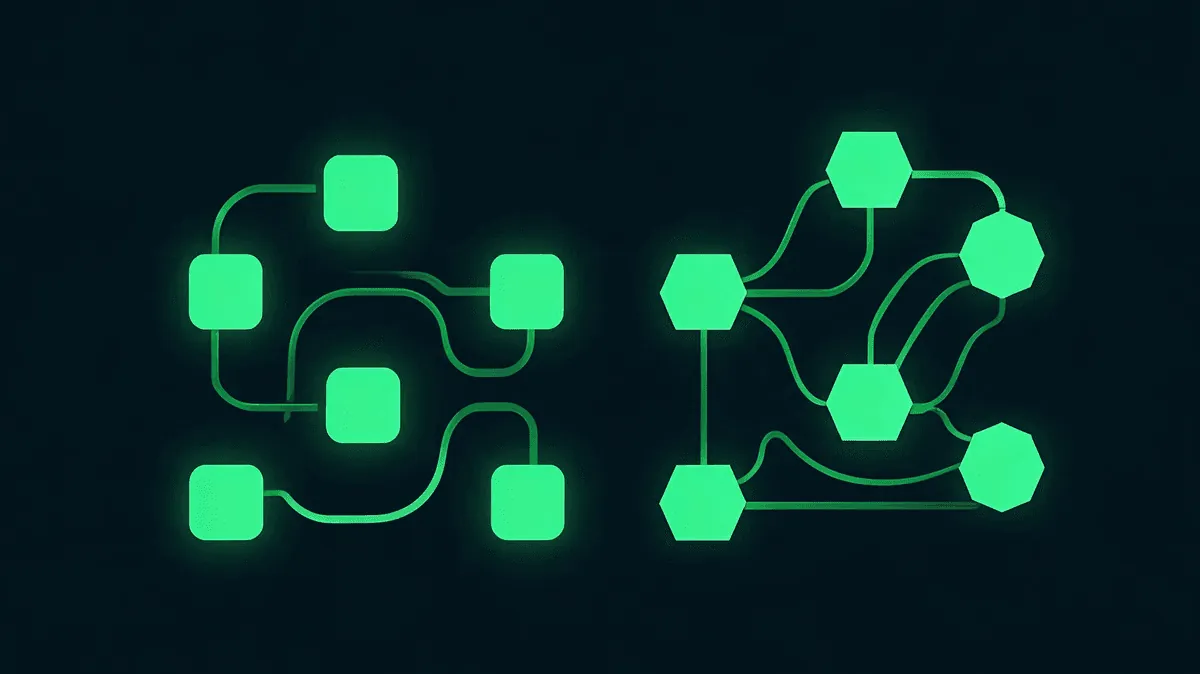
2. MCP's Weakness: Security Vulnerabilities Aren't Bugs, They're Architectural
MCP's core problem: most MCP servers are essentially thin wrappers around code interpreters or APIs. More wrapping layers mean more attack surface.
Specifically: - Remote code execution risk: Without strict safeguards, malicious input can execute arbitrary code through the MCP channel - Privilege amplification: MCP servers may have broader permissions than the original tools - Data leakage: More intermediate hops mean longer data flow paths and higher breach risk
This isn't fixable with a few patches — it's the inherent cost of client-server architecture. Like USB-C unifying the interface but adding an adapter that introduces signal loss and failure points.
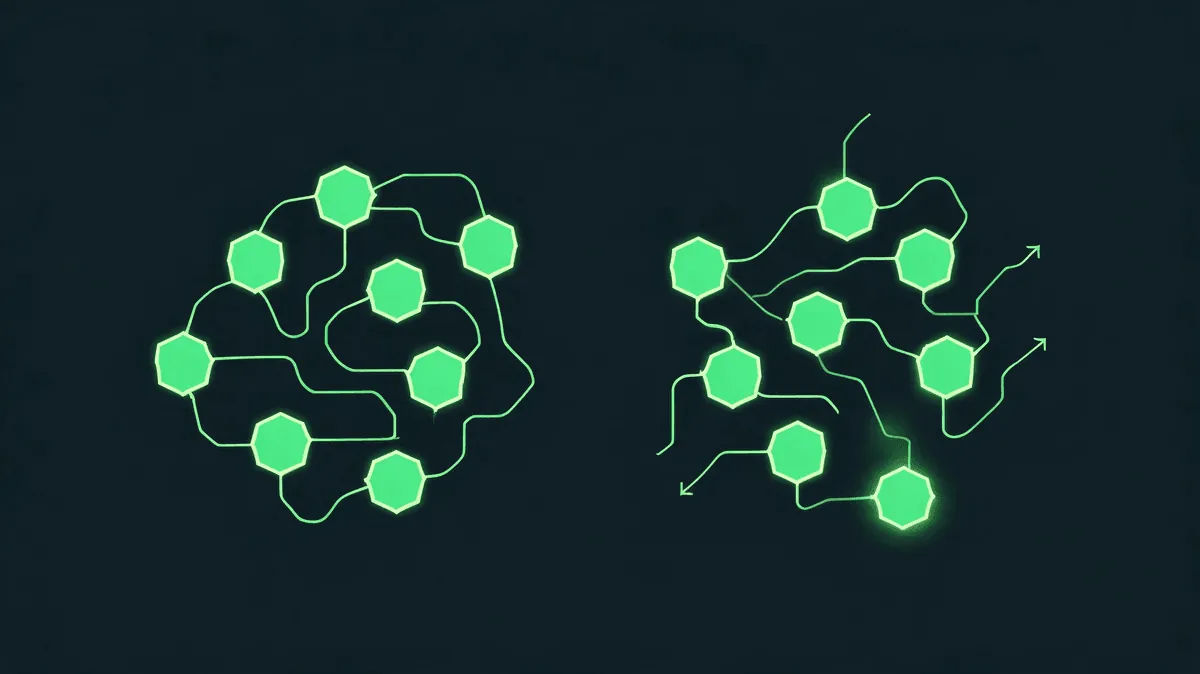
3. UTCP: One Less Wrapper, One Less Risk
UTCP (Universal Tool Calling Protocol) proposes a fundamentally different approach: no intermediate servers — let models call capabilities directly through tools' native endpoints.
Analogy: MCP is "every appliance gets an adapter, plugged into a unified power strip"; UTCP is "appliances come with standard plugs, go straight into the wall."
UTCP's argument: if tools already have API interfaces, adding MCP servers only increases redundancy and attack surface. Direct native endpoint integration offers higher performance, better security, and simpler deployment.
4. Path Dependency: Why "Better" Doesn't Mean "Wins"
UTCP is logically cleaner and more secure, but remains niche. Three reasons:
- Ecosystem sunk costs: Most majors have built on MCP; switching costs far exceed the cost of tolerating its security weaknesses
- Network effects: MCP's tool library and server ecosystem are already rich; UTCP starts from zero
- Standardization inertia: USB-C's history shows that a unified standard's value often exceeds the standard's quality differential
5. The OpenClaw Approach: Skills Over Protocols
Notably, OpenClaw — the world's most popular open-source Agent framework — never adopted MCP. Instead, it uses its own Skills system + CLI. Each Skill is a self-contained capability module that runs directly through the CLI, no protocol server needed.
This is philosophically closer to UTCP than MCP: direct tool invocation without protocol-layer intermediation. And it works — OpenClaw's Skill ecosystem has grown to 51+ official extensions, demonstrating that you don't need a universal protocol to build a rich tool ecosystem.
Key insight: Good standard vs fast standard — IT history repeatedly proves: the one that ships first wins. MCP isn't the best, but it arrived first in front of everyone.
KaiheAiBox| Agentaibox that lets AI work for you 24/7· AI Agents