MediaTek's AI Agent Engine 2.0: The Phone Becomes an Agent — What It Means for Private AI
📖 Glossary
AI Box (also known as Agent Computer / Agent PC), is a dedicated local hardware device that runs AI Agents. Pre-installed with an AI agent management system, plug-and-play, running 24/7. Users can remotely command AI to work via Discord, Slack, Telegram, WhatsApp, and more.
At MDDC 2026 on May 13, MediaTek launched "Dimensity AI Agentization Engine 2.0," enabling all-time sensing + cross-app execution. Simultaneously, Dimensity AI Developer Suite 3.0 reduced on-device LLM deployment time by 90%. The turning point — from "passive tool" to "proactive Agent" — has arrived.
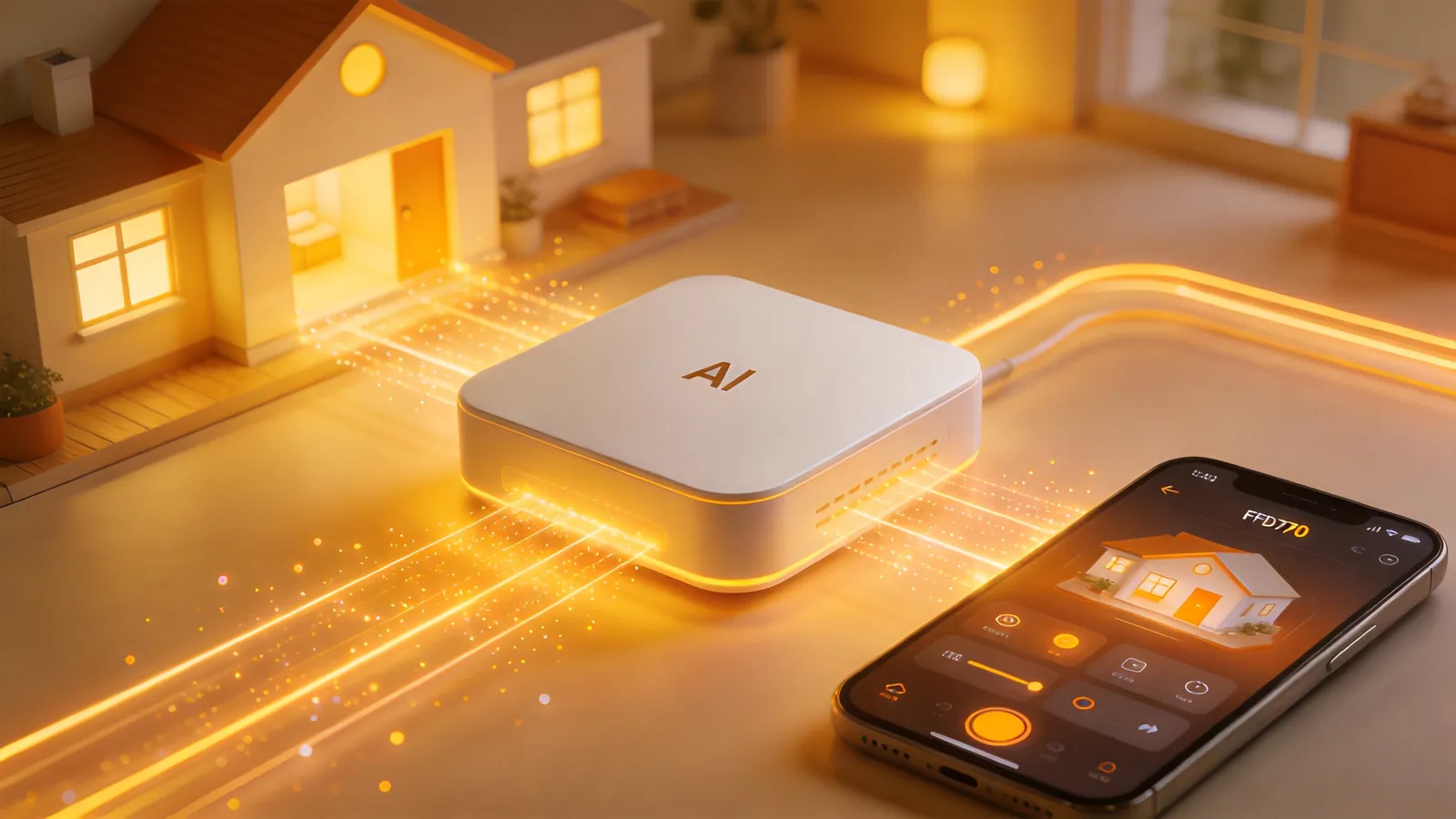
From "You Call It" to "It Helps You"
The logic of how we've used phones until now: Open an App → Input a command → Wait for the result.
MediaTek's MDDC 2026 proposes a new logic: the phone continuously senses your needs and proactively helps you complete cross-app tasks.
The technology behind this is the Dimensity AI Agentization Engine 2.0, core of which is the "SensingClaw" all-time sensing technology — capable of continuously capturing user behavior, environmental changes, and scenario needs without significantly increasing power consumption.
A more intuitive example: You don't need to open a food delivery App to search, compare, and order. Your phone will, around your usual lunch time, proactively recommend options fitting your taste preferences and ordering history — you just confirm.
Why Did On-Device AI Suddenly "Work"?
The biggest bottleneck for on-device AI in the past two years: models are too big; phones can't run them. Even 7B models were practically unusable at real inference speed.
MediaTek's two data points from this release explain why the inflection point is here:
Chip-Level Breakthroughs
Dimensity AI Developer Suite 3.0 brings four key improvements:
| Capability | Improvement | What It Means for Users |
|---|---|---|
| LLM deployment efficiency | +50% | Larger models on phones, faster and easier |
| AI model compression | Up to 58% | Same model needs half the memory |
| Light-load AI power | -42% | Keep AI on all day without draining battery |
| On-device LLM setup time | -90% | Models that took a day to deploy now take an hour |
Three Signals of Inflection
Signal 1: OPPO, Xiaomi, and Transsion have deployed system-native Agents (Claw) on mass-produced devices, supporting proactive sensing, proactive execution, and cross-device handoff. These aren't lab demos — they're phones consumers can buy today.
Signal 2: Dimensity AI ecosystem partners grew 240% over three years, developer suite downloads increased 440%. Developers are pouring into on-device AI.
Signal 3: Data processing stays on-device — "privacy protection" is no longer a marketing slogan, but an architecture-determined, inherent property.
If Phones Become Agents, Is Nizwo in Trouble?
On the surface, phone chips are getting stronger every generation, and on-device AI is increasingly capable — so who still needs a dedicated "AI computer"?
Actually, this is a tailwind, not a crisis.
Phones and AI Computers Solve Different Problems
| Phone Agent | Nizwo AI Computer | |
|---|---|---|
| Compute ceiling | Limited by thermal and battery | Sustained full-power operation |
| Storage | 128-512GB | Multi-TB, expandable |
| Local LLM | 7B max, heavily compressed | 14B-70B native operation |
| Multi-Agent | Single-device, single Agent | Multi-Agent parallel orchestration |
| Data security | Personal device, easy to lose | Enterprise-grade physical isolation |
| Use case | Personal随身助理 | Home/enterprise hub |
The Real Trend: "On-Device AI Ecosystem Network"
Imagine this scenario: - The Agent on your phone senses you'll be very busy today → notifies Nizwo to pre-organize the files you'll need - The local LLM running on Nizwo completes complex data analysis → pushes a summary back to your phone - All sensitive data never left the premises throughout
MediaTek opened the door to cheap, power-efficient on-device AI. But that doesn't mean "all AI goes into the phone" — more devices forming AI collaboration networks locally is the real meaning of "omni-device core intelligence."
Three Certainties of the On-Device AI Era
Regardless of which company ultimately wins, three trends are irreversible:
- AI is moving from cloud back to local. Not a question of "whether," but "when."
- Privacy will become a hard requirement. If a phone Agent can sense everything you do, where data is processed determines whose hands your life is in.
- "Multi-device AI collaboration" will be the next-generation system architecture. Phones handle sensing and interaction; local AI computers handle inference and decision-making; cloud handles training and updates.
In one sentence: MediaTek made cheap, power-efficient on-device AI a standard phone feature. But that doesn't mean "all AI in the phone" — more devices forming an AI collaboration network locally is the real "omni-device intelligence."
The AI Frontier column continuously tracks the latest AI industry developments. Follow us to understand every technology inflection point.