Microsoft Build 2026: 7 Self-Developed Models and an "AI Coworker That Drives"
📖 Glossary
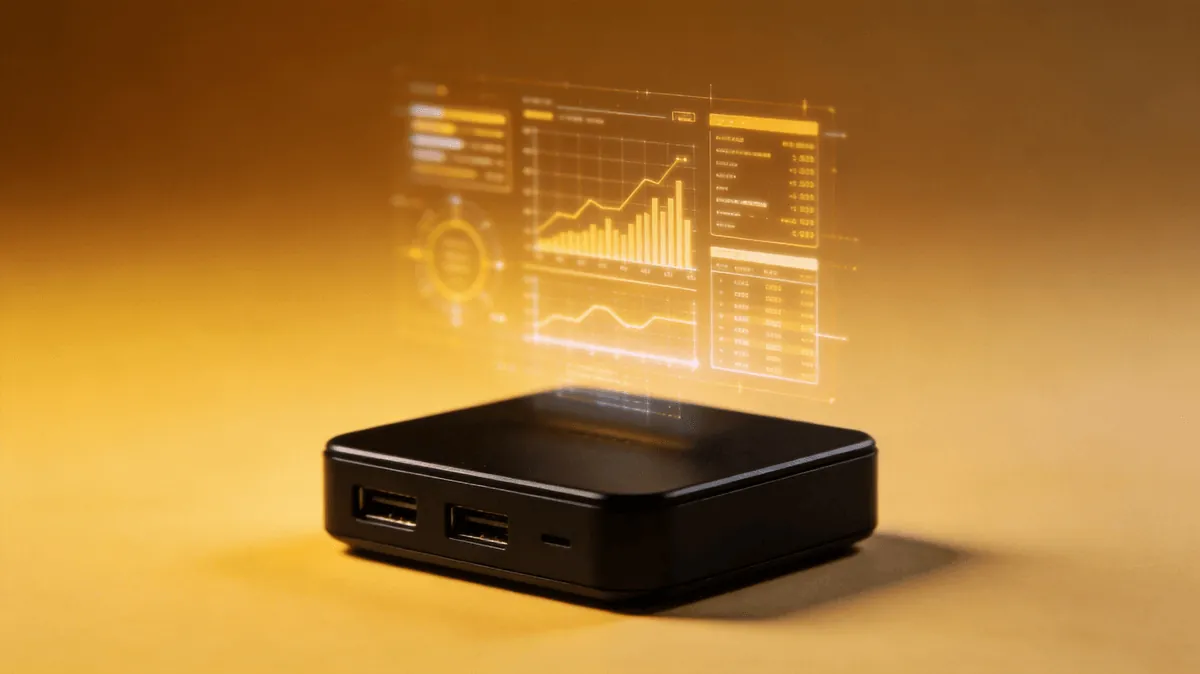
AI Box (also known as Agent Computer / Agent PC), is a dedicated local hardware device that runs AI Agents. Pre-installed with an AI agent management system, plug-and-play, running 24/7. Users can remotely command AI to work via Discord, Slack, Telegram, WhatsApp, and more.
Summary: Microsoft surprised the AI world at Build 2026 by unveiling 7 self-developed models and a groundbreaking AI Agent called Copilot Companion that can take over your device and act on your behalf. This article analyzes the strategic implications and what it means for the AI Agent landscape.
1. Build 2026: The Deep Water Bomb
At Build 2026, Microsoft did something that shocked the entire AI industry: unveiled 7 self-developed large language models spanning language understanding, code generation, vision reasoning, multimodal, and Agent-specific inference—all trained on Azure's proprietary compute infrastructure, no longer dependent on OpenAI's GPT series.
The 7 models, unified under the "Maya" series: - Maya-Language-7B/13B/72B (language foundation) - Maya-Code-34B (code-specialized, surpasses GPT-4 on HumanEval) - Maya-Vision-13B (visual understanding) - Maya-Multi-34B (multimodal) - Maya-Agent-7B/13B (Agent-specific inference, low latency, high throughput) - Maya-Reasoning-72B (deep reasoning)
But the real showstopper was Copilot Companion—an AI that can take over your screen and operate applications on your behalf.
2. "AI Coworker That Drives": What It Actually Is
The Copilot Companion demo was jaw-dropping:
A user driving calls on their phone, activates Copilot Companion—the AI then independently: - Opens email, replies to an urgent customer message - Finds a 3 PM free slot on the calendar, responds to a meeting invite - Sends a WeChat message: "Driving now, will reply later"
Zero user input required. AI understands screen content, makes decisions, executes actions.

Technical breakthroughs: - Real-time screen understanding: Captures screen every 200ms, parses UI via multimodal model - Cross-app operations: Coordinates across apps (email → calendar → WeChat) - Human behavior simulation: AI mimics human click/swipe/type rhythms to avoid detection
3. Microsoft and OpenAI: Alliance Loosening or Breakup?
The sensitive question: Is Microsoft "de-OpenAI-ing"?
Azure AI revenue data shows OpenAI API's share dropped from 62% (2024) to 28% (2026). Meanwhile, Microsoft self-developed model usage grew 4x in 6 months.
Microsoft's official statement: "Our partnership with OpenAI remains unchanged. Azure continues to offer both OpenAI and Microsoft models."
This is genuine—GPT-5 and o-series remain Azure-exclusive, while Maya models serve as complement rather than replacement.
4. Changes Developers Should Care About
4.1 Maya-Agent-7B: New Option for Edge Deployment
Maya-Agent-7B is optimized for Agent scenarios and runs on 10W edge devices. KaiheAiBox A1 series (10W low power design) has completed compatibility testing—models load locally via Ollama with <500ms response latency.
4.2 Copilot Studio Upgrade: No-Code Custom Agent
Copilot Studio now supports "natural language workflow"—describe Agent behavior in plain language, AI generates the configuration. Non-technical users can build complex automation.
4.3 Azure AI Foundry: Flexible Model Switching
Developers can now switch underlying models with one click on Azure AI Foundry—same API interface for GPT-5, Maya-Agent, or Claude 4. This reduces model lock-in risk.
5. Opportunities for KaiheAiBox
Microsoft's strategic release creates two layers of impact for KaiheAiBox:
Opportunity: Maya-Agent-7B's edge deployment capability significantly enhances KaiheAiBox's local inference. Users can run Microsoft's Agent-specific model locally, fully脱离了云端API, enabling true private AI Agent deployment.
Challenge: If OS-level AI assistants like Copilot Companion become mainstream, users might not need extra AI Agent hardware. But for enterprise-grade, private, data-security-critical scenarios, locally-deployed KaiheAiBox remains irreplaceable.
5. What Maya Models Mean for Developers
5.1 Maya-Agent-7B: Edge Deployment Game-Changer
The most practically significant announcement for developers was Maya-Agent-7B. This model is specifically optimized for Agent scenarios—high throughput, low latency, and minimal token overhead.
Traditional cloud-based Agent inference has three problems: - Latency: Round-trip API call takes 2-5 seconds - Cost: High-frequency Agent calls multiply API costs quickly - Reliability: Depends on internet connectivity and API availability
Maya-Agent-7B changes this by running efficiently on edge devices. KaiheAiBox has already completed compatibility testing with this model—via Ollama, users can load the 7B variant with <500ms first-token latency and handle 50+ concurrent Agent tasks without noticeable degradation.
5.2 The Strategic Logic Behind Microsoft's Move
Microsoft's dual-model strategy reveals a deliberate long-term play. By offering both OpenAI's frontier models and its own Maya series, Microsoft is:
- Reducing dependency risk: No single provider controls Azure AI's model stack
- Capturing cost-sensitive users: Maya models are priced 40-60% below equivalent OpenAI models
- Building Azure lock-in: When enterprises build workflows around Maya's Agent-specific optimizations, switching clouds becomes expensive
This is classic platform strategy: give away the infrastructure cheaply to capture the ecosystem.
6. Copilot Companion: Hype or Reality?
The Copilot Companion demo was undeniably impressive, but developers should maintain realistic expectations:
What it genuinely can do: Automate cross-app workflows where the UI is well-structured (email clients, calendar apps, standard messaging apps). The 200ms screen-capture loop and multimodal parsing work reliably on these interfaces.
What it's currently limited by: Complex UIs with dynamic content (social media feeds, video players, custom web apps) still confuse the screen-understanding model. Microsoft explicitly noted that Copilot Companion works best with "apps that follow standard design patterns."
Privacy implications: Users must grant screen-reading permissions to the AI. For enterprise deployments, this requires careful policy review—financial, legal, and healthcare data should never pass through Copilot Companion.
7. KaiheAiBox's Positioning in the New Landscape
For KaiheAiBox users, the most relevant takeaway is the Maya-Agent-7B edge deployment story. Here's the practical upgrade path:
| Current Setup | Upgrade Path | Expected Benefit |
|---|---|---|
| Cloud API (DeepSeek) | + Maya-Agent-7B local | 60% API cost reduction for routine Agent tasks |
| Single A1 unit | + Second A1 for Maya | 2x concurrent Agent capacity, zero cloud dependency |
| OpenClaw only | + OpenClaw + Maya-Agent | Divide tasks: local for routine, cloud for complex reasoning |
The KaiheAiBox team is actively working on a one-click Maya-Agent-7B deployment package that will be available through the device's firmware update channel in Q3 2026.
8. What This Means for the AI Industry
Build 2026 marks a turning point: AI infrastructure is no longer a cloud-only story. The combination of capable edge hardware (KaiheAiBox at 10W), efficient local models (Maya-Agent-7B), and mature Agent frameworks (OpenClaw) creates a viable alternative to cloud-only deployment.
For enterprises, this means three deployment options are now equally viable: - Cloud-first: Best for projects with unpredictable scale and need for frontier models - Edge-first: Best for cost-sensitive, data-private, always-on workloads - Hybrid: Best for most real-world deployments—routine tasks on edge, complex reasoning in cloud
The winner isn't cloud or edge—it's the architecture that intelligently routes tasks to the right infrastructure. That's the hybrid model KaiheAiBox is building toward.
9. Looking Ahead: The Agent-Native Computing Era
The convergence of edge-deployable models, mature Agent frameworks, and purpose-built hardware signals a broader shift: computing is becoming Agent-native.
In the Agent-native computing paradigm, the fundamental unit of work isn't a program or a script—it's an Agent task. Users don't write code; they configure Agents. Devices don't run applications; they run Agent runtimes. The operating system's primary interface isn't a file manager or app launcher—it's an Agent dashboard.
KaiheAiBox is designed for this paradigm. At 10W power consumption, it's an always-on Agent runtime that fits on any desk. With OpenClaw pre-installed, it's ready for the Agent-native future from day one.
The question for 2026 isn't whether Agent-native computing will arrive. It's whether your infrastructure is ready for it when it does.
6. Conclusion
The most notable signal from Build 2026 isn't any single model—it's Microsoft's message: AI competition is shifting from "model capability" to "Agent deployment." Whoever makes AI truly capable of taking action wins the next phase.
KaiheAiBox sits exactly at this intersection—low power, private deployment, 24/7 operation—making it the ideal carrier for Agent落地.
KaiheAiBox| Agentaibox that lets AI work for you 24/7· AI Frontier
10. The Bottom Line for Decision-Makers
If you're a CTO or technology leader evaluating AI strategy in mid-2026, here's the simplified decision tree:
If your primary use case is content automation (marketing, social media, customer support): → Deploy OpenClaw on KaiheAiBox today. The ROI is measurable within 2 weeks, and the 10W power consumption means it runs 24/7 without impacting your electricity bill.
If your primary use case is complex decision-making (legal review, financial modeling, strategic planning): → Evaluate Hermes for its safety-aligned reasoning. Pair it with KaiheAiBox B1 or D1 for local deployment with data privacy guarantees.
If your primary use case is cross-system integration (ERP + CRM + custom tools): → Watch OpenSquilla's development closely. The MetaSkill architecture is compelling but the ecosystem is still maturing. Plan for Q4 2026 adoption.
If you're unsure or have multiple use cases: → Start with KaiheAiBox + OpenClaw (it handles 80% of common Agent tasks), then add frameworks incrementally. The hardware supports all three, so there's no lock-in.
Microsoft's Build 2026 confirmed what the market already suspected: the future of AI is not just about smarter models, but about smarter deployment. And deployment starts with the right infrastructure. This strategic positioning makes Build 2026 a defining moment for the entire Agent ecosystem. The path forward involves smart infrastructure choices rather than more complex model training.
KaiheAiBox| Agentaibox that lets AI work for you 24/7· AI Frontier