Microsoft Build 2026 Drops 7 MAI Models: The De-OpenAI Era Begins, 35B Reasoning Model Matches Claude Opus
📖 Glossary
AI Box (also known as Agent Computer / Agent PC), is a dedicated local hardware device that runs AI Agents. Pre-installed with an AI agent management system, plug-and-play, running 24/7. Users can remotely command AI to work via Discord, Slack, Telegram, WhatsApp, and more.
Abstract: Microsoft launched 7 self-developed MAI models at Build 2026. The flagship MAI-Thinking-1 uses a 35B MoE architecture to score 97% on AIME 2025 and 53% on SWE-Bench Pro — matching Claude Opus. Seven models cover the full stack: reasoning, code, vision, speech, embedding, and safety. Microsoft's "de-OpenAI" strategy has moved from whispers to action. What does this mean for developers?
The Microsoft-OpenAI relationship has always been tech's most ambiguous topic.
Build 2026 delivered the answer: Microsoft doesn't need OpenAI anymore. At least, it no longer depends solely on OpenAI.
Seven self-developed MAI models dropped at once, covering the full stack from reasoning to code to vision to speech. The flagship MAI-Thinking-1 uses a 35B MoE architecture and matches Claude Opus. This isn't a trial balloon — it's a declaration.
The 7 MAI Models at a Glance
| Model | Parameters | Positioning | Core Capability |
|---|---|---|---|
| MAI-Thinking-1 | 35B MoE | Reasoning flagship | AIME 97%, SWE-Bench Pro 53% |
| MAI-Code-1 | TBD | Coding workhorse | Code generation + bug fixing + refactoring |
| MAI-Code-1-Flash | Lightweight | Low-latency completion | Real-time code completion, instant response |
| MAI-Vision-1 | TBD | Multimodal | Image understanding + OCR + chart analysis |
| MAI-Speech-1 | TBD | Speech | Speech recognition + synthesis + translation |
| MAI-Embed-1 | TBD | Embeddings | Text vector representation for RAG |
| MAI-Guard-1 | TBD | Safety | Content safety + compliance detection |
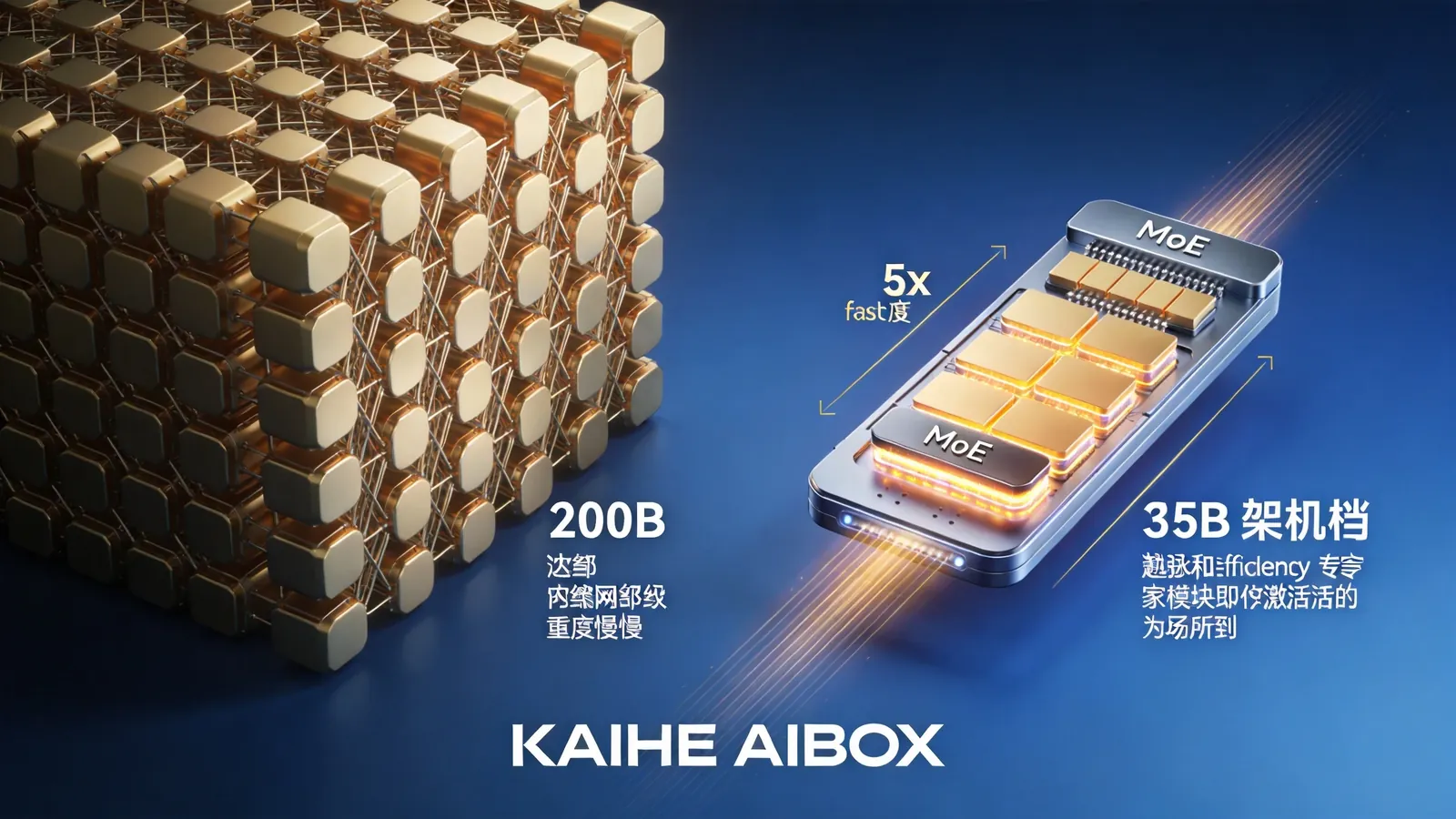
Seven models covering the complete AI application stack. Microsoft isn't competing with OpenAI at just one point — it has a replacement at every layer.
MAI-Thinking-1: 35B Beats the Heavyweights
MAI-Thinking-1 is the star of this release. 35B parameters, MoE (Mixture of Experts) architecture, with approximately 7B active parameters — meaning inference costs are only 1/5 of a comparable dense model.
The benchmarks speak for themselves:
AIME 2025 Math Competition: 97%. For context, GPT-5.5 scores around 95%, Claude Opus around 96%. A 35B model beating 100B+ closed-source flagships.
SWE-Bench Pro: 53%. Roughly matching Claude Opus 4.6. SWE-Bench measures real-world software engineering capability — from understanding GitHub issues to fixing code. It's the closest test to "can AI actually do your job?"
The key: this isn't a model built by throwing parameters at the wall. It's a win for architectural efficiency. MoE architecture activates only the relevant expert modules when needed, consuming 7B parameters worth of compute during inference while delivering performance on par with 200B+ dense models. For local deployment, this is great news — a Kaihe AIBOX could run it.
Why Microsoft Is De-OpenAI-ing
Three core reasons:
1. Independence. Microsoft invested $13 billion in OpenAI, but OpenAI increasingly doesn't act like a compliant partner. Altman pursued the for-profit transition, partnered with Apple, and built custom chips — Microsoft found itself increasingly marginalized in OpenAI's strategy. Self-developed models are the insurance policy: "Even if OpenAI turns hostile, Microsoft won't panic."
2. Cost. Every token through OpenAI's API costs money. Running self-developed models on Microsoft's own Azure servers brings marginal costs close to zero. Copilot, Office AI, Bing Chat — these products consume massive token volumes daily. The savings from using proprietary models are measured in the billions.
3. Customization. GPT is a general-purpose model. Microsoft's products need specifically optimized capabilities — fast code completion, accurate safety auditing, natural-sounding speech. A general model can't achieve these extremes; self-developed models can be tailored to product requirements.
What This Means for Developers
Short term: more choices, better prices. Microsoft entering the self-developed model race means another capable model provider in the market. MAI model API prices on Azure will likely undercut OpenAI (because Microsoft's own inference costs are lower), giving developers another option.
Medium term: model ecosystem fragmentation. Previously, OpenAI alone was sufficient. Now you're choosing between OpenAI, Anthropic, Google, Microsoft, and Meta. Each model has different API formats, calling conventions, and best practices. Developer adaptation costs are rising.
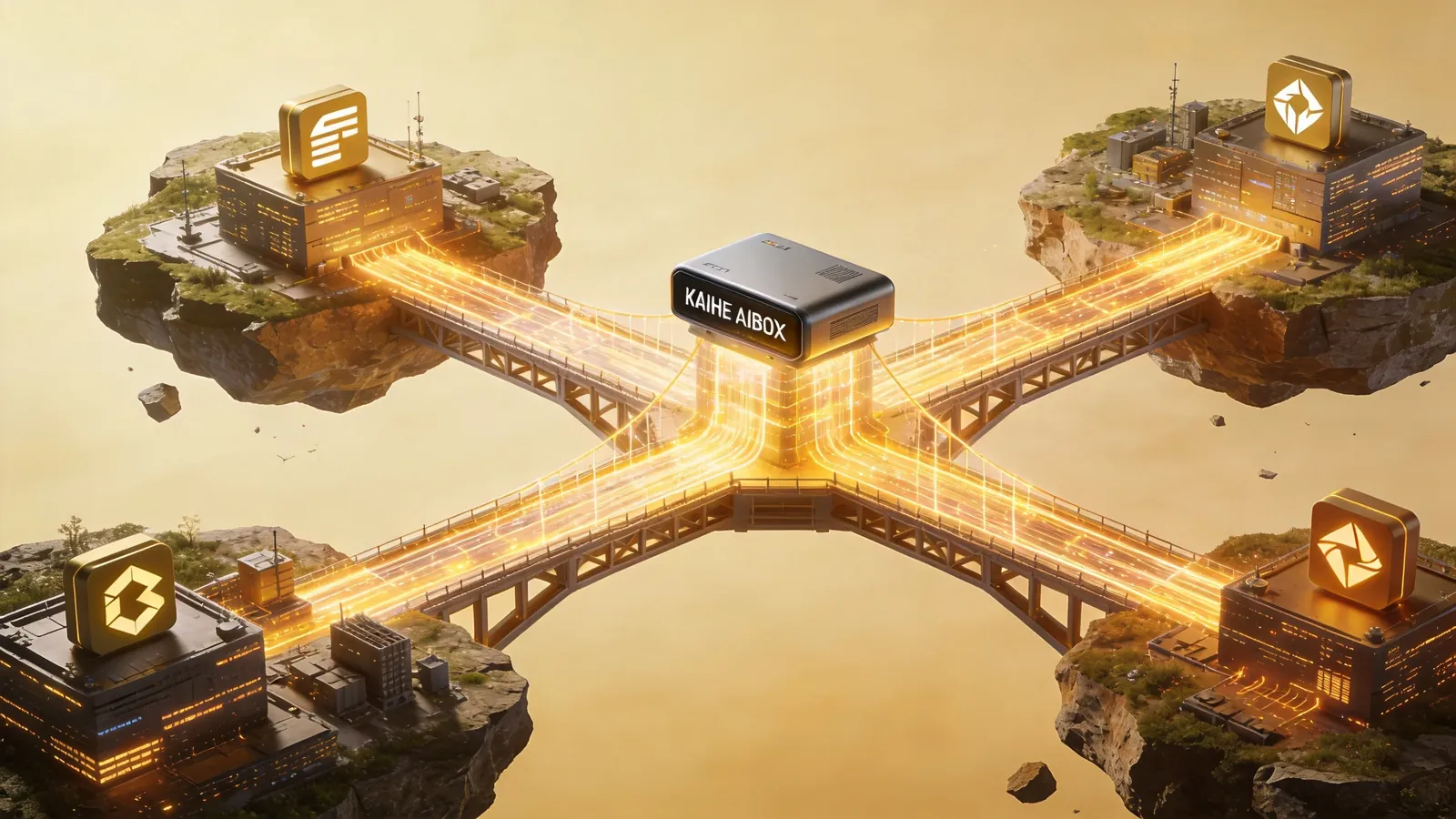
This is where Kaihe AIBOX and OpenClaw prove their value — they provide an abstraction layer. Whether the backend is GPT-5.5, Claude, MAI, or DeepSeek, OpenClaw handles the orchestration uniformly. No code changes needed. Switch from GPT to MAI tomorrow, and the application layer doesn't notice. The more fragmented the model landscape, the more valuable the middleware.
Can MAI Models Run Locally?
Microsoft hasn't announced open-source plans for MAI models yet. Looking at industry trends:
- Meta's Llama series: fully open-source
- DeepSeek: fully open-source
- GLM-5.2: MIT open-source
- Qwen3.7-Max: open-source
Microsoft will likely open some MAI models (especially utility ones like Embed and Guard), but the core Thinking-1 will probably remain closed-source in the near term.
However, Kaihe AIBOX's strategy is edge-cloud synergy regardless — daily light tasks use local open-source models (GLM-5.2, DeepSeek-V4, Qwen3.7-Max), while heavy reasoning calls cloud APIs (including the future MAI-Thinking-1). Use whichever works best. No single-vendor lock-in.
Bottom Line
Microsoft Build 2026's seven MAI models mark the shift from "de-OpenAI whispers" to actual action. MAI-Thinking-1's 35B parameters deliver 100B+ performance — the MoE architecture is the key, cutting inference costs to 1/5 and making local deployment viable.
The model market is shifting from "one superpower" to "multiple contenders." More choices for developers, but higher adaptation costs. OpenClaw's value as a unified orchestration layer only grows in a fragmented model landscape.
-#KaiheAIBOX #LocalAI #AINews #AIAgent #AIBOX
Kaihe AIBOX | The Agent Computer That Works 7×24 for You · AI Frontier