Microsoft Build 2026: Windows AI Agent as First-Class Citizen Security Architecture
📖 Glossary
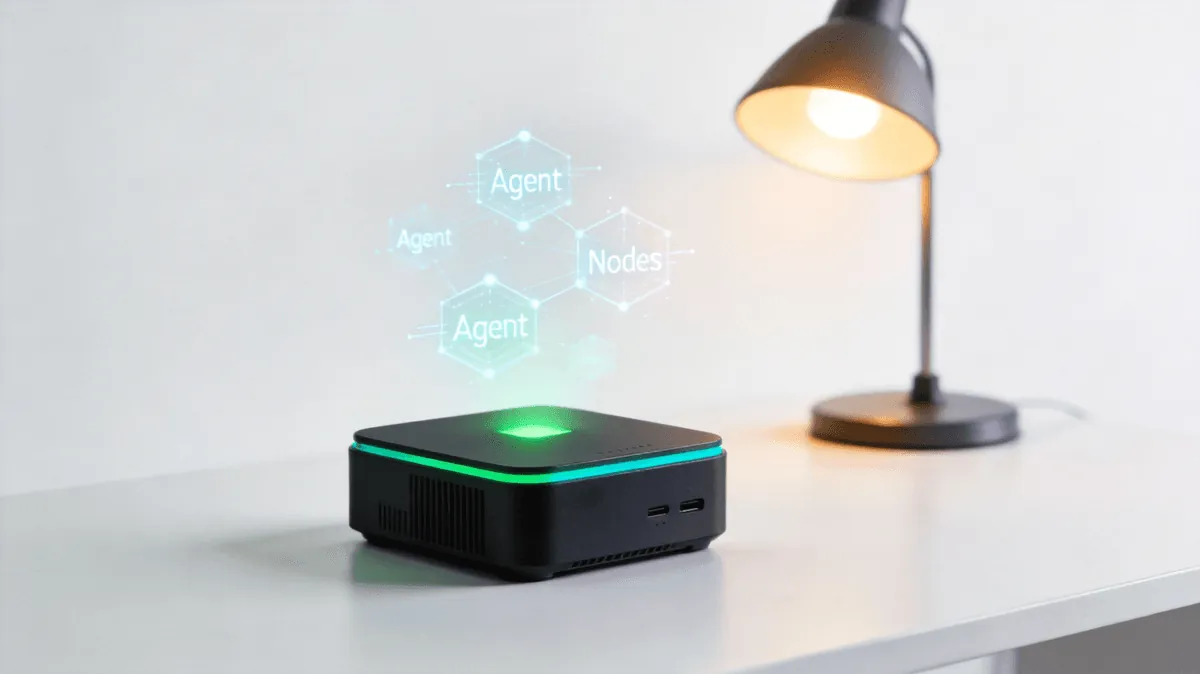
AI Box (also known as Agent Computer / Agent PC), is a dedicated local hardware device that runs AI Agents. Pre-installed with an AI agent management system, plug-and-play, running 24/7. Users can remotely command AI to work via Discord, Slack, Telegram, WhatsApp, and more.
Summary: Microsoft Build 2026 announced AI Agents as "First-Class Citizens" in Windows, introducing Execution Containers for security isolation. This article analyzes the architecture, compares it with traditional containers, and explores implications for enterprises and KaiheAiBox.
1. The Identity Shift of AI Agents in Windows
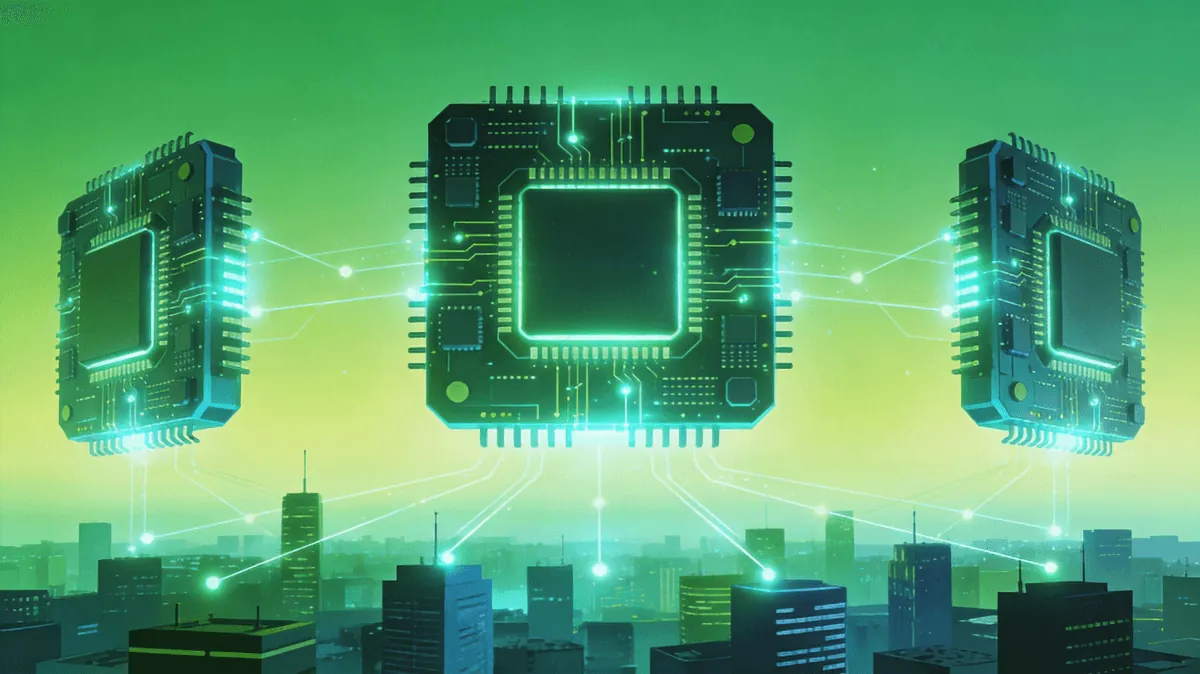
In previous OS architectures, AI applications shared the same status as regular apps—they ran under user identity, constrained by user permissions and resource quotas. The changes announced at Microsoft Build 2026 fundamentally transformed this landscape—AI Agents are elevated to "first-class citizens" in Windows, receiving system-level resource scheduling and security isolation support.
This shift means: - AI Agents no longer run under user identity, but have independent system security context - The OS allocates dedicated compute resources and memory regions, unaffected by user process competition - Each AI Agent runs in its own Execution Container with complete process isolation - Agent behavior audit logs are managed uniformly by the operating system
Panos Panay, President of Windows, stated in the keynote: "AI Agents are not applications—they are part of the operating system. Just like the file system and network stack, the Agent runtime is a foundational capability of Windows."
This marks a paradigm shift from "OS serving humans" to "OS serving humans and AI together."
2. Execution Containers: The Core Security Architecture
Microsoft showcased Execution Containers at Build 2026—a lightweight security isolation solution purpose-built for AI Agents.
2.1 Design Principles
The core philosophy is "principle of least privilege": - Each Agent can only access authorized data and APIs—out-of-bounds access is denied by the system - Inter-Agent data exchange must go through the system-level Agent Message Bus, not direct memory access - All Agent actions have audit logs for traceability and replay - Agent resource usage has hard limits to prevent runaway Agents from degrading system performance
2.2 Comparison with Traditional Containers
Execution Containers are not a Docker replacement—they are purpose-built optimizations for AI Agent scenarios:
| Feature | Docker Containers | Microsoft Execution Containers |
|---|---|---|
| Startup time | Seconds (1-5s) | Milliseconds (<100ms) |
| Resource footprint | MB-level | KB-level |
| Network isolation | Full isolation | On-demand authorization (minimal exposure) |
| Filesystem | Independent | Shared + sandbox (selective sharing) |
| Agent coordination | Requires extra config | OS-native support |
| Security auditing | Requires third-party tools | Built into OS |
| Use case | General app deployment | AI Agent-specific |
The key difference: Execution Containers pursue not "complete isolation" but "secure coordination"—Agents can communicate efficiently, but all interactions occur under OS supervision.
2.3 Technical Implementation Details
According to Microsoft's published technical documentation, Execution Containers are built on: - Windows Sandbox: Leveraging Hyper-V lightweight virtualization for kernel-level isolation - Win32 Isolated Processes: Process-level isolation for non-virtualized scenarios with zero startup overhead - Agent Permission Manifest: Declarative permission configuration file defining accessible resource scope - Agent Message Bus: High-performance inter-process communication based on Windows RPC
3. Impact on Enterprise AI Deployment
3.1 Security Compliance Without Middleware
Previously, IT teams needed a security gateway or API proxy between Agents and core systems. Now, Windows-native Execution Containers serve as the security boundary—Agents cannot access unauthorized resources.
This is particularly important for data-sensitive industries like finance, healthcare, and government. Microsoft guarantees Execution Containers comply with SOC 2 Type II and ISO 27001 standards.
3.2 Multi-Agent Coordination as OS Capability
With AI Agents as first-class citizens, the OS includes built-in message routing, task orchestration, and resource contention arbitration. Enterprises no longer need custom Agent scheduling middleware, reducing both development complexity and operational costs.
3.3 Developer Toolchain Upgrade
Microsoft simultaneously released Visual Studio AI Agent extensions: - Agent project templates (C# / Python / TypeScript) - Execution Container local debugger - Agent Permission Manifest visual editor - Agent behavior recording and replay tools
This transforms developers from "writing an AI program" to "writing an AI Agent"—a fundamental development paradigm shift.
3.4 KaiheAiBox Differentiation
While Windows strengthens its AI Agent capabilities, KaiheAiBox maintains clear differentiation:
| Dimension | Windows PC + Execution Containers | KaiheAiBox |
|---|---|---|
| Power consumption | 300W+ | 10W |
| 24/7 Operation | Must keep PC on | Dedicated device, native 24/7 |
| Deployment difficulty | Install Windows + configure Agent env | Out-of-box ready |
| Data security | Shares disk with work PC | Physically isolated |
| Running cost | $15+/month electricity | $1.50/month electricity |
| Agent runtime | Windows Execution Container | OpenClaw Agent Runtime |
KaiheAiBox focuses on "Agent orchestration + 24/7 execution," while Windows PCs suit "Agent development + interactive use." They are complementary, not substitutive.
4. Industry Impact and Trends
Microsoft Build 2026 marks a milestone in "OS-level AI transformation." When AI Agents become OS primitives rather than application-level features:
- Lower development barriers: ISVs no longer need to build Agent runtimes—Visual Studio templates generate them with one click
- Unified security standards: Microsoft's Execution Container spec may become industry standard, similar to Active Directory's trajectory
- Accelerated edge AI: Windows PCs become universal AI Agent deployment platforms—any Windows device can run Agents
- Competitive landscape shift: macOS and Linux must follow with native Agent support, or fall behind in enterprise markets
However, for enterprise users, Windows PCs' high power consumption (300W+) and general-purpose design make them suboptimal 24/7 AI deployment platforms. True AI Agents should never stop running, not halt when the PC shuts down.
5. Conclusion
Windows AI Agent first-class citizenship is the inevitable direction of OS evolution. For KaiheAiBox, this is a tailwind rather than a threat—when Agents become OS-native capabilities, the value of Agent orchestration and 24/7 operation becomes even more pronounced.
KaiheAiBox comes with OpenClaw pre-installed, helping enterprises move AI Agents from "development and debugging" to "production operation."
KaiheAiBox| Agentaibox that lets AI work for you 24/7· AI Agent