Decoding Minglue Tech's Octo Platform: How OpenClaw Grows a Cross-Platform "Agent Neural Network"
📖 Glossary
AI Box (also known as Agent Computer / Agent PC), is a dedicated local hardware device that runs AI Agents. Pre-installed with an AI agent management system, plug-and-play, running 24/7. Users can remotely command AI to work via Discord, Slack, Telegram, WhatsApp, and more.
Summary: When OpenClaw moved from macOS to Windows, it wasn't a simple "port"—it was Minglue Technology's Octo platform executing a cross-platform architectural transformation. Octo serves as the technical foundation, allowing Agents to grow freely across multiple operating systems instead of being locked into a single platform. This article deconstructs the OpenClaw+Octo strategy from technical architecture, cross-platform implementation, and ecosystem collaboration perspectives, exploring how this combination opens new possibilities for Agent computers.
1. The Cross-Platform Dilemma: Why "Write Once, Run Everywhere" Is So Hard
Agents are fundamentally different from traditional applications. Traditional software is about "functions"—UI, logic, data flow—and cross-platform frameworks (Electron, Flutter) have solved this fairly well. But Agents are about "autonomous action"—reading/writing files, calling tools, controlling browsers, executing scripts, interacting with APIs, even running local servers.
This creates a fundamental contradiction: An Agent's action capabilities deeply depend on the host OS's interfaces, and different OS interfaces are vastly different.
Concrete example: An Agent on macOS uses AppleScript to control Safari; on Windows, it needs PowerShell to drive Edge. File system path formats differ, package managers differ, process scheduling models differ, permission systems differ. These differences can't be flattened by "one layer of abstraction" because Agents need to actually execute these operations.
This is the core problem Minglue Tech's Octo platform aims to solve.
2. Octo Platform: The "Middleware Layer" for Cross-Platform Agents
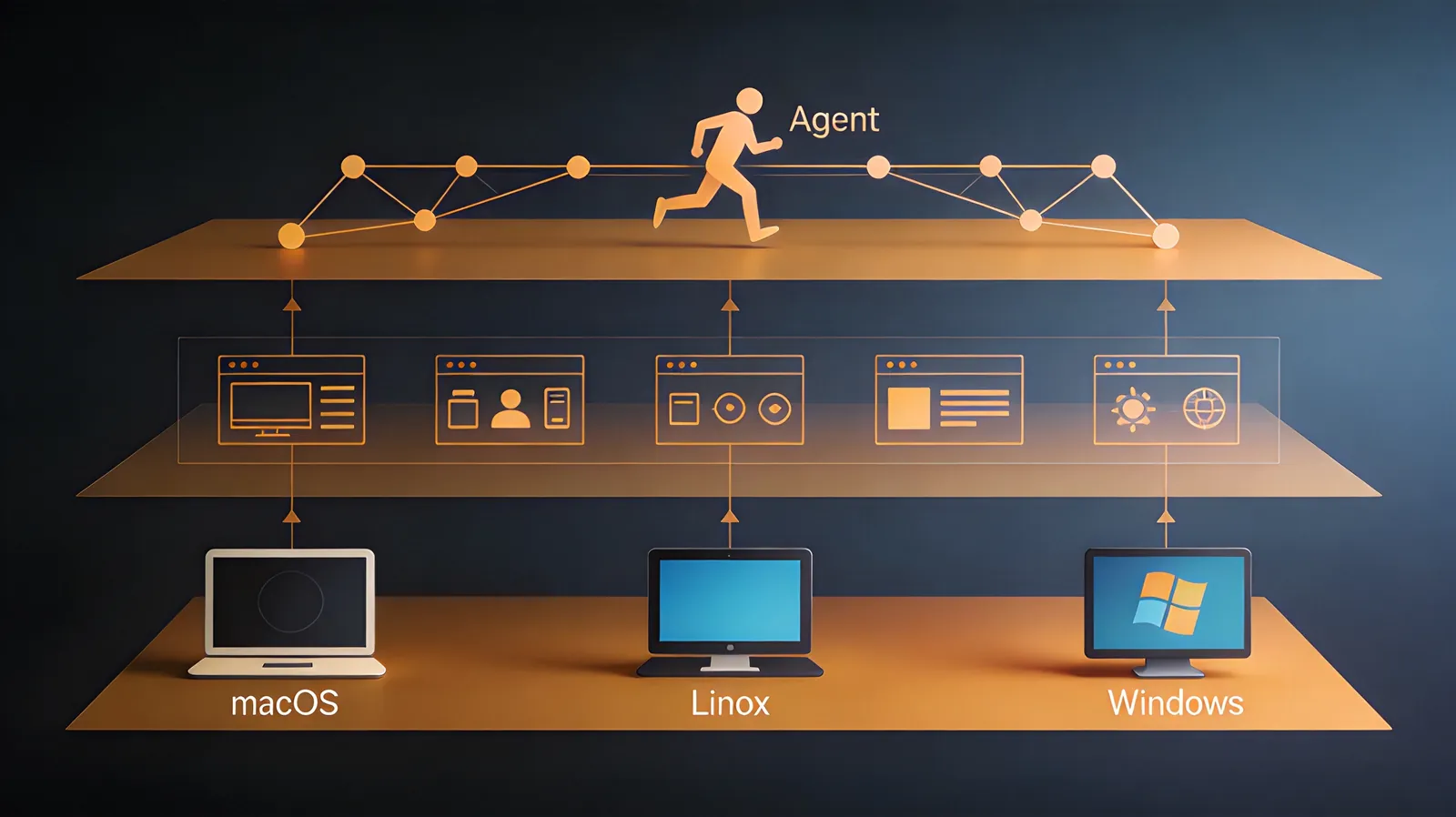
The best analogy for Octo is an "OS beneath the OS" for Agent runtime.
Traditional OS manages processes, memory, file systems—designed for human users and applications. Octo manages Agent lifecycle—from deployment, scheduling, tool mounting, to state persistence, capability discovery, and cross-device sync.
Capability Abstraction Layer
Octo abstracts OS-level capabilities into standardized "capability interfaces." Whether the underlying OS is macOS or Windows, Agents see the same set of capability descriptions:
- File operations: unified path resolution, encoding handling, permission models
- Browser control: CDP protocol abstracts browser differences
- Process management: cross-platform process creation, signal handling, timeout control
- Tool mounting: standardized Skill package format—write once, load cross-OS
State Synchronization and Persistence
Octo provides a state persistence engine that abstracts Agent runtime state into migratable data structures. This means you can start a task on a Windows desktop at the office, continue on a macOS laptop at home, with the Agent's context fully intact—not just chat history, but entire work state including loaded Skills, running sub-task queues, and intermediate variables.
Scheduling and Orchestration Engine
Octo's scheduling engine handles Agent instance management, task queues, resource isolation, and cross-Agent communication. Under the hood, it selects optimal process isolation strategies per OS (Windows uses Job Objects, macOS uses sandbox-exec), but the top-level API is completely consistent.
3. OpenClaw on Windows: Not Just "Working," But "Working Well"
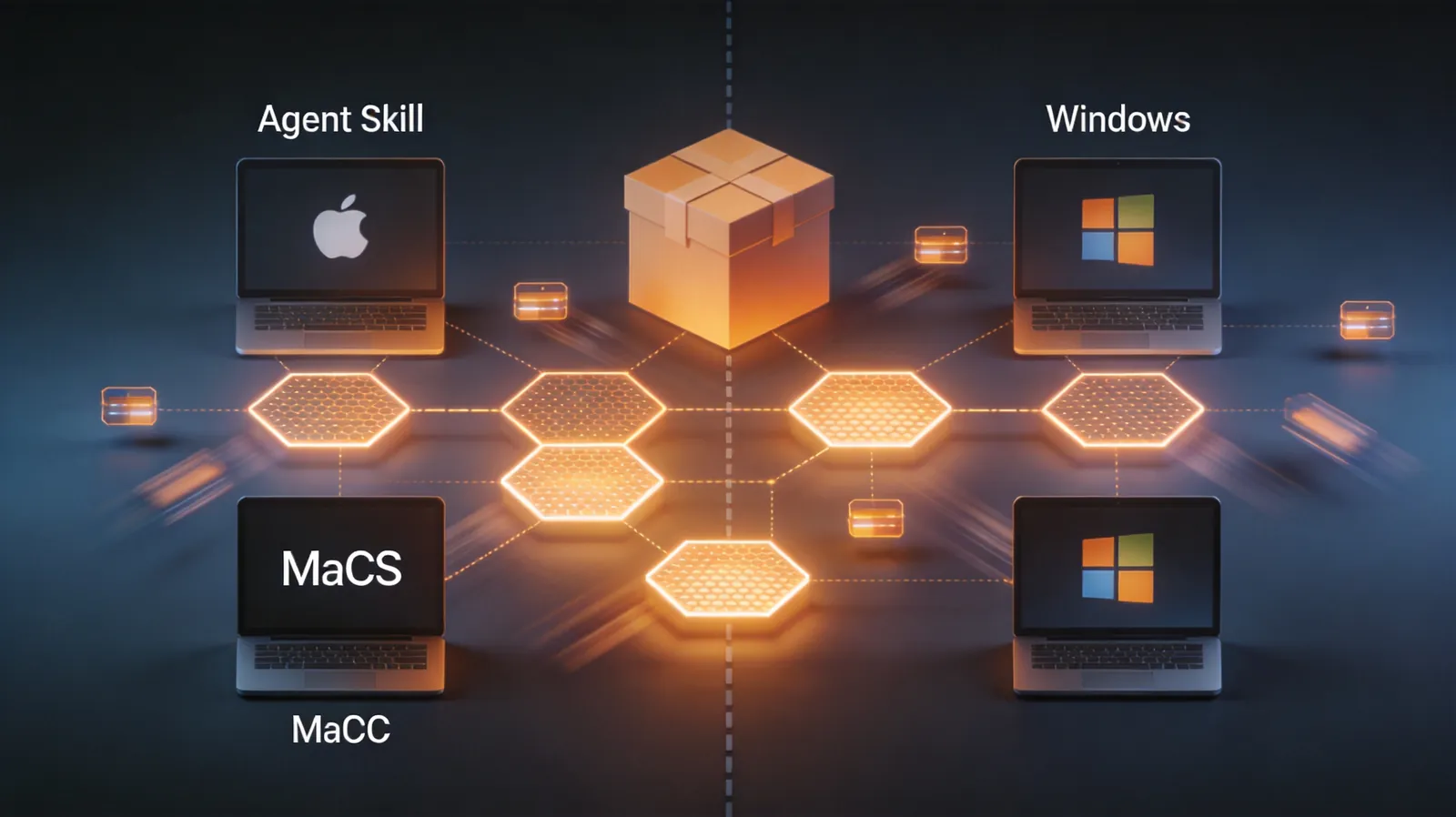
With Octo's technical foundation, OpenClaw's Windows deployment isn't a simple port—it's an architectural validation.
OpenClaw's Windows performance stands out precisely because there's no "discount"—no frequent timeouts, no encoding issues. Behind this seamless experience lies extensive Windows-specific adaptation:
- Deep PowerShell integration: native PowerShell runtime support with pipeline, object streams, .NET assembly calls
- Path and encoding adaptation: automatic handling of backslash paths, UTF-8 BOM, GBK encoding
- Browser control: unified CDP protocol for Edge/Chrome under Windows permission models
- Security model: respecting Windows UAC with clear approval flows
Traditional PCs are designed for human operation. Agent computers are designed for Agent operation. The KaiheAiBox A1 (¥999, RK3576 8-core, 6 TOPS AI, 4GB RAM, 64GB eMMC) is a 7×24 Agent-dedicated device—low power, rich interfaces, out-of-box Agent environment.
Summary: From "Agent Running" to "Agent Growing"
The three-phase strategy is clear: Phase 1—run Agents on a single platform (OpenClaw on macOS). Phase 2—run Agents across platforms (Octo + OpenClaw Windows). Phase 3—let Agents "grow" across platforms (cross-device collaboration, state migration, ecosystem standards).
When Octo+OpenClaw delivers this combination, the Agent "neural network" has already begun to grow. Those who start building cross-platform Agent capabilities now will have the advantage in the coming Agent economy.
KaiAIBox | Agentaibox that lets AI work for you 24/7 · OpenClaw Zone
KaiheAiBox| Agentaibox that lets AI work for you 24/7· OpenClaw专区