📖 Glossary
AI Box (also known as Agent Computer / Agent PC), is a dedicated local hardware device that runs AI Agents. Pre-installed with an AI agent management system, plug-and-play, running 24/7. Users can remotely command AI to work via Discord, Slack, Telegram, WhatsApp, and more.
Abstract: On June 1, 2026, MiniMax released its next-generation flagship model M3 — China's first open-source LLM to simultaneously deliver frontier Coding & Agentic capabilities, 1M-token ultra-long context, and native multimodality. It abandons the MoE architecture of its predecessor in favor of a homegrown MSA (MiniMax Sparse Attention) mechanism, surpassing GPT-5.5 on SWE-Bench Pro and approaching Claude Opus 4.7. This is not merely a model iteration; it marks the transition of Chinese LLMs from "catching up on individual metrics" to "competing across the full frontier."
1. The Triple Threat: Not Feature Stuffing, but Redefining "Frontier"
The LLM race has long moved past the era where more parameters meant a better model. In 2026, what truly separates leaders from followers comes down to three words: coding ability, ultra-long context, and native multimodality.
Only a handful of closed-source models overseas — Claude Opus 4.7, GPT-5 — combine all three. Among open-source models? Zero. Until MiniMax M3.
M3's "triple threat" is no mere bundling exercise:
- Frontier Coding & Agentic Capability: 59.0% on SWE-Bench Pro, surpassing GPT-5.5 and Gemini 3.1 Pro, within 3% of Opus 4.7. Top score on Claw-Eval end-to-end Agent benchmark, capable of autonomous task decomposition, tool invocation, and multi-step reasoning — delivering code that's "ready to ship," not "runs but needs human fixes."
- 1M (1,000,000) Token Ultra-Long Context: API supports up to 1,048,576 tokens with stable 512K+ availability. You can feed it an entire project's source code, documentation, and hundreds of files in one go — it won't "forget what it read earlier."
- Native Multimodality: Trained on text + images + video from step zero, not a "text model with a bolted-on vision encoder." Supports image and video input, and can even directly operate computer desktops, executing cross-application, cross-file, cross-system complex tasks.

For the first time, a Chinese LLM isn't "close on one dimension" — it stands at the starting line of the global first tier across three core dimensions simultaneously.
2. The MSA Architecture: Abandoning MoE to Forge a New Path
The most surprising thing about M3 isn't what it does — it's what it doesn't do.
The predecessor M2.5 used MoE (Mixture of Experts) architecture — the standard choice for mainstream open-source models, adopted by DeepSeek, Qwen, and Mixtral alike. M3 completely abandons MoE in favor of a homegrown MSA (MiniMax Sparse Attention) architecture.
This is a bold decision. Why?
The fundamental MoE problem: MoE reduces computation through "sparse activation," but it solves the "many parameters, only some used each time" problem — it does nothing about the O(n²) complexity bottleneck inherent in the attention mechanism itself. As context length grows, computation still explodes exponentially.
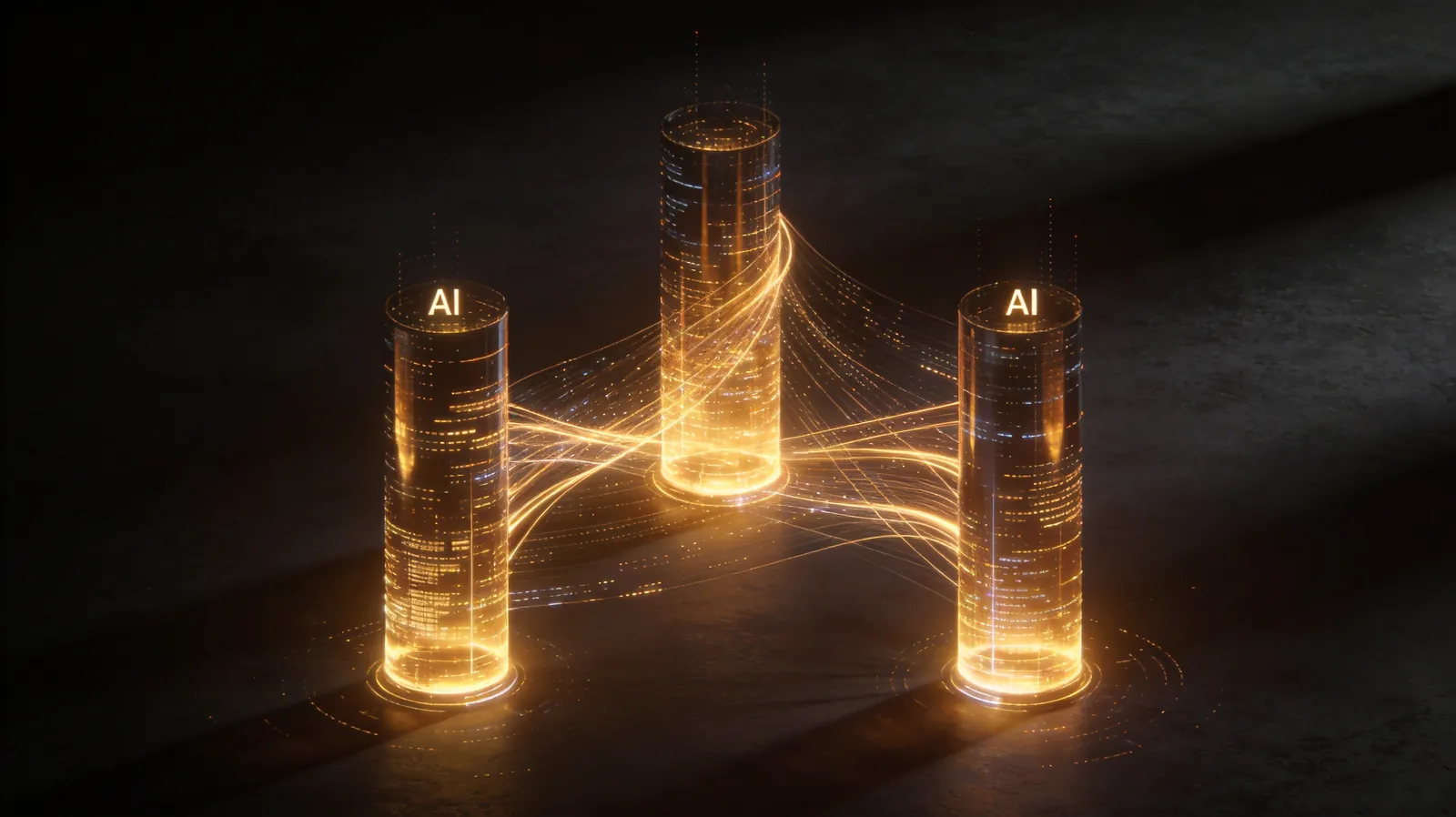
MSA's approach: Sparsify directly at the attention level. Traditional full attention requires every token to compute similarity with all previous tokens — the longer the sequence, the slower and more expensive. MSA replaces full attention with KV-block selection, focusing only on important token blocks and skipping irrelevant information.
Specifically, MSA employs a "KV-block outer, aggregated hit query" KV outer gather design, achieving more precise KV blocking than alternatives like DSA and MoBA, with higher effective context coverage. Optimized directly at the operator level, its memory access speed is 4× faster than Flash-sparse-attention.
How dramatic are the results? According to MiniMax's official data:
| Metric | Improvement |
|---|---|
| Per-token compute at 1M context | Reduced to 1/20 of predecessor M2.5 |
| Prefill speed | 9.7× faster |
| Decode speed | 15.6× faster |
What does this mean? At 1M context, M3's inference cost is no longer "astronomical" — it's an engineering-feasible number. Million-token context has gone from "lab toy" to "production tool."
MoE is "saving parameters but not attention"; MSA is "saving attention itself." This is a paradigm shift at the foundational level, not incremental patching.
3. Open Source Strategy: Not Just "Open," but "Fully Open"
Open-sourcing an LLM is easier said than done. Many vendors' "open source" is more marketing than substance — releasing a nerfed base model while keeping the real capabilities locked behind an API.
M3 takes a different approach. MiniMax has committed to open-sourcing the weights within 10 days of release — with the complete triple-threat capabilities: coding, long context, and multimodality, all included.
This is crucial. Previously, the open-source ecosystem forced developers into fragmented choices:
- Want strong coding? DeepSeek-Coder, but no native multimodality.
- Want long context? Some models offer 128K or even 256K, but never 1M.
- Want multimodality? LLaVA and Qwen-VL exist, but coding is weak.
M3 is the first model to package all three capabilities into a single open-source offering. For the developer community, this means no more "building with Lego blocks" — one model covers code generation, long-document processing, multimodal understanding, and Agent automation across mainstream scenarios.
Equally noteworthy is M3's engineering compatibility: it works seamlessly with Claude Code and various AI Agent frameworks, supports the OpenAI-compatible protocol, and requires minimal integration changes. In a Hopper FP8 operator optimization task, M3 autonomously invoked tools 1,959 times within 24 hours, boosting hardware utilization from 7.6% to 71.3% — a 9.4× acceleration. This is far beyond "barely usable."
4. Industry Impact: From "Catching Up on Individual Metrics" to "Full-Frontier Competition"
Placed within the trajectory of Chinese LLMs, the significance of M3's release extends far beyond a single product iteration.
In 2024, the core narrative was "chasing GPT-4" — approaching parity on a single dimension was considered a victory. That was the era of "catching up on individual metrics."
In 2025, the narrative shifted to "surpassing on certain dimensions" — DeepSeek matched coding performance, Qwen broke through on long context. But no single model stood on the first tier across multiple core dimensions simultaneously.
In 2026, M3 signals the beginning of "full-frontier competition" — no longer just approaching the international top on individual metrics, but reaching Frontier-level across three core capabilities simultaneously, and making them available to the community through open source.
The implications of this shift are profound:
-
Developer ecosystem gravity may shift: When open-source models offer 90% of the capability combination of closed-source alternatives — at lower cost, with more data control — an increasing number of teams will choose the open-source route.
-
Local deployment moves beyond "barely functional": M3's capability combination makes local deployment genuinely productive, rather than limited to simple text Q&A.
-
Agent application barriers drop further: Coding + long context + multimodality happen to be the three capabilities most critical for Agent automation. M3's open source means more teams can build high-capability Agent systems at low cost.
When Chinese open-source models start offering "complete capability combinations" rather than "individual standout features," the dimension of competition has fundamentally changed.
5. KaiheAiBox A1: Bringing M3's Capabilities from Cloud to Desktop
Once M3's open-source weights are released, a natural question arises: How do everyday users actually take advantage of such a powerful model?
Cloud APIs are certainly one path. But for many scenarios — enterprise intranet data isolation, personal privacy protection, long-running 24/7 Agent tasks — local deployment is the real requirement.
This is precisely where the KaiheAiBox A1 delivers value. As an agent computer, the A1's positioning isn't "a compute beast for running full-parameter LLM inference" but rather "an always-on device that lets AI work for you 24/7":
- ARM architecture, 6 TOPS: Not chasing maximum-parameter inference, but specializing in lightweight models and Agent orchestration
- 24/7 operation: Low-power design enables year-round uninterrupted operation — scheduled tasks, data monitoring, automated workflows
- WeChat scan-to-start: No need to configure development environments or learn Docker — scan the QR code and you're ready
- Physical isolation: Data never leaves the device, ensuring enterprise compliance and personal privacy
Picture this scenario: M3's Agent capabilities are invoked remotely via API, while the KaiheAiBox A1 serves as the local "command center" running 24/7 — periodically fetching data from the corporate intranet, calling M3 for code reviews and document generation, and pushing results to WeChat. A cloud-based brain + local hands and feet — this is the form AI Agents truly take when they land in the real world.
KaiheAiBox | Agentaibox that lets AI work for you 24/7 · AI Frontier