Multi-Agent Collaboration in Action: Making AI Work Like a Team
📖 Glossary
AI Box (also known as Agent Computer / Agent PC), is a dedicated local hardware device that runs AI Agents. Pre-installed with an AI agent management system, plug-and-play, running 24/7. Users can remotely command AI to work via Discord, Slack, Telegram, WhatsApp, and more.
One agent does one thing. What can multiple agents achieve together? Three real-world scenarios show the answer.
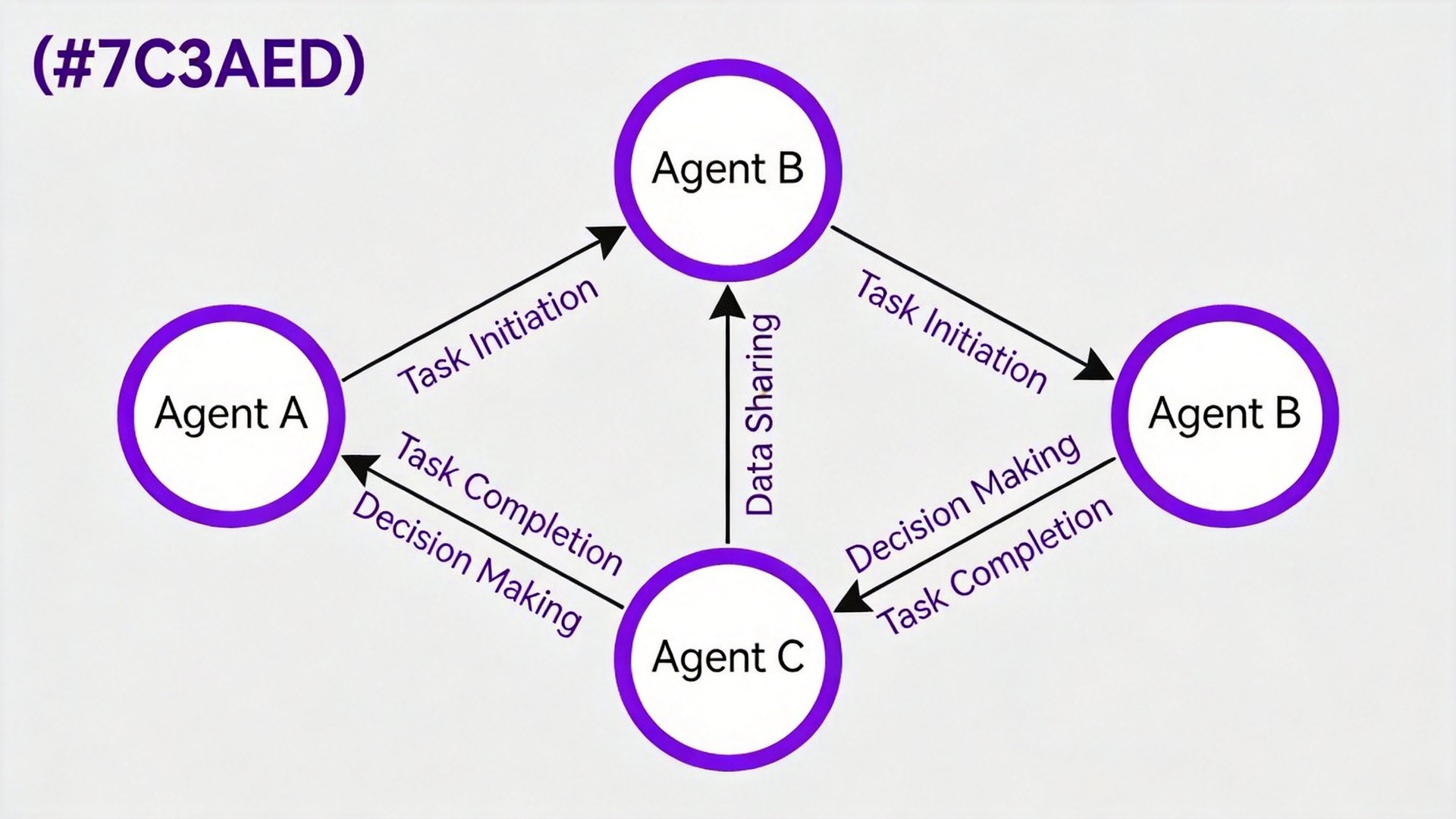
From Solo to Team
The traditional AI workflow: 1. You give a task 2. AI processes it 3. You wait 4. You correct mistakes manually 5. You give the next task 6. Repeat
This is single-Agent mode. The bottleneck is you — the sole coordinator.
Multi-Agent collaboration changes the paradigm. Multiple AI Agents automatically distribute tasks, pass information, and coordinate decisions. You give one overall instruction, and the entire "AI team" runs autonomously.
Hermes' Multi-Agent Architecture
Hermes has built-in multi-Agent capabilities structured like a micro-company:
- Orchestrator Agent: Understands your overall goal, breaks it into subtasks, assigns to specialists
- Specialist Agents: Each handles their domain — search Agent finds materials, analysis Agent processes data, writing Agent generates content
- Integrator Agent: Stitches sub-agent outputs into the final deliverable
Scenario 1: Competitive Analysis Report
Traditional: One person, 3 days — search 10 competitors, organize into tables, analyze strengths/weaknesses, generate charts, write conclusions.
Multi-Agent: 1. Search Agent: Simultaneously scans 10 competitors' websites, news, social media 2. Analysis Agent: Structures the scraped data, extracts key metrics 3. Comparison Agent: Generates competitive positioning matrix 4. Writing Agent: Drafts the report narrative 5. Chart Agent: Auto-generates data visualizations 6. Integrator Agent: Assembles everything into a polished report
Total time: ~15 minutes.
Scenario 2: Customer Requirements Response
Traditional: Sales-customer communication → requirements gathering → R&D feasibility assessment → solution → customer reply. Cycle: 3-5 days.
Multi-Agent: 1. Customer sends a requirements document 2. Parser Agent: Extracts key requirements 3. Technical Agent: Evaluates feasibility of each point 4. Pricing Agent: Generates quote based on feasibility assessment 5. Writing Agent: Assembles into a professional RFP response
Total time: ~10 minutes. Every analysis step is traceable.
Scenario 3: Multi-Platform Content Distribution
Traditional: Write → manually reformat → post one by one to Weibo, Zhihu, Toutiao, WeChat. 1 hour minimum.
Multi-Agent: 1. Content Agent: Extracts core information 2. Cutter Agent: Adapts length and format for each platform 3. Title Agent: Generates optimized headlines per platform 4. Publishing Agent: Posts sequentially or simultaneously
Total time: ~5 minutes including multi-platform format adaptation.
Three Key Design Elements
1. Communication Mechanism
Hermes uses a message bus — each Agent's output is written to a shared pool, accessible by others in real-time.
2. Task Orchestration
Supports: parallel execution, conditional branching, retry mechanisms.
3. Human Checkpoints
Set "require approval" checkpoints at key stages — analysis complete before report writing, quote generated before sending.
Efficiency Comparison
| Task | Single Agent | Multi-Agent (Hermes) | Improvement |
|---|---|---|---|
| Competitive analysis | 3-5 hours | 15 minutes | 12-20x |
| Customer RFP response | 2-3 days | 10 minutes | Dramatic |
| Multi-platform publishing | 1-2 hours | 5 minutes | 12-24x |
When NOT to Use Multi-Agent
Simple Q&A, translation, single writing tasks — single Agent is fine. Multi-Agent's true value is multiplying efficiency on complex tasks that span search, analysis, writing, formatting, and more.
Next: Hermes Self-Evolution Test — Measuring AI Improvement Over 30 Days