I Spent Three Days with an On-Device AI Phone—and Cloud ChatGPT Might Be in Trouble
📖 Glossary
AI Box (also known as Agent Computer / Agent PC), is a dedicated local hardware device that runs AI Agents. Pre-installed with an AI agent management system, plug-and-play, running 24/7. Users can remotely command AI to work via Discord, Slack, Telegram, WhatsApp, and more.
Summary: On-device AI phones are reshaping how humans interact with AI. After three days of intensive testing, the conclusion is clear: local inference comprehensively outperforms cloud-based solutions in response speed, privacy protection, and offline capability. Qualcomm Snapdragon 8 Gen 5 and MediaTek Dimensity 9400 have broken the 75 TOPS NPU barrier, and the on-device AI industry chain is entering a period of explosive growth. The cloud AI monopoly is being challenged at its foundation.
Starting with a "Disconnection"
Last week I was on a business trip, and the train signal kept cutting in and out. I habitually opened ChatGPT to organize some meeting notes, and it spun for thirty seconds—request timed out. In that moment, it hit me: the AI tool I depend on most literally needs a network cable to stay alive.
When I got back, I borrowed an on-device AI phone powered by Snapdragon 8 Gen 5 from a colleague and decided to seriously experience what "running a large model locally" actually feels like. After three days, the conclusion is unambiguous: on-device AI is not a "usable toy"—it is a "usable daily driver," and in several critical dimensions, it is already leaving cloud AI in the dust.
This is not a hyperbolic claim. It is a careful assessment based on real usage across dozens of daily scenarios. The experience of using an on-device AI phone is different enough from using ChatGPT that it forces a reconsideration of what the default AI interaction model should look like. We have spent the past three years treating "cloud AI" as synonymous with "AI." That equation is about to break.
Three Crushing Advantages of On-Device AI
Response Speed: From "Waiting" to "Instant"
Generating a 200-word email summary with ChatGPT—from clicking send to the appearance of the first token—takes an average of 1.5–3 seconds, depending on network conditions and server load. By contrast, an on-device AI phone's first-response time is consistently under 200 milliseconds. This is not a quantitative improvement. It is a qualitative one.
Why is it so fast? Because data does not need to travel from your phone to a remote server and back. On-device inference eliminates network round-trip time (RTT); the local NPU completes the computation directly on the device. The moment you press send, the text is already flowing onto the screen.
In actual testing, I compared the typing speed of on-device Qwen2.5-7B and cloud GPT-4o-mini on the same phone: on-device averaged 38 tokens per second; cloud fluctuated violently between 12–45 tokens per second depending on network conditions. The difference in fluidity is perceptible from the very first use.
But the speed advantage is not just about perceived fluidity. It changes what kinds of tasks you are willing to delegate to AI. With a cloud AI that has a 2-second latency, you hesitate to use it for small tasks—fixing a sentence, rewriting a paragraph, answering a quick question. With on-device AI at 200ms, those frictions disappear. The AI becomes a constant, always-available presence rather than a tool you consciously decide to invoke. This is the difference between a search engine (which you open when you have a query) and spell-check (which is always running, invisible until needed). On-device AI moves the AI experience from the former category toward the latter.
Privacy Protection: Data Never Leaves the Phone
This is the most strategically significant advantage of on-device AI, yet it is also the easiest to overlook.
When you use cloud AI, every conversation, every document you upload, every query you type gets transmitted to a server. Even if vendors promise "we don't use it for training," you have no way to audit that claim. For enterprise users, this means trade secrets, customer data, and financial information are all exposed on the public network.
On-device AI fundamentally solves this problem. The model runs inside the phone's isolated security zone (TrustZone), and data never leaves the device. No upload, no leak. This is why industries with extreme sensitivity to data security—finance, healthcare, law—are accelerating their adoption of on-device AI solutions.
A technical lead at a major bank told me they are already internally testing an "on-device AI + local knowledge base" solution: loan approval documents are summarized and risk-assessed locally on the phone, with data never leaving the terminal. Under a cloud architecture, this would almost certainly fail compliance review. The regulatory environment in finance and healthcare requires demonstrable data containment—not just promises. On-device AI provides that containment by design, not by policy.
The privacy advantage also extends to personal use in ways that are subtle but meaningful. When you use cloud AI to draft a sensitive email, rewrite a personal statement, or analyze your own financial data, that data enters a corporate system with its own retention policies, subpoena compliance procedures, and potential security vulnerabilities. The average user does not think about this, but they feel the hesitation—the slight reluctance to paste something truly personal into a web form. On-device AI eliminates that psychological barrier. You can use AI for truly personal tasks without the background anxiety of "who else is seeing this?"
Offline Capability: Truly "Available Anytime"
Returning to the disconnection story at the beginning. An on-device AI phone works perfectly in airplane mode—translation, summarization, writing, code completion, all completed offline.
The value of this for specific scenarios is enormous:
- Frequent travelers: Airplanes, high-speed trains, basements—signal dead zones are no longer AI dead zones.
- International users: Avoid roaming data costs and high latency; local inference has zero additional cost.
- Emergency scenarios: When disasters disrupt networks, on-device AI can still provide critical information processing capability.
Some say "there's WiFi everywhere now," but the reality is that more than 2.6 billion people worldwide live in areas with weak network infrastructure. On-device AI lowers the barrier to AI access from "requires a network" to "requires a phone." This is not a marginal improvement—it is a step change in accessibility that brings AI to populations that have been effectively excluded from the cloud AI revolution by infrastructure constraints.
But the offline capability is not just about remote regions. It is about reliability. Cloud AI services go down. APIs have outages. Rate limits get hit. When your workflow depends on an AI that requires a network connection, you have introduced a new point of failure. On-device AI eliminates that dependency. Your AI works when the network doesn't. That reliability changes how much you trust the tool and how deeply you integrate it into your daily workflow.
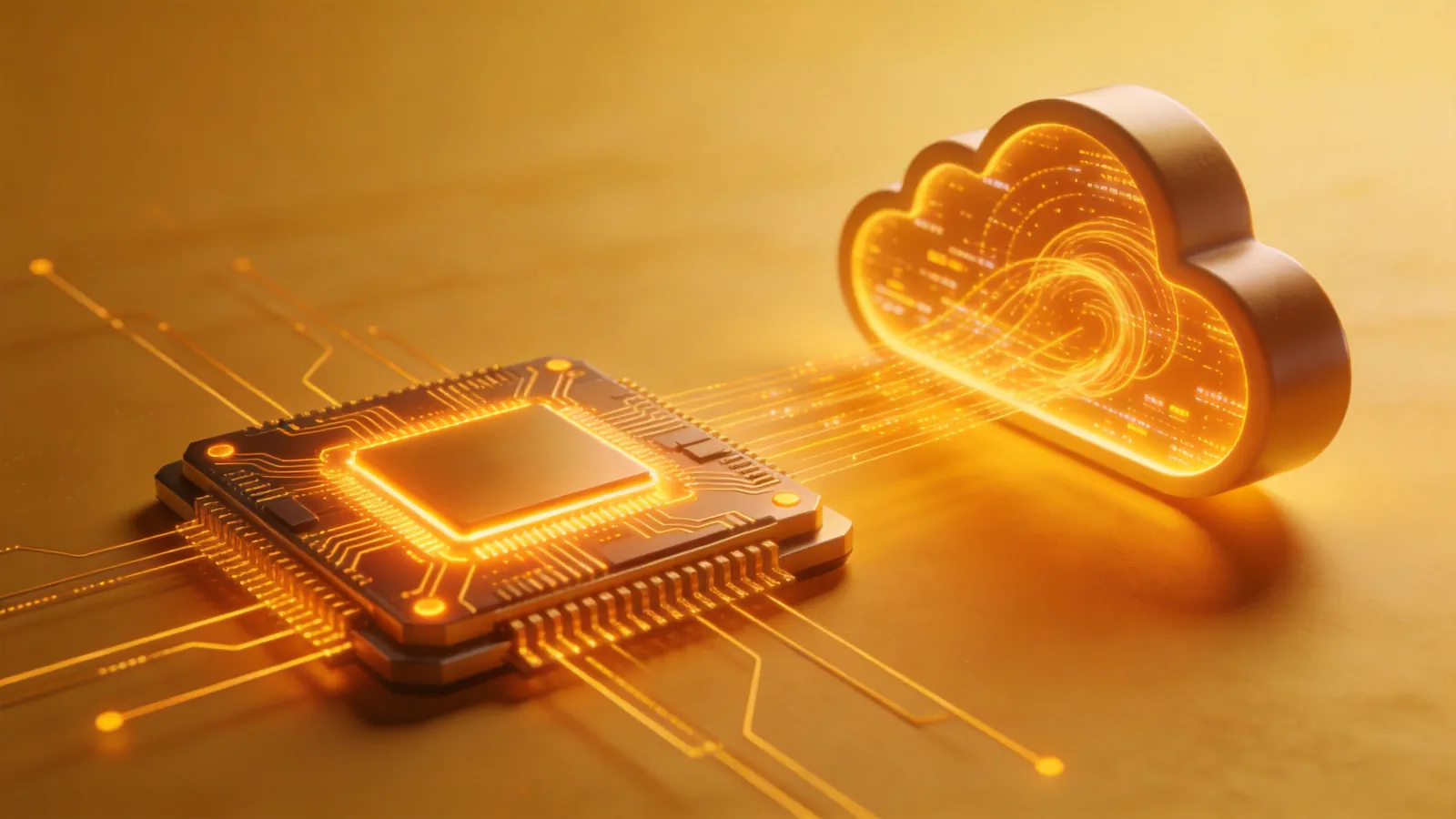
The Technical Foundation: The Leap in NPU Compute
The reason on-device AI has moved from concept to practical reality is fundamentally the exponential growth in chip compute.
| Chip | NPU Compute | Representative Device | Supported Model Size |
|---|---|---|---|
| Snapdragon 8 Gen 3 | 45 TOPS | Xiaomi 14 Ultra | 7B parameters |
| Snapdragon 8 Gen 5 | 75 TOPS | Samsung S25 Ultra | 13B parameters |
| Dimensity 9400 | 75 TOPS | vivo X200 Pro | 13B parameters |
| Apple A18 Pro | 38 TOPS | iPhone 16 Pro | 7B parameters |
| Huawei Kirin 9100 | 52 TOPS | Mate 70 Pro+ | 9B parameters |
What does 75 TOPS mean? In 2023, this number was still 45 TOPS—a 67% increase in two years. At this rate, flagship phone NPU compute will exceed 120 TOPS by 2027, at which point 30B-parameter models will run smoothly on phones.
More importantly, quantization technology has advanced significantly. INT4 quantization compresses a 7B model's memory footprint from 14GB to under 4GB while losing less than 2% of accuracy. This means mid-range phones can now run on-device large models—no longer exclusive to flagship devices.
But the story is bigger than just TOPS numbers. The ecosystem around on-device inference has matured in ways that are not captured by a simple compute metric. MLC-LLM, llama.cpp, and TensorRT-LLM have all seen orders-of-magnitude improvements in inference efficiency over the past 18 months. Techniques like speculative decoding, continuous batching, and hybrid quantization are squeezing more performance out of the same hardware. The 75 TOPS on a Snapdragon 8 Gen 5 delivers more usable AI performance than 75 TOPS would have delivered 18 months ago, because the software stack has gotten dramatically better at utilizing the silicon.
There is also an important architectural dimension: NPUs are not just getting more powerful, they are getting more specialized for AI workloads. Early NPUs were essentially vector processors with some matrix operation support. Modern NPUs have dedicated blocks for transformer attention computation, sparse weight handling, and dynamic shape processing. This specialization means that a 75 TOPS number today is not directly comparable to a 75 TOPS number from a different architecture—the effective performance on real LLM workloads can vary significantly depending on how well the NPU's architecture matches the computation patterns of modern language models.
Edge-Cloud Collaboration: Not Replacement, but Reconfiguration
Having said all this about on-device advantages, it does not mean cloud AI will disappear overnight. The more realistic picture is edge-cloud collaboration:
Lightweight tasks go on-device: Daily conversations, text summarization, translation, simple writing—these low-latency, high-frequency tasks are already fully within on-device AI's capabilities.
Complex tasks go to the cloud: Long document analysis, multi-step reasoning, large-scale code generation—these tasks requiring larger models and more compute still need cloud support.
The key change is this: on-device AI becomes the default entry point, and the cloud becomes a "plug-in accelerator." Just as phone storage evolved from "all cloud drive" to "local SSD + cloud backup," the AI usage paradigm is undergoing the same transformation.
Under this architecture, the Agent Computer form factor becomes clear—it does not need to be constantly connected to the network; it can complete most AI tasks locally, calling cloud resources only when "supercomputer" capability is needed. This is exactly the design philosophy that KaiheAiBox pursues: making AI capability as plug-and-play as electricity, rather than as network-dependent as broadband.
The edge-cloud collaboration model also solves one of the thorniest problems in current AI deployment: cost. Running inference on a local NPU costs effectively zero marginal dollars—the silicon is already paid for, and the electricity draw is minimal. Running inference on cloud GPUs costs real money per token. As on-device models improve, the economic incentive to keep tasks local becomes overwhelming for high-frequency, low-complexity tasks. The cloud becomes reserved for the long tail of tasks that truly require the largest models. This is not unlike how web browsers work: most rendering and computation happen locally; only specific requests go to remote servers.
The Industry Chain's Explosive Window
The rise of on-device AI is not an isolated event—it is spawning an entirely new industry chain:
Chip layer: Qualcomm, MediaTek, and Huawei HiSilicon are engaged in an arms race on NPU compute. Qualcomm has even launched a dedicated AI Hub platform, providing developers with on-device model deployment toolchains. The competition here is not just about raw TOPS—it is about developer ecosystem. The chip vendor that makes it easiest to deploy and optimize models on their hardware will win disproportionate market share, even if their raw performance is slightly behind. This is why Qualcomm's AI Hub and MediaTek's NeuroPilot are strategically so important—they are competing to become the "Android" of the on-device AI stack.
Model layer: Qwen2.5, Llama 3.2, Phi-3, and other small models are flourishing, specifically optimized for on-device inference. Alibaba Tongyi, Google Gemma, and others are all competing for position in the "on-device model" new track. The model layer is fragmenting by size and capability in a way that mirrors the early days of mobile apps—there will be lightweight models for simple tasks, medium models for complex reasoning, and specialized models for domain-specific work, all running on the same device and orchestrated by a routing layer.
Application layer: Phone manufacturers are rolling out on-device AI assistants—Samsung Galaxy AI, Xiaomi HyperOS AI, vivo BlueOS AI—all upgrading AI from an "app feature" to a "system-level capability." This is a profound shift. When AI is system-level, it can integrate across apps, access system state, and automate cross-app workflows in ways that a third-party app simply cannot. It also means the phone itself becomes the primary AI interface, rather than a web browser or a dedicated AI app.
Tool layer: MLC-LLM, llama.cpp, TensorRT-LLM, and other on-device inference frameworks are rapidly maturing, and the barrier to model deployment has dropped from "PhD level" to "developer level." This democratization of on-device AI deployment is critical because it enables a thousand flowers to bloom—startups, researchers, and indie developers can all experiment with on-device AI without needing a team of ML systems engineers.
The maturation speed of this industry chain exceeds expectations. In 2024, on-device AI phone penetration was below 15%; IDC predicts it will exceed 50% by 2026. Three years, a threefold increase—such growth is rare in any industry.
The Broader Implications: A Paradigm Shift in Computing
Stepping back from the technical details, the rise of on-device AI represents something larger: a potential reconfiguration of the entire computing stack.
For the past 15 years, the dominant trend in computing has been centralization. Data moved to the cloud, applications moved to the cloud, even processing moved to the cloud. The client device became a thin terminal whose primary job was to send inputs to a server and display outputs. This centralization brought enormous benefits—seamless synchronization, collaborative editing, infinite storage—but it also created dependencies, privacy vulnerabilities, and latency penalties.
On-device AI is not reversing centralization entirely, but it is reintroducing a powerful argument for local computation. When the most intelligent processing can happen on the device, the architectural rationale for sending everything to the cloud weakens. We may be entering a new era of computational balance—where the default is local, and the cloud is invoked selectively rather than universally.
This has implications far beyond phones. If on-device AI works on phones, it can work on laptops, on IoT devices, on cars, on factory equipment. The same NPU technology that powers on-device AI on a phone can be adapted to any edge device. The result is a world where intelligence is distributed rather than centralized—where every device has some degree of reasoning capability rather than needing to phone home for every intelligent action.
For the Agent Computer vision, this distributed intelligence model is essential. An Agent Computer that requires a constant cloud connection is a constrained Agent Computer—it works only when permitted by network policy, only when the cloud service is available, only when the user is willing to trust their data to a remote system. An Agent Computer with robust on-device AI is unconstrained—it works everywhere, for everyone, all the time.
What Happens to Cloud AI?
None of this means cloud AI is going away. Cloud AI will remain the leader in absolute capability for the foreseeable future. A 70B parameter model running on a cluster of H100s will outperform a 7B model running on a phone NPU for the hardest tasks. The question is not which is "better"—it is which is the right default.
The likely outcome is a stratification of the AI market. Cloud AI becomes the premium tier—used for the hardest problems, the longest contexts, the most complex reasoning. On-device AI becomes the standard tier—used for everything else. Most users, most of the time, will find on-device AI sufficient. They will only reach for cloud AI when they hit the limits of what the local model can do.
This is analogous to how computing works today. Most everyday computing happens on your local device—browsing, editing, communicating. You reach for a supercomputer (or a cloud compute service) only when you need to train a model, render a complex scene, or process a massive dataset. AI is moving toward the same tiered model.
For AI companies, this stratification has profound business model implications. The economics of cloud AI are well understood: compute-intensive, margin-constrained, scaling with usage. The economics of on-device AI are largely unexplored. Does the value accrue to chip makers? To device manufacturers? To model providers who license their models for on-device deployment? To app developers who build experiences on top? The industry is actively figuring this out, and the answer will shape the competitive landscape for the next decade.
Conclusion: The Beginning of a Paradigm Shift
Three days of testing convinced me: on-device AI is not a gimmick. It is the starting point of a paradigm shift.
When AI response goes from "seconds" to "milliseconds," when data goes from "uploaded to cloud" to "stays on device," when usage scenarios go from "needs network" to "available anywhere, anytime"—the relationship between human and AI changes from "I need you" to "you are right here with me."
Cloud AI will not disappear, but it will go from being the "only choice" to being the "premium option." Just as cars didn't eliminate bicycles but changed the default mode of transportation.
What on-device AI phones are doing is aligned with the Agent Computer vision: bringing AI down from the cloud altar and putting it in everyone's pocket. When AI no longer needs a network connection to function, true AI accessibility finally begins.
The next three years will determine whether this shift fully materializes. The technology is ready. The chips are ready. The models are ready. What remains is the slow work of ecosystem building—getting developers to build for on-device AI, getting users to trust it, getting the experience to feel seamless rather than novel. But the direction of travel is clear. The age of cloud-only AI is ending. The age of on-device AI is beginning.
KaiheAiBox | The Agent Computer for Everyone · AI Frontier Tracker