A Reality Check: OpenAI Agent Phone Targets 2027 Mass Production, 30 Million Units in Two Years
📖 Glossary
AI Box (also known as Agent Computer / Agent PC), is a dedicated local hardware device that runs AI Agents. Pre-installed with an AI agent management system, plug-and-play, running 24/7. Users can remotely command AI to work via Discord, Slack, Telegram, WhatsApp, and more.
1. Timeline Accelerates Dramatically: From 2028 to First Half of 2027
According to the latest supply chain survey from TF International Securities analyst Ming-Chi Kuo, OpenAI's first AI agent phone has moved its mass production timeline from the originally planned 2028 to the first half of 2027 — a full year ahead of market expectations.
Kuo projects that if development proceeds smoothly, combined shipments for 2027 and 2028 could approach 30 million units. For a company that has never shipped a piece of consumer hardware, that's an audacious target.
Two driving forces behind this acceleration stand out:
- IPO Narrative: OpenAI is expected to pursue an IPO by late 2026. A hardware product that defines "AI-native interaction" is exactly the story capital markets want to hear.
- Closing Window: The AI agent phone race is rapidly intensifying. Samsung, Apple, and Google are all ramping up on-device AI capabilities. The first-mover advantage window is extremely narrow.
This isn't just about product timing — it's a dual race of capital narrative and market positioning.
2. Hardware Ambition: Architecture Matters More Than Specs
Early disclosed specifications reveal several key architectural signals:
Dual NPU Architecture: Heterogeneous AI computing splits inference workloads across NPU cores by latency and power requirements. This is a prerequisite for smooth on-device large model inference — a single NPU inevitably creates queueing delays under mixed workloads.
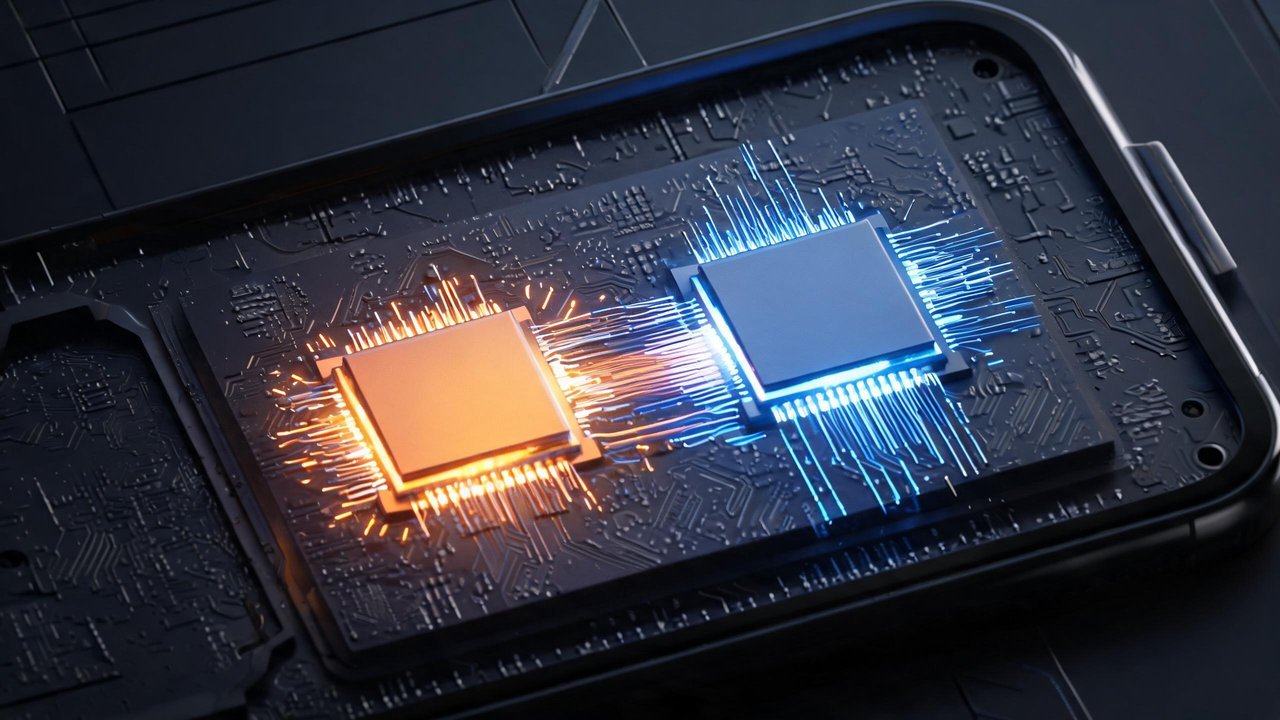
Security Reimagined: The introduction of pKVM (Protected Kernel-based Virtual Machine) and inline hashing isolates the AI Agent's execution environment at the hardware level. The Agent operates in its own secure domain, strictly separated from user data and application layers — the foundation for users trusting an AI to handle emails, book flights, and process payments.
Generational Storage Leap: LPDDR6 memory and UFS 5.0 storage. LPDDR6 delivers over 40% bandwidth improvement over LPDDR5X. For on-device inference running 7B-13B parameter models continuously, memory bandwidth — not compute — is the real bottleneck.
Perception-First ISP: The image signal processor is designed for real-world visual perception, not better photography. The camera's primary job is giving the AI Agent "eyes" rather than serving the user's photo needs.
3. Supply Chain Signal: MediaTek's Quiet Victory
The most telling supply chain detail: MediaTek has most likely beaten Qualcomm to become OpenAI's exclusive SoC provider, with a customized Dimensity 9600 chip.
The logic is clear:
- Customization Flexibility: MediaTek offers deeper customization than Qualcomm's standardized approach, allowing OpenAI to re-architect NPU, ISP, and memory controller weightings.
- Cost Structure: A 30-million-unit target demands tight BOM control. MediaTek's pricing is more competitive than Qualcomm's.
- Vendor Diversification: OpenAI clearly doesn't want to depend on any single chip ecosystem — a strategy that echoes Apple's silicon independence.
4. 30 Million Units: Ambition or Delusion?
Two years, 30 million units. Aggressive for any newcomer. But let's break down the logic:
- Market Context: Global smartphone shipments were ~1.2 billion in 2024. 30 million is only 2.5%. The premium segment ($600+) is ~350 million units — 30 million would be about 8.6% of that.
- Timing Window: 2027-2028 marks the transition from AI phone "proof of concept" to "mainstream adoption." Upgrade intent is at an inflection point.
- Brand Leverage: OpenAI's consumer brand recognition far exceeds any phone startup's debut. First-product attention is a natural tailwind.
The real uncertainty isn't demand (the AI phone market is genuinely expanding), but supply chain ramp and whether the AI Agent experience truly delivers. There's a vast gap between "a phone that helps write emails" and "a phone that genuinely understands your intent and completes tasks proactively."
5. The Real Variable: Who Defines the Next Interaction Paradigm?
If this were just about putting ChatGPT in a phone, it could have been done three years ago. OpenAI's core bet isn't "AI features" — it's an AI-native interaction paradigm:
- Input shifts from touch + typing to voice + vision + intent understanding
- The OS shifts from app grids to agent task flows
- Users stop "open app → operate → close" and start "say something → agent completes → notification"
This is what truly worries Apple and Google. If OpenAI captures the definition of AI agent phone interaction, iOS and Android ecosystem moats get shaken at their foundations — users won't care what OS they're running, only which agent understands them better.
6. The Anchor Value of Local AI Infrastructure
OpenAI's phone targets — 30 million devices running 7B+ models locally, with continuous perception and agent execution — validate a broader trend: AI's real battleground is shifting from cloud to edge.
This is precisely where KAIHE AI has been investing. While OpenAI validates consumer AI agent value on phones, KAIHE is delivering the same philosophy on desktop and enterprise: the A1-C1 mini PC comes pre-installed with the OpenClaw agent framework, and the E1-G1 series supports 70B-class local model inference. All data stays on-device. No token fees.
The OpenAI phone story underscores a logic that's gaining mainstream acceptance: future AI shouldn't just be cloud API calls. It should be local intelligence residing on devices at everyone's fingertips — always online, privacy-respecting, and genuinely personal.
Whether OpenAI's phone ultimately disrupts the market or crashes trying, it has already blown open the biggest ceiling in consumer electronics: AI Agents don't belong trapped in browsers. They belong in a device you carry with you — a true digital companion.