OpenAI Considers Major Token Price Cuts: The Token Price War Reaches America — What It Means for Developers
📖 Glossary
AI Box (also known as Agent Computer / Agent PC), is a dedicated local hardware device that runs AI Agents. Pre-installed with an AI agent management system, plug-and-play, running 24/7. Users can remotely command AI to work via Discord, Slack, Telegram, WhatsApp, and more.
Abstract: According to a June 11 Wall Street Journal report, OpenAI is considering significantly reducing token pricing to compete with Anthropic for enterprise customers. Altman recently stated publicly that OpenAI would continue reducing costs. The token price war has spread from China to the US — and it brings real implications for developers and businesses.
Chinese AI players have been battling a price war for a year. Now it's America's turn.
On June 11, the Wall Street Journal reported, citing sources, that OpenAI is considering substantially lowering token prices. The reason is straightforward: competing with Anthropic for customers.
The Context Behind the Price Cuts
Over the past year, China's large model price war has been fierce. DeepSeek, Doubao, Tongyi Qianwen — all have taken turns cutting prices. The cost per million tokens dropped from tens of yuan to just a few yuan, or even less.
The US market is a beat behind, but the trend is the same. Enterprise users are voicing discontent over high AI call costs — every call costs money, the more you use the more you spend, and scaling AI applications requires overcoming a hard cost barrier.
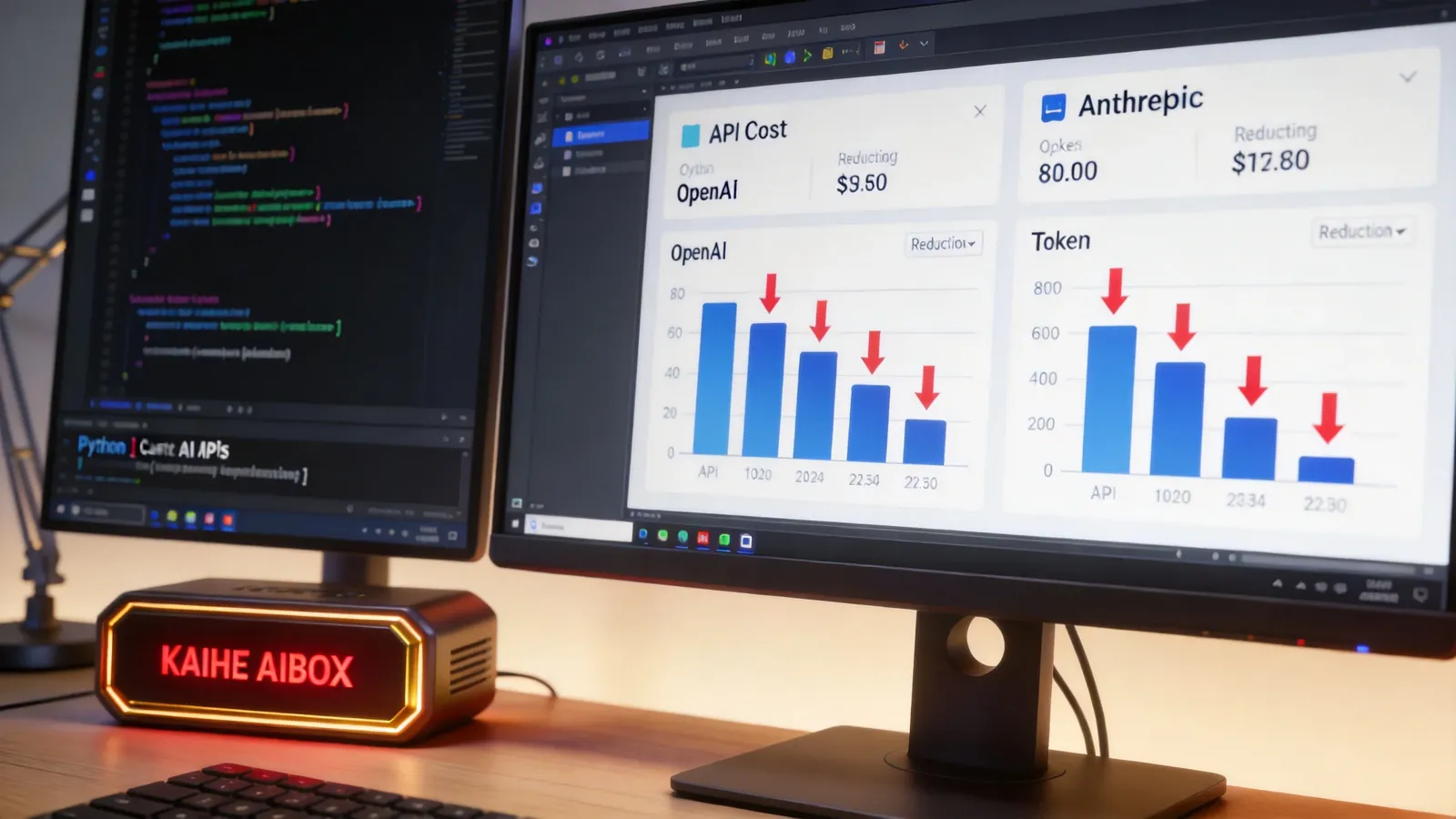
OpenAI CEO Altman recently stated publicly that OpenAI will continue reducing costs. The WSJ report essentially brought internal discussions into the open.
Why Now
Two reasons.
First, the Anthropic threat. Claude has won significant enterprise market share, especially in coding and Agent scenarios. OpenAI needs pricing to defend its turf.
Second, market scale is expanding. AI is moving from experimental to production phase, and call volume growth is far exceeding expectations. Lower prices don't necessarily mean lower revenue — if volume grows fast enough, lower prices can actually drive more revenue. Classic economies of scale logic.
What It Means for Developers
Short-term: More confidence in scaling calls
Many developers building AI applications have had Token cost as their biggest headache. Every user query costs money. As daily active users rise, costs balloon.
If OpenAI actually cuts prices — and with domestic models already priced aggressively — developers have more options. Use OpenAI's models for core logic, domestic models for high-frequency calls. Balancing cost and quality becomes easier.
Medium-term: Price isn't everything
Price cuts are just an entry ticket. When choosing a model, developers consider more than price: - Stability: Does the API stay up? - Latency: Can real-time apps handle it? - Context window: Long document capability? - Tool calling: How good for Agent scenarios? - Data compliance: Can enterprise data cross borders?

After the price war shakes out, what matters is comprehensive value, not just cheapness.
Long-term trend: Tokens get cheaper, but Agent call volume grows exponentially
A counterintuitive phenomenon: the cheaper models get, the lower the per-call cost — but total spend doesn't necessarily drop. Because you use AI in more scenarios.
Before, AI was only used in core business operations. After cost reduction, customer service, operations, data analysis, content generation — all can connect to AI. Per-scenario cost drops, but the number of scenarios multiplies.
Especially with Agent scenarios. A single Agent executing one task may involve 5-10 model calls. The more Agents spread, the faster Token consumption grows. Model prices drop, but your Agent usage might have increased 10x.
Local Agents: The Other Side of Price Cuts
Cheaper models make cloud calls more affordable. But that doesn't mean everyone should send their data to the cloud.
Some scenarios are naturally suited for local processing: internal enterprise data, customer privacy information, financial data. Even if tokens were free, this data shouldn't leave the network.
The value of local Agents isn't about "saving money" — it's about "data never leaves your device." Cloud models handle the heavy inference that requires massive compute, while local Agents handle privacy-sensitive task scheduling and data routing. Two paths running in parallel, each doing what it does best.
Want to Go Deeper?
"DeepSeek V4 Open Source: The Era of Million-Token Context for Everyone Arrives" — domestic model pricing trends "Claude Opus 4.8 Takes the Crown: Coding Benchmarks Crush GPT-5.5" — Anthropic's product competitiveness
-#OpenAI #TokenPricing #AICost #LargeModels #AIAgent
Kaihe AIBOX | The Agent Computer That Works 7×24 for You · AI Frontier