GPT-6 Astra has been all over the news this week, with headlines getting louder by the hour. But most readers walk away remembering only the phrase "AGI is here," without understanding what GPT-6 actually changes for them, and even less what it has to do with the device sitting in their home. This article first explains what truly matters about GPT-6, then the questions it leaves unanswered, and finally where KAIHE AIBOX stands in this shift.
What GPT-6 Is Strong At: It Starts Using a Computer Like a Person
📖 Glossary
AI Box (also known as Agent Computer / Agent PC), is a dedicated local hardware device that runs AI Agents. Pre-installed with an AI agent management system, plug-and-play, running 24/7. Users can remotely command AI to work via Discord, Slack, Telegram, WhatsApp, and more.
In the past, you talked to an AI and it gave you an answer; the actual work was still on you. What is different about GPT-6 Astra is that it begins to operate a computer the way a new hire would: it reads the screen pixels, moves the mouse and keyboard, opens a browser, reads and writes files, runs code, debugs its own failures, and finally hands back a finished result. You give it a goal — "build a financial analysis and turn it into a presentation," or "prototype a game and test whether it runs" — and it breaks the steps down, calls tools, executes continuously, and delivers.
The demos that landed with real visual punch: in KiCad it reads a circuit schematic and finishes component placement and copper routing in 2 minutes 54 seconds; in Blender it builds a 3D house model and imports it into Unreal Engine 5 for a real-time walkthrough; you speak to it and it runs the entire eBay listing flow on its own. On the OSWorld 2.0 benchmark it scored 72.6%, averaging 40 minutes per task versus 75 minutes for the previous generation — roughly a 47% drop in time.
The weight of this is not another set of high scores. It is that AI's boundary has moved from "generating content" to "executing complete workflows." You describe the outcome, it delivers the outcome, and you do not manage the steps in between. That is a change in the nature of the capability.
But There Are Questions GPT-6 Cannot Answer Itself
The capability went up, yet GPT-6 leaves several questions it cannot answer — and these are exactly what ordinary people should care about most:
First, where does the work actually happen? Astra's Computer Use is essentially a cloud brain "borrowing" your computer environment to operate — the thinking lives in OpenAI's servers, and the operation runs in a desktop environment it schedules. It works for you, but the "place" and the "brain" of the work are not in your hands.
Second, whose house does the data stay in? When it processes your client list, financial sheets, or private chats, the flow of that data is decided by the cloud vendor, not by you.
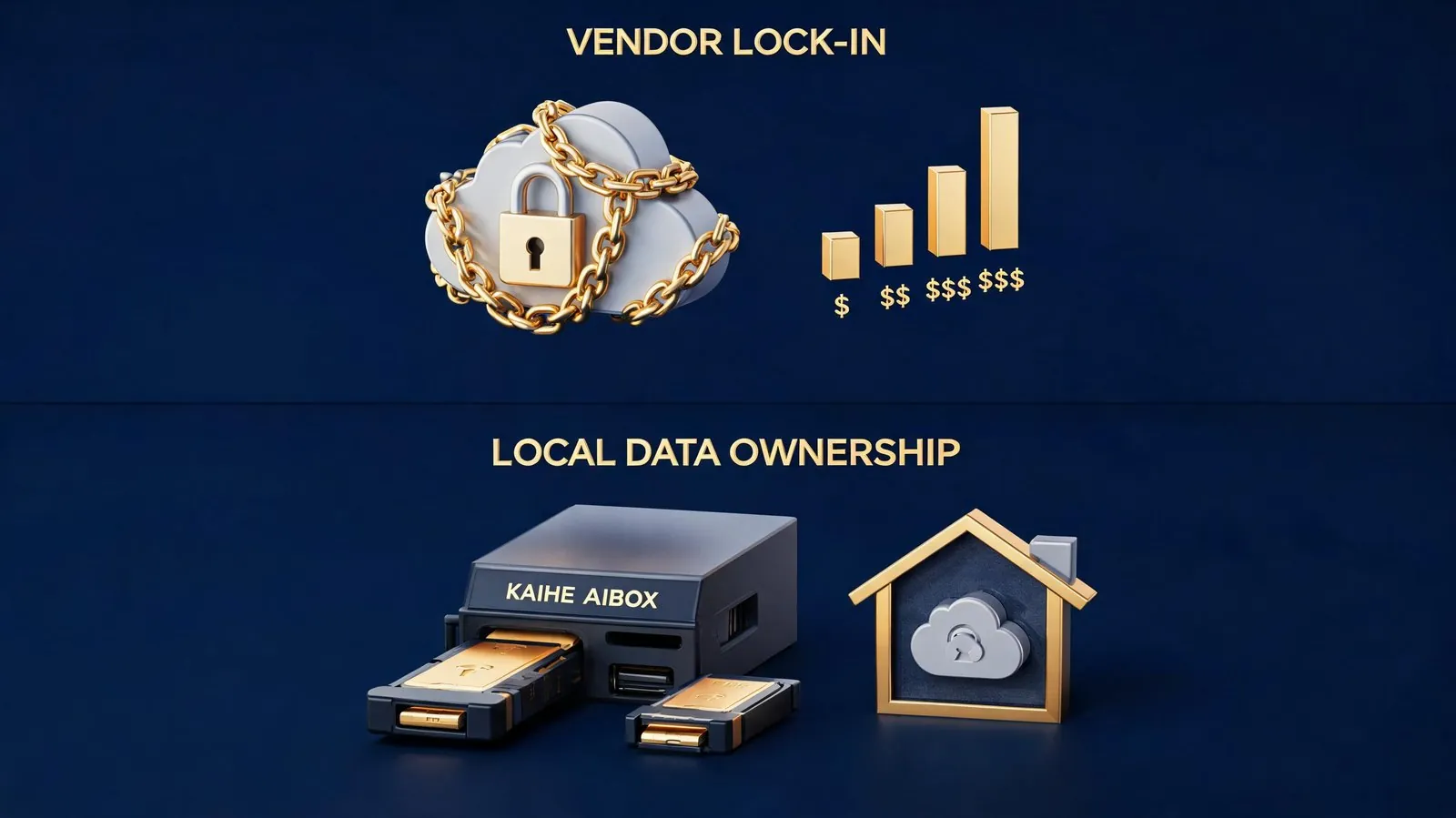
Third, who controls the cost? GPT-6 is OpenAI's API, priced at $10 per million input tokens and $50 per million output tokens — 2.5 times the previous generation — and billed by usage. The more you use it, the tighter it binds you.
Fourth, can it stay resident? It responds on demand, but it cannot, after you fall asleep, run your next day's tasks on a schedule by itself — that is the job of a different product form.
Taken together, these point to one thing: when the era of AI truly working for you arrives, do you plug it into someone else's cloud, or keep it at home?
KAIHE AIBOX: A Local Agent Base That Connects Any Model API
KAIHE AIBOX plays the role of "someone staying home on guard." It is a local Agent computer that runs an open-source Agent framework like Hermes locally, responsible for breaking down tasks, storing workflows, and managing private data. And a large model like GPT-6 is, for KAIHE AIBOX, simply a "strongest tool" it can connect to at any time — the base stays the base, the model stays the model; keeping the two separate makes both stronger.
Connecting GPT-6 into KAIHE AIBOX gives you a combination a cloud-only solution cannot match on its own:
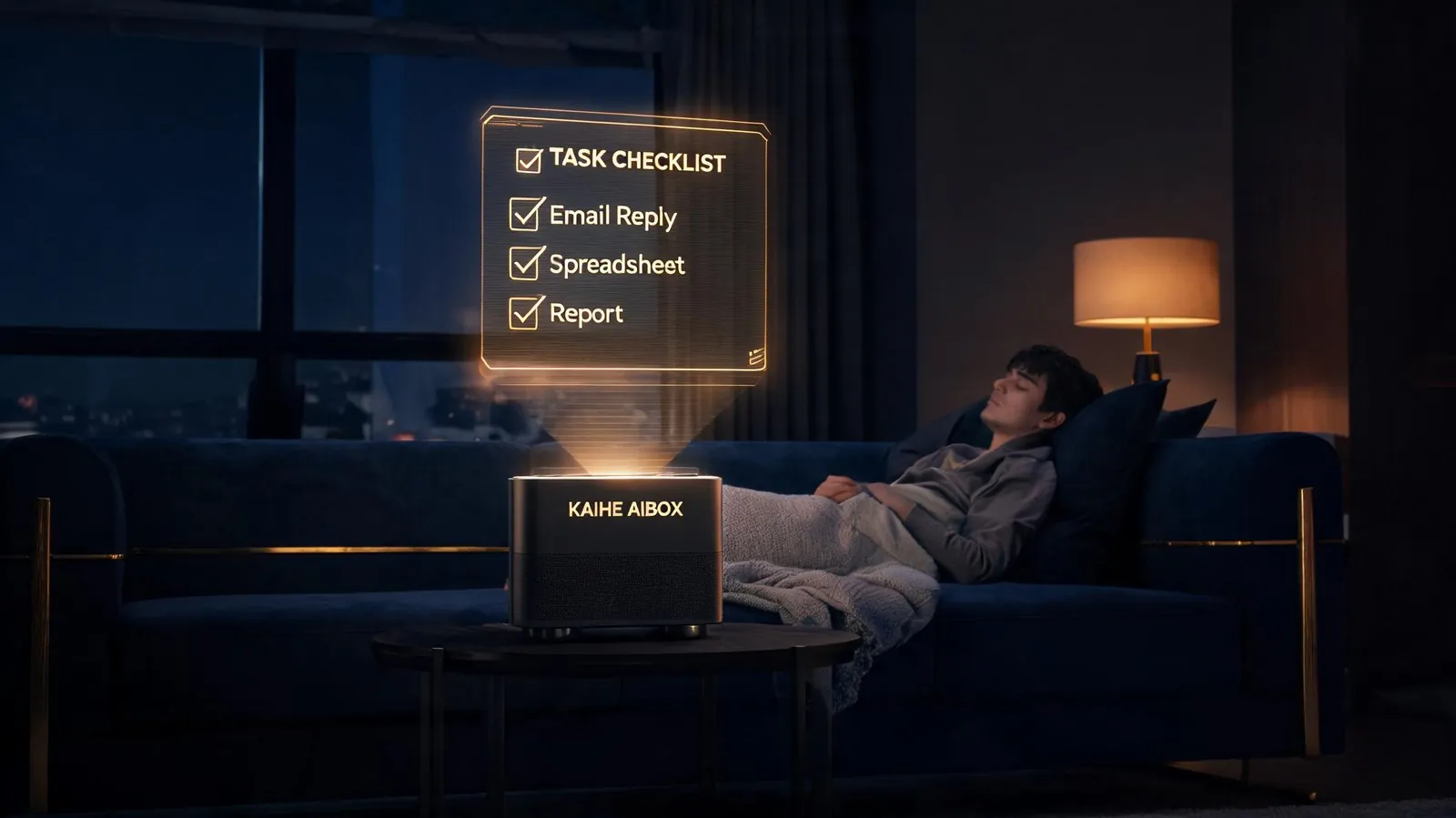
The computer is off, the phone is locked, yet the work keeps running. KAIHE AIBOX is a 7×24 low-power resident device; scheduled tasks execute on their own when due. GPT-6 does the work in the cloud, KAIHE AIBOX guards the flow locally, and queues the next morning's multilingual customer replies at midnight while you sleep.
Work memory and workflows settle locally. The reporting flow you ran for a month, the client-follow-up scripts, the weekly-report template — all stored on the local drive. You can swap models anytime; these accumulations are not lost. A cloud-only solution re-feeds context every time, and when the model changes, the habits you tuned are wiped.
Data sovereignty is in your hands. Sensitive work — anything touching client lists or financial sheets — can stay local and run on a local model; only general work calls GPT-6. What leaves locally and what stays local is your call, not the vendor's default of taking everything.
A concrete picture: you are a small cross-border e-commerce seller handling twenty-language customer emails daily, importing orders into spreadsheets, generating daily reports. GPT-6 handles the strong parts — writing multilingual replies, doing data analysis. KAIHE AIBOX orchestrates the whole flow locally: triggers on schedule, calls the model, stores history, queues the next morning's replies by midnight. Customer data and orders never leave that small box at home; only a generic request like "write an English reply" goes to the cloud. You keep the strong model's power and hold onto ownership and privacy.
Combined, What Bigger Change Does It Mean for Ordinary People
A GPT-6 alone gives an ordinary person "a stronger cloud tool, but one you pay for, with data in someone else's hands, and that binds you." A KAIHE AIBOX alone gives "a local steward, but with limited model power." Combine the two and the change is more than "1+1":
More. You no longer have to choose between "strong but not in your hands" and "in your hands but not strong enough." KAIHE AIBOX wired to GPT-6 turns its strengths into your daily flow — writing, spreadsheets, customer service, scheduling, all automated, and ready to swap in a stronger model at any time.
Bigger. This is the first time an ordinary person can truly "own a local AI partner that works for them," rather than "rent someone else's brain once." It remembers your last quarter's report format, last month's client preferences, works for you at midnight, and keeps all data at home. AI moves from "someone else's cloud service" to "a permanent member of your household" — a leap far more important than how many times stronger a single call is.
Better for ordinary people. You do not need to understand models, manage APIs, or bet on which vendor wins. The base is bought once, the model is on demand; whoever raises prices gets swapped, and your workflow and memory are always your own assets. For small shop owners, content creators, and freelancers this is especially real — they are not unable to afford a few calls; they cannot afford the long-term binding of "the more you use, the more expensive, and you dare not stop." Base bought once, model on demand — that is the sustainable posture.
Don't Get Carried Away by "AGI Is Here"
One last note on proportion. Astra's Computer Use is genuinely a qualitative leap, but the most easily amplified part of the coverage is "the AGI era has arrived." The person who said "welcome to the AGI era" was OpenAI president Brockman, and his wording was careful — "people may one day look back at this model as the point AGI arrived," a personal judgment, not an official announcement. OpenAI's official definition of Astra is "a new generation of intelligence," with no mention of AGI at all. The independent evaluator Artificial Analysis scored Astra's intelligence at 61, tied for fifth with the previous generation. It is strong — a new tool, not the end of the world nor a savior.
What ordinary people should watch is not "did it reach AGI," but "such a strong tool — how do I bring it into my life without being bound by it." To see how AI keeps working after you turn off your computer, read: AI keeps working after hours. Why we place the Agent locally rather than betting everything on the cloud is spelled out here: Why the Agent computer is not installed in your PC. What happened when Doubao and Qianwen killed third-party Agents is also worth comparing: When the giants kill your Agent, a local base is the way out.
To get started with a local Agent computer that connects any large model, look here: KAIHE AIBOX-A1, and the full lineup is at our store.
Further Reading
- AI keeps working after hours — the real landing of 7×24 offline automation
- Why the Agent computer is not installed in your PC — the positional difference between local base and cloud solution
Learn More 请搜索【KAIHE AIBOX】
Welcome to contact email: [email protected]