Is OpenAI's App-Free Phone the Same as What OpenClaw is Trying to Do?
📖 Glossary
AI Box (also known as Agent Computer / Agent PC), is a dedicated local hardware device that runs AI Agents. Pre-installed with an AI agent management system, plug-and-play, running 24/7. Users can remotely command AI to work via Discord, Slack, Telegram, WhatsApp, and more.
Summary: OpenAI's recent app-free phone concept has sparked widespread discussions about the ultimate form of human-computer interaction in the AI era. This article compares OpenAI's app-free phone approach with OpenClaw's local Agent route, exploring two fundamentally different paths: the complete disappearance of traditional apps versus AI acting as an autonomous agent to operate apps on behalf of humans. We analyze the technical tradeoffs, business implications, and future trends of each approach, providing valuable reference for developers, enterprises, and technology decision-makers.
1. Background: The Coming of App-Free Era
In early 2026, OpenAI made headlines with its demonstration of a revolutionary smartphone concept that completely eliminates the need for traditional apps. Instead of navigating through a grid of app icons, users simply speak or type their requests in natural language, and AI directly invokes the necessary services to complete the task. This demonstration marked the most concrete vision yet of what a post-app world might look like.
1.1 Core Logic of OpenAI's App-Free Phone
OpenAI showcased an app-free phone at its latest press conference, where users can complete various tasks through natural language instructions, from booking tickets to shopping, from searching to editing documents. Its core idea is radical in its simplicity: - Completely abandon the traditional App Store model and app icon grid interface - All services are dynamically composed and invoked by AI from cloud APIs based on user intent - No need for users to manually download, install, update, or organize apps - AI handles all the complexity of service orchestration behind the scenes
The vision is compelling: instead of you having to remember which app does what, find it on your home screen, open it, navigate through menus, and perform the steps yourself — you just tell AI what you want, and it does all that work for you.
1.2 OpenClaw's Local Agent Route
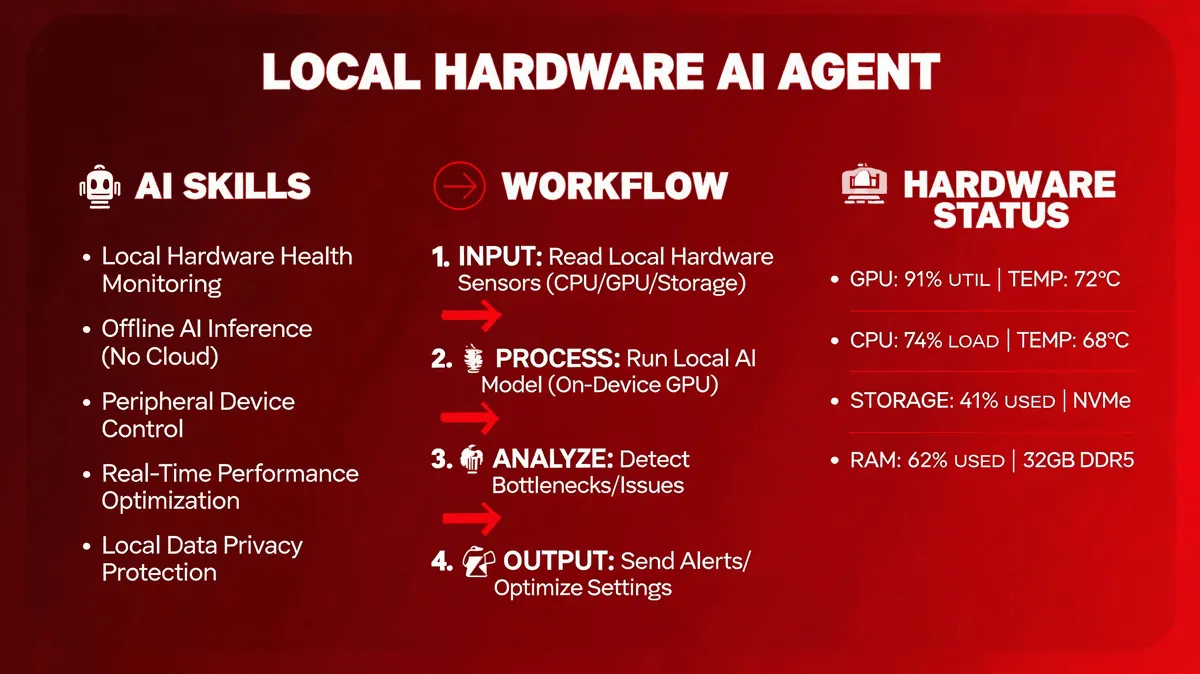
OpenClaw has taken a fundamentally different path compared to OpenAI's cloud-centric approach: - Run AI Agent based on local hardware, with all computation happening on your own device - All operations are completed locally without relying on cloud connectivity or sending sensitive data to third-party servers - Full support for user-defined Skills and customizable workflows that adapt to your specific needs - Privacy-by-design architecture keeps your data under your complete control
While OpenAI is building a world where AI lives in the cloud and serves you through thin clients, OpenClaw believes that the most valuable AI agents should live right alongside you on your own hardware.
2. Core Differences: Cloud VS Local
The debate between cloud-centric AI versus local AI is not new, but the app-free phone concept brings this debate into sharp focus. The two approaches differ dramatically in architecture, privacy model, performance characteristics, and customization capabilities.
2.1 Architecture Comparison
| Dimension | OpenAI App-Free Phone | OpenClaw Local Agent |
|---|---|---|
| Computing Resources | Cloud-dominated, client handles only UI and input/output | Local-dominated, all core AI computation happens on device |
| Data Privacy | User requests and data must be uploaded to OpenAI's cloud for processing | All data stays on your local device, never leaves without your explicit permission |
| Response Speed | Depends on network latency and cloud server load, typically 500ms to several seconds | Real-time local response, usually under 100ms even for complex tasks |
| Offline Capability | Basic functions may work offline, but most advanced features require cloud connectivity | Full functionality works completely offline, no internet required |
| Customization Capability | Limited, controlled by OpenAI's platform policies and API ecosystem | Highly customizable, users can create and share their own Skills, modify existing ones |
| Cost Model | Pay-per-token API pricing, ongoing operating costs | One-time hardware purchase, no recurring token fees |
| Scaling | Easy to scale by adding more cloud servers | Limited by the hardware capabilities of the local device |
2.2 Application Scenario Comparison
Different architectures shine in different use cases, and understanding these differences helps you choose the right approach for your needs:
-
OpenAI App-Free Phone: Suitable for ordinary consumers, lightweight daily use cases, users who value convenience over privacy and customization, and tasks that don't involve sensitive data.
-
OpenClaw Local Agent: Suitable for enterprises, developers, privacy-conscious users, and scenarios involving sensitive business data or personal information. It's also ideal for environments where reliable internet connectivity cannot be guaranteed.
3. The Ultimate Form of Human-Computer Interaction
So which vision represents the true "ultimate form" of human-computer interaction in the AI age? Let's examine the strengths and weaknesses of each path.
3.1 Future Trends of the Two Paths
Path 1: Disappearance of Apps (OpenAI Route)
When AI is powerful enough to understand all users' natural language needs and directly compose services to fulfill those needs, apps may indeed disappear from the consumer-facing interface. From the user's perspective, they don't need to think about apps at all — they just express their intent, and AI handles the rest.
However, this model comes with significant tradeoffs: - It requires enormous cloud computing infrastructure, which translates to ongoing operating costs that are passed back to users either through subscription fees or data monetization - Because all processing happens in the cloud, user data must be shared with the AI provider, creating privacy risks - The model is inherently dependent on network connectivity, which can be unreliable in many scenarios - Innovation is gated by the platform provider — if OpenAI doesn't want to support a certain type of service, developers can't easily add it
Despite these challenges, there's no denying that for many simple consumer use cases, this approach delivers incredible convenience. For someone who just wants to book a restaurant reservation or check the weather, having AI do it all for you without opening an app is undeniably better than the current approach.
Path 2: AI Replacing Humans in Operating Apps (OpenClaw Route)
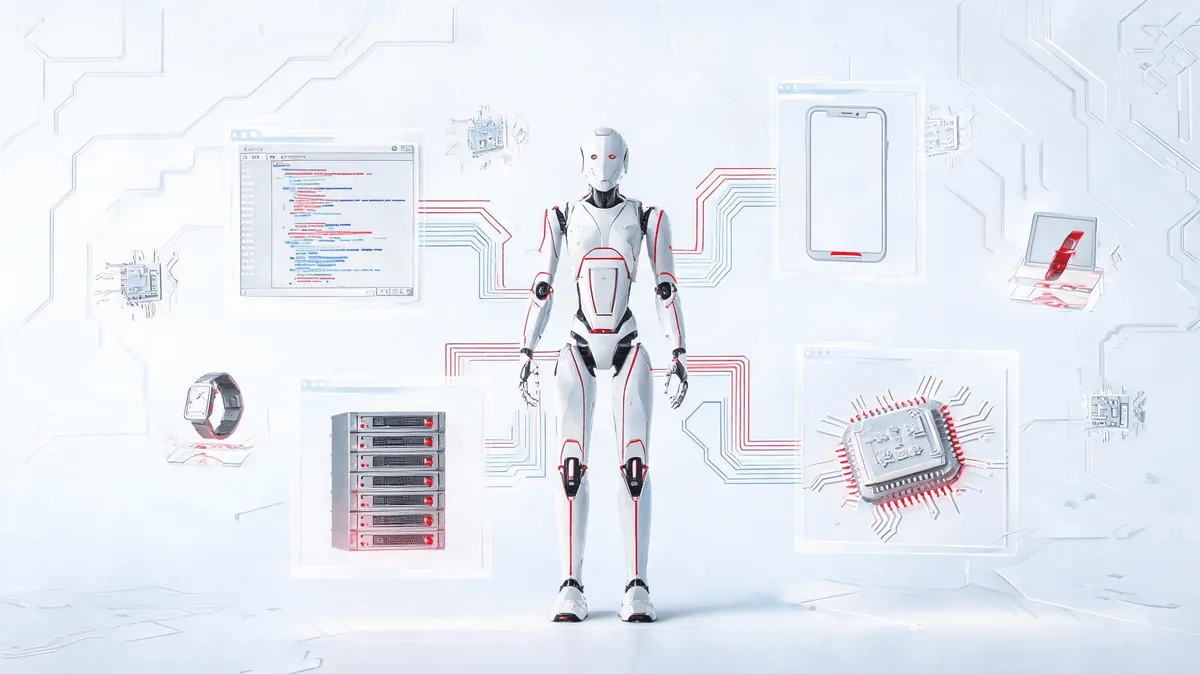
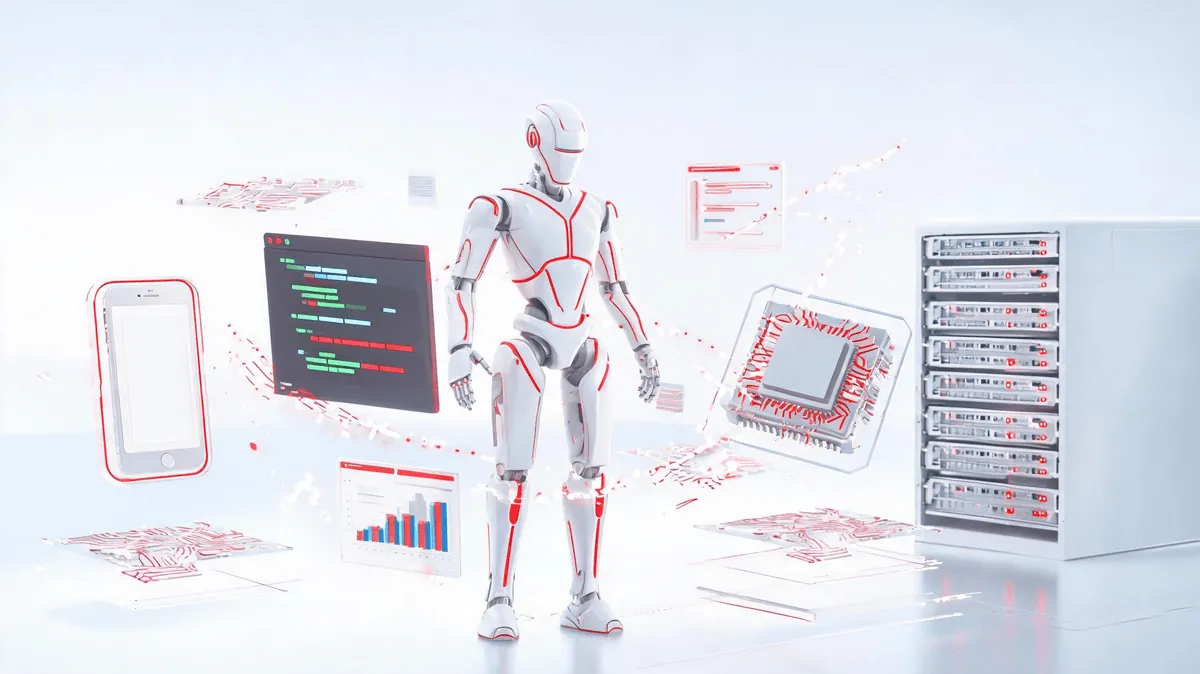
Another possibility — and the one that OpenClaw embraces — is that AI acts as an autonomous agent that works with the existing app ecosystem, rather than trying to replace it entirely. Instead of eliminating apps, AI learns how to operate them just like a human would: it sees the screen, understands what's there, finds the buttons, clicks them, fills out forms, and navigates through workflows.
This approach has several key advantages: - It works with the existing trillion-dollar app ecosystem that already exists, rather than requiring everyone to rebuild everything as APIs - Since all the automation happens locally on your device, your data never leaves your control - It works offline because everything is running locally - Developers and users can create custom Skills for any app or workflow, without asking for permission from a central platform - You still have the option to step in and take over manually at any point if AI makes a mistake
This model is more incremental and evolutionary rather than revolutionary, but that's actually one of its strengths. It doesn't require everyone to throw away their existing infrastructure and start over.
4. Why Privacy Matters More Than Ever
In the debate between these two approaches, privacy is one of the most decisive factors. As AI becomes more capable and integrated into every aspect of our lives, it collects and processes more and more personal information. The question of who controls that data becomes increasingly important.
With OpenAI's cloud-centric approach, your conversations, your requests, your preferences — all of this data goes to OpenAI's servers. While they have privacy policies that promise not to misuse it, the fact remains that your personal data is stored on someone else's servers. There's always risk of data breaches, unauthorized access, or misuse for commercial purposes.
With OpenClaw's local approach, all data stays on your device. The AI works with your data locally, and it never needs to send it anywhere unless you explicitly choose to share it. This is particularly important for: - Business users handling sensitive company information - Individuals handling personal financial, health, or legal data - Organizations in regulated industries with strict data residency requirements - Anyone who values their privacy and wants to maintain full control over their own information
At KaiheAiBox, we believe that privacy isn't just a nice-to-have feature — it's a fundamental requirement for AI that people can trust long-term.
5. KaiheAiBox's Choice and Practice
As a leader in local AI agent computers, KaiheAiBox has chosen to bet heavily on the OpenClaw local Agent route. Why did we make this choice? Because we believe three things deeply:
-
Data privacy is the core: For enterprises and individual users alike, data security and privacy will only become more important over time, not less. Users are increasingly aware of the value of their data, and they don't want to give it away for free to large technology companies. By keeping everything local, we ensure that users always remain in full control.
-
Offline use is a rigid demand: In many real-world scenarios, you don't have reliable high-speed internet connectivity. This is true in many industrial settings, in remote locations, even sometimes just on the go when your mobile data drops. If your AI agent depends on the cloud, it becomes useless when you don't have connectivity. With a local agent, it just keeps working no matter what.
-
High customization is the future: One size never fits all when it comes to AI workflows. Different organizations have different processes, different compliance requirements, different use cases. The future of AI isn't one-size-fits-all from the cloud — it's customizable AI that adapts to your needs. OpenClaw's Skill architecture enables exactly this: anyone can create a Skill for their specific use case, share it with others if they want, or keep it private internally.
We've seen this firsthand with our customers. Enterprises love the fact that they can deploy OpenClaw on their own hardware, keep all their data within their own network, and customize it to integrate with their existing systems. Individual developers love the flexibility to experiment and create new workflows without asking anyone for permission.
6. The Cost Advantage of Local AI
Another often overlooked advantage of the local AI approach is the cost model. With cloud-based AI like OpenAI's approach, you pay per token for every request. This can add up quickly, especially if you're running automated workflows that make many requests throughout the day. For a business running multiple AI agents 24/7, the monthly costs can easily run into thousands or tens of thousands of dollars.
With local AI running on your own hardware, you make a one-time purchase of the hardware, and there are no ongoing token fees. Even though the upfront hardware cost is higher, over the long term it's almost always cheaper than paying per token to a cloud provider — especially for heavy users. This is one of the key reasons why many businesses are already shifting toward local AI deployment: it gives them more predictable costs and better budget control.
At KaiheAiBox, this is one of our core value propositions: we provide hardware with OpenClaw pre-installed and optimized, so you can start using local AI immediately without any complicated setup, and you never pay any token fees no matter how much you use it.
7. Conclusion and Outlook
OpenAI's app-free phone represents an exciting vision for the future of human-computer interaction, where AI handles all the complexity and you just focus on what you want to accomplish. It represents the cloud-first approach that has dominated the tech industry for the past two decades.
OpenClaw's local agent route takes a different tack: instead of eliminating apps, it makes AI the automation layer that works with existing apps, keeps everything local for privacy and reliability, and gives users full control and customization capabilities.
These two paths are not mutually exclusive — they serve different use cases and different user needs. For ordinary consumers doing simple everyday tasks, OpenAI's app-free approach offers unbeatable convenience. For enterprises, developers, privacy-conscious users, and anyone with sensitive data, OpenClaw's local approach is almost certainly the better choice.
The future of human-computer interaction will likely have room for both approaches. Cloud AI will handle general-purpose tasks where privacy isn't a major concern, and local AI will handle the sensitive, customized, business-critical workflows where privacy, reliability, and control matter most.
At KaiheAiBox, we're convinced that local AI is the future for most real-world business applications. The combination of privacy, offline capability, customization, and predictable one-time pricing makes it a compelling choice that will only grow in popularity as AI becomes more integrated into business operations.
Whether you choose cloud or local depends on your specific needs, but we believe that more and more organizations will discover that for their critical workflows, local AI with OpenClaw on KaiheAiBox hardware gives them the best combination of capability, privacy, and value.
KaiheAiBox| Agentaibox that lets AI work for you 24/7· OpenClaw Zone