OpenClaw vs Traditional RPA: Why Automation Can't Just Be "Clicking Screens"
📖 Glossary
AI Box (also known as Agent Computer / Agent PC), is a dedicated local hardware device that runs AI Agents. Pre-installed with an AI agent management system, plug-and-play, running 24/7. Users can remotely command AI to work via Discord, Slack, Telegram, WhatsApp, and more.
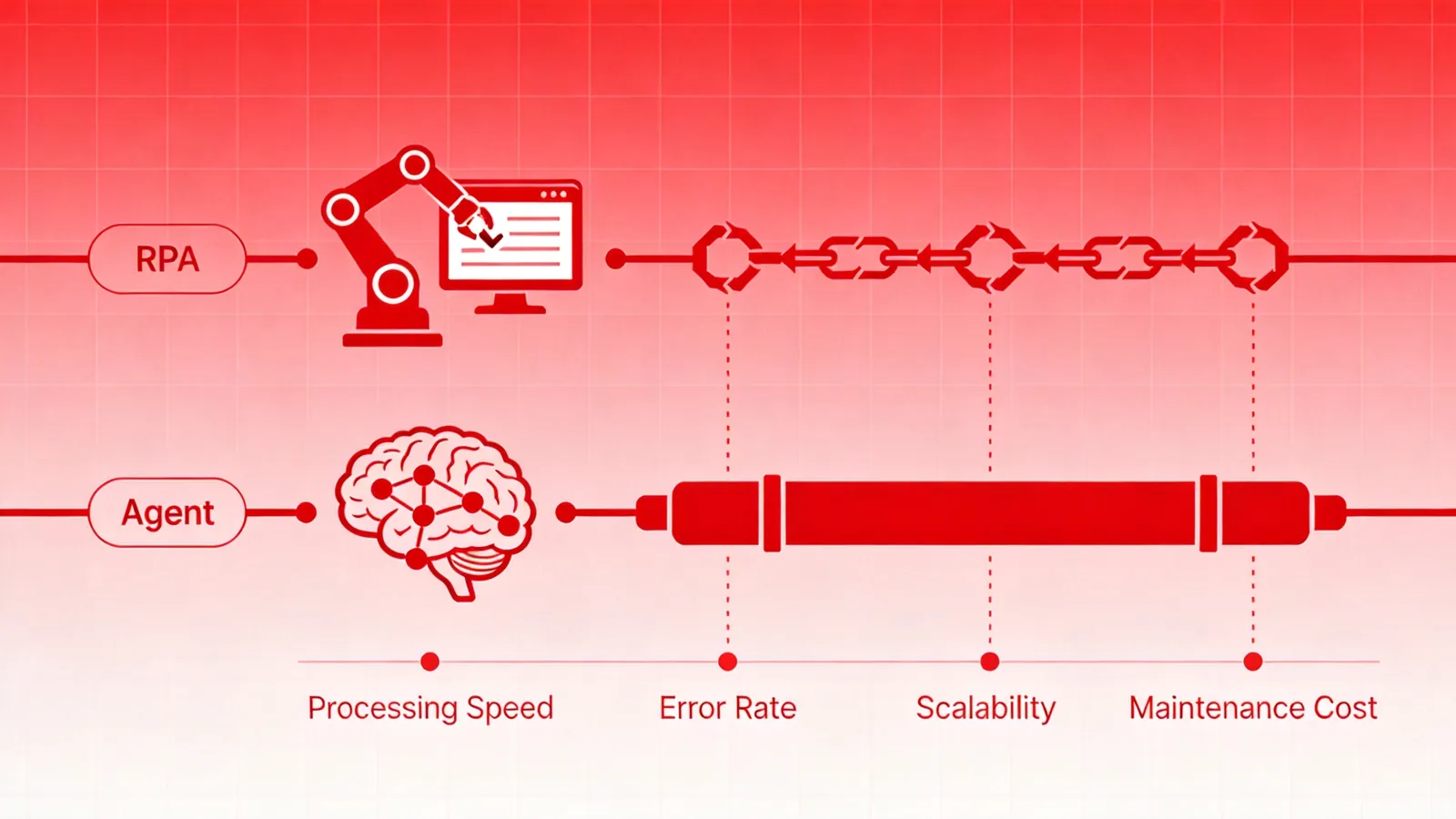
There's a running joke in the RPA industry: you spend three months building an RPA workflow, then the website changes a button position and everything breaks. Not a joke — a major bank's financial reconciliation RPA collapsed overnight when their SAP system upgraded. One hundred fifty automated workflows dead. Six weeks to fix.
OpenClaw's automation philosophy is fundamentally different from RPA. RPA simulates human actions — it records screen coordinates, waits for elements to appear, mimics clicks and keystrokes. It doesn't understand "why" — it only does "see X, click Y." OpenClaw operates at the API and semantic layer — the agent understands the task objective, then completes it via API calls, function invocations, and script execution.
A comparison makes the difference clear. Scenario: extract order information from 50 daily emails and enter it into the ERP system. RPA approach: open webmail → wait for load → open each email → find the order field region → copy → switch to ERP window → paste into correct fields → submit. Any UI change breaks the chain. OpenClaw approach: Agent reads emails via IMAP API → extracts order fields via NLP → writes to ERP via REST API in bulk → generates execution report. UI changes are irrelevant — it operates on data, not pixels.
That said, OpenClaw doesn't universally beat RPA. RPA still wins in two scenarios: legacy systems with zero API access (think hospital information systems or government intranet OA), and ultra-repetitive standardized operations (same form, same fields, same time every day) where RPA's mechanical reliability actually outperforms semantic flexibility.
Selection guidance: If the target system has APIs, always use an agent. If it has no APIs but the tasks are low-frequency and high-complexity, still use an agent (OCR + agent beats writing RPA). Only pure repetitive keyboard-and-mouse operations justify RPA. The core difference: RPA teaches machines to "do human work," while agents let machines "understand human intent and figure out how to execute." The latter is where this industry needs to go.