OpenClaw 2026.5.18 Release Analysis: QA Testing Framework, Android Real-Time Voice, and Plugin SDK Enhancements
📖 Glossary
AI Box (also known as Agent Computer / Agent PC), is a dedicated local hardware device that runs AI Agents. Pre-installed with an AI agent management system, plug-and-play, running 24/7. Users can remotely command AI to work via Discord, Slack, Telegram, WhatsApp, and more.
Abstract: The OpenClaw 2026.5.18 release brings three critical upgrades: a QA testing framework that makes Agent behavior verifiable, Android real-time voice that opens mobile interaction channels, and plugin SDK improvements that lower the developer barrier — each directly enhancing the practical experience for KaiheAiBox users.
QA Testing Framework: From "Black Box" to Rigorous Science
One of the most persistent pain points with AI Agents is the near-impossibility of predicting their behavior with certainty. The same Prompt that worked flawlessly yesterday may break today — the underlying language model updated, a dependency shifted, a target webpage changed its layout. This unpredictability creates a persistent trust crisis in production environments. Can you confidently hand over a critical business workflow to a system that is "sometimes reliable, sometimes not"?
The QA testing framework introduced in OpenClaw 2026.5.18 directly addresses this problem.
Core Philosophy: Define Agent behavior as testable "skill units," write test cases for each Skill, and run automated regression tests whenever versions are updated, environments change, or models are swapped. A comprehensive test suite — covering FAQ validation, API call assertions, output format verification, and exception recovery — transforms Agent reliability from "finger-crossed hoping" into "scientifically verified."
Value for KaiheAiBox Users: The core promise of the KaiheAiBox Agent Computer is "stable 7×24 operation." The QA framework makes that promise verifiable. After each OpenClaw version upgrade, users can run a complete regression test suite to confirm their Agent workflows have not been disrupted. Skill developers can write tests for their custom Skills, ensuring behavioral consistency across upgrades. This is the foundational infrastructure needed to move Agents from "playthings" to "production tools."
Practical Scenario: Imagine you have deployed on KaiheAiBox an automated daily workflow that aggregates industry news and sends a summary email. It uses the online-search Skill for research and the email-skill for delivery. After upgrading OpenClaw, you simply run the predefined QA tests — if the search result parser fails or the mail API throws an error, the test alerts you immediately. Without QA testing, you might not discover the failure until the next morning when you realize no email arrived.
Android Real-Time Voice: Finally, the Agent Can Listen and Speak
For a long time, OpenClaw's primary interaction domain has been desktop and server environments. Voice capability has been a notable gap. Even with the tts tool, it was purely one-directional — the Agent could read text aloud to you, but there was no mechanism for true voice dialogue.
The Android real-time voice capability in 2026.5.18 completes this critical missing piece.
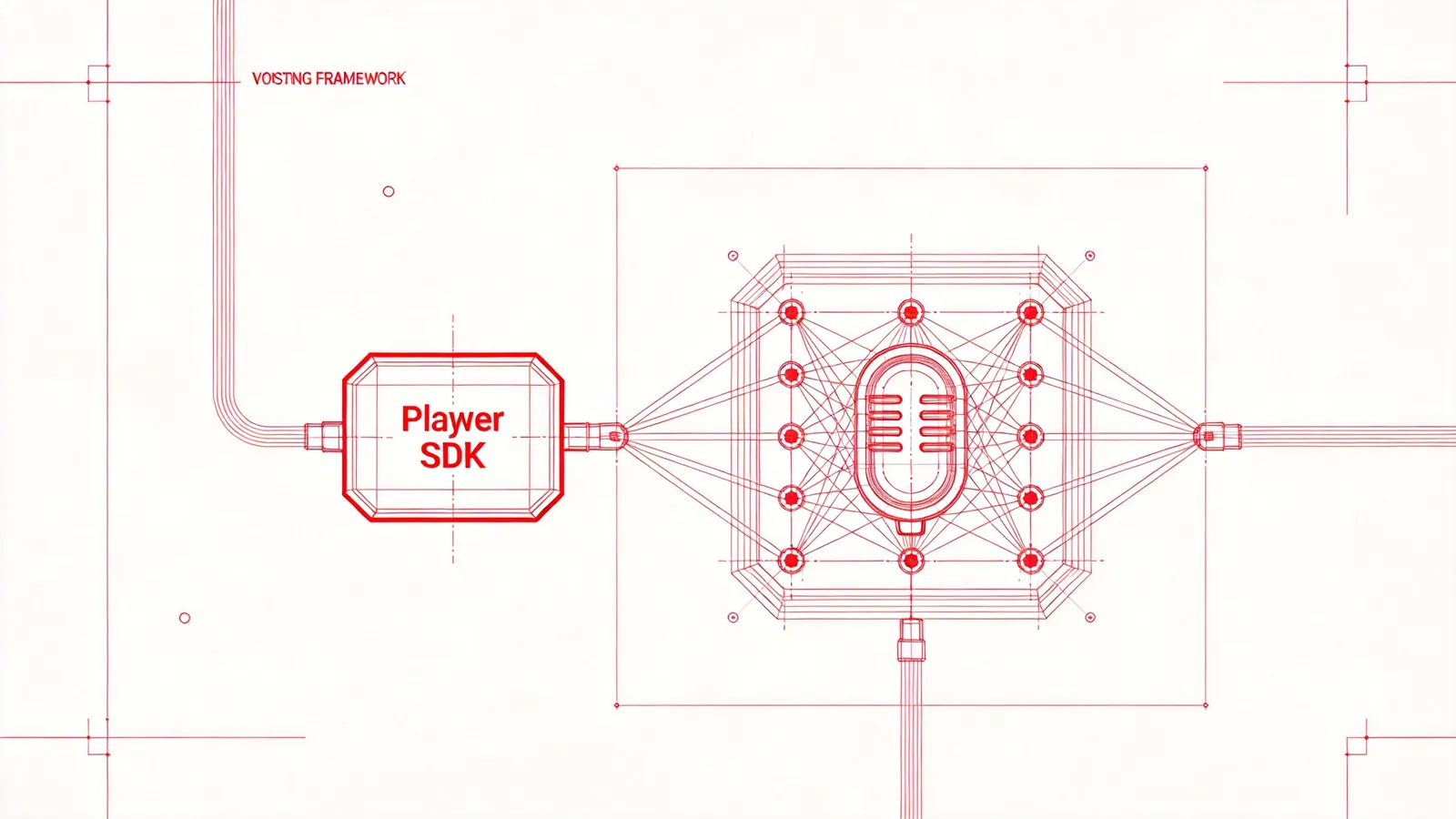
Technical Implementation: Through real-time audio stream transmission from an Android device, microphone input is delivered to the OpenClaw server with minimal latency. A large language model handles speech-to-text conversion, intent understanding, and response generation, and the result is played back through text-to-speech. The end-to-end latency is controlled within an acceptable range, enabling a near-conversational experience.
Why Android First? A smartphone's sensor ecosystem far exceeds that of a PC: microphone arrays, cameras, GPS, accelerometers — all of these are the Agent's sensory channels into the physical world. Android, as the world's largest mobile operating system, being the first to enable real-time voice means OpenClaw is evolving from a "desktop Agent" toward an "always-with-you Agent." In the near future, your Agent does not necessarily need to run on your phone — but it can certainly "hear" you, "see" your surroundings, and "know" where you are through your mobile device.
Value for KaiheAiBox Users: KaiheAiBox, as a 7×24 Agent Computer, can now extend its capabilities through Android devices as "sensing endpoints." You speak to your phone in the living room; the Agent running on KaiheAiBox executes a complex task. The phone serves as the interaction interface; KaiheAiBox serves as the computational foundation. This "mobile interaction + fixed compute" architecture is precisely the characteristic that distinguishes an Agent Computer from an ordinary PC.
Plugin SDK Enhancements: Lowering Barriers, Growing the Ecosystem
The strength of OpenClaw has always resided in its Skill system — by composing different Skills, users can tailor an Agent to their specific needs. Yet developing a third-party Skill has historically carried a steep learning curve: understanding OpenClaw's Skill specifications, tool invocation protocols, message formats, and error-handling conventions all required significant investment before a single line of meaningful code could be written.
The 2026.5.18 release comprehensively enhances the plugin SDK, with a single core objective: making Skill development as straightforward as writing a Python function.
Specific improvements include:
- Standardized Skill templates. Official Skill scaffolding is now available, generating a standards-compliant Skill directory structure, SKILL.md template, and test case framework with a single command. Developers no longer need to reverse-engineer Skill conventions from scratch.
- Tool invocation abstractions. The SDK provides unified tool-calling wrappers, eliminating the need for developers to manually handle MCP protocol details, JSON-RPC formatting, and error code mappings. Developers can focus on "what goes in, what comes out."
- Type-safe parameter validation. Schema-based input/output validation is introduced, with declared Skill interfaces statically checked at load time, reducing runtime errors from malformed parameters.
- Complete debugging toolchain. New Skill debugging commands support step-through execution, tool call tracing, and simulated message injection — bringing the development experience close to modern IDE debugging workflows.
Ecosystem significance: The prosperity of the Skill ecosystem depends directly on developer participation. The accessibility of the SDK determines how many people are willing to write Skills for OpenClaw. As the barrier to entry lowers, developers from vertical domains — finance, law, healthcare, education — can create Skills tailored to their industries. The ultimate result is a Skill marketplace covering a wide range of scenarios. This mirrors the logic of the iPhone App Store — a platform's value is ultimately determined by the richness of its ecosystem.
Value for KaiheAiBox Users: Ecosystem prosperity benefits end users most. More Skills mean more capabilities for KaiheAiBox. Today you may need to write a "query stock price" Skill yourself; tomorrow, a developer from the financial sector may contribute a more fully-featured version. KaiheAiBox users are both consumers of this ecosystem and, through feedback and requirements, influencers of its direction.
The Synergistic Effect of All Three Upgrades
These three upgrades are not isolated features — they reinforce each other in profound ways.
QA Framework + Plugin SDK: The SDK lowers the Skill development barrier → more Skills are created → the QA framework ensures their quality and behavioral consistency are verifiable → users gain confidence installing and using third-party Skills → a virtuous ecosystem cycle begins.
Android Real-Time Voice + KaiheAiBox Deployment: The phone provides a voice interaction interface → KaiheAiBox provides 7×24 stable compute → the Agent can both "carry on a conversation on the go" and "continuously execute complex background tasks" → the Agent Computer's use cases expand from "desktop scenarios" to "all scenarios."
All three together point toward a single goal: transforming the Agent from "a toy for tech enthusiasts" into "a production tool that ordinary users can depend on."
How KaiheAiBox Users Benefit from This Update
For users of the KaiheAiBox Agent Computer, the value of this update can be distilled into a single statement: more reliable, more natural, more capable.
- More reliable: The QA testing framework makes Agent behavior verifiable — workflows on KaiheAiBox no longer rely on luck.
- More natural: Android real-time voice shifts interaction from keyboard-and-mouse to voice dialogue — the Agent finally has warmth.
- More capable: Plugin SDK improvements lower the development barrier — a thriving Skill ecosystem continuously expands KaiheAiBox's capability boundary.
The value of KaiheAiBox has never resided in the hardware alone — it is the optimal deployment platform for OpenClaw and Agents of every kind. As OpenClaw iterates continuously and capabilities expand, KaiheAiBox provides an unwavering foundation: the stable, reliable, always-online runtime environment where those capabilities execute. The software evolves; the platform endures.
KaiheAiBox · OpenClaw Zone