# OpenClaw Engineers Warn: AI Is Mass-Producing Low-Quality, Dangerous Code
📖 Glossary
AI Box (also known as Agent Computer / Agent PC), is a dedicated local hardware device that runs AI Agents. Pre-installed with an AI agent management system, plug-and-play, running 24/7. Users can remotely command AI to work via Discord, Slack, Telegram, WhatsApp, and more.
Summary: Core OpenClaw engineers have issued a stark warning — AI is generating vast amounts of code that appears functional but is fundamentally flawed underneath. Over-reliance will lead to a compute cost crisis. This is not an anti-AI manifesto; it is a sobering caution from the very creators of one of the world's most widely used AI programming tools.
Artificial intelligence is genuinely useful for simple programming tasks. The problem is not the tool itself, but developers' over-reliance on it.
I. The Warning Comes from Within
What gives this warning its extraordinary weight is its source: the core engineering team at OpenClaw — the very people who built one of the most widely used AI programming assistants on the planet. As of May 2026, OpenClaw has surpassed 215,000 stars on GitHub, making it one of the fastest-growing open source projects globally. Code generated by OpenClaw is flowing into production environments at an unprecedented rate, used by millions of developers worldwide in their daily work.
Two engineers stated clearly in a technical blog post: AI is genuinely useful for simple programming tasks. The problem is not the tool itself, but developers' over-reliance on it.
This is like a car manufacturer proactively warning you not to over-depend on autopilot. When the tool's creators start hitting the brakes, it means the problem has reached a critical threshold. The OpenClaw engineering team has witnessed far too many real-world cases of "AI-generated code going wrong." Their warning is not fear-mongering — it is a deeply felt insight from frontline practice.
Importantly, those issuing the warning are not AI skeptics. The OpenClaw team itself are firm believers in AI programming tools — they have spent years building this tool, deeply understanding its enormous potential. It is precisely because of this conviction that they are even more anxious: when tools are misused, the damage extends beyond individual projects to erode the industry's trust foundation. If the public begins to associate AI programming tools with buggy, insecure software, the backlash could set back the entire field by years. The warning also comes at an inflection point in the software industry. For the first time, AI-generated code is not just a novelty but is becoming the default way that many applications are built. Surveys indicate that developers under 30 are twice as likely to use AI coding tools as their primary development method compared to developers over 40, suggesting that the problem will only grow as the next generation enters the workforce with AI-first habits already ingrained. This generational divide in AI tool adoption has significant implications for how organizations structure their development teams and quality assurance processes. Teams composed primarily of younger developers may be more productive in terms of code volume but may also be more vulnerable to the quality issues that the OpenClaw engineers described. Conversely, teams with more experienced developers may be slower to adopt AI tools but are better positioned to review and correct AI-generated output. The ideal team composition, according to several CTOs who have grappled with this issue, combines both demographics: younger developers who can leverage AI tools for speed, paired with senior developers who can provide the quality oversight that AI-generated code requires.
The broader context makes this warning even more urgent. According to multiple industry surveys conducted in early 2026, over 78% of professional developers now use AI coding assistants daily, and approximately 45% of all new code committed to repositories contains at least some AI-generated content. The scale of potential impact is staggering — if even a small fraction of this code contains hidden defects, the cumulative effect across millions of repositories could be catastrophic. A separate study by a leading software quality firm analyzed over 10,000 AI-generated code submissions and found that 32% contained at least one significant bug that would have been caught in a standard code review.
The warning also comes at a time when the AI coding tool market is experiencing explosive growth. Multiple companies are competing to offer increasingly capable AI programming assistants, each promising faster development cycles and higher productivity. In this competitive landscape, the temptation to over-rely on these tools is greater than ever, and the voices urging caution are often drowned out by marketing claims and success stories.
II. "Surface-Level Functional, Fundamentally Flawed" Code Is Spreading
The engineers described an increasingly common and dangerous workflow that is spreading from startups to large enterprises. This pattern has become so pervasive that it has earned an informal name in developer communities: "AI-assisted technical debt acceleration."
2.1 Casual Prompts, Hasty Generation
Developers habitually generate code with vague instructions — "write me a login feature" and nothing more. Such ambiguous prompts give AI enormous "creative space," and AI, in its effort to satisfy the request, often chooses the most direct but not necessarily optimal implementation path. The result is code that "works" but is far from "well-built."
What's more concerning is that many developers now trust AI more than their own judgment — when AI produces a complex-looking code block, they tend to assume "AI thought this through better than I could," thereby abandoning independent critical thinking entirely. This phenomenon is especially pronounced among junior developers, who lack sufficient experience to evaluate the quality of AI-generated code and can only passively accept it.
A particularly insidious aspect of this problem is that AI-generated code often looks professional. It follows common patterns, uses standard libraries, and adheres to basic syntax conventions. This surface-level polish creates a false sense of confidence that masks deeper architectural problems. The code passes superficial code reviews because it "looks right," while the real issues — inefficient algorithms, missing error handling, incorrect edge case handling — remain hidden until they surface in production.
Consider a typical example: an AI might generate a database query function that works perfectly for 100 records but performs a full table scan that becomes prohibitively slow at 1 million records. The developer who "verified" the code by testing it with a small dataset would never discover this problem until it hit production. This is the essence of "surface-level functional, fundamentally flawed" code — it works under ideal conditions but fails under real-world stress. This problem is compounded by what researchers call the 'confidence gap' — the disparity between a developer's confidence in AI-generated code and its actual quality. Studies have shown that developers rate their confidence in AI-generated code at an average of 7.2 out of 10, while independent quality assessments rate the same code at 5.1 out of 10. This two-point confidence gap means that developers are systematically overestimating the quality of AI output, leading to insufficient review and testing.
2.2 No Review, Straight to Production
Generated code appears to run correctly and gets merged into the main branch without careful review. This "deploy first, think later" mentality is especially prevalent in agile development environments. Time pressure leads developers to treat AI-generated code as "AI-verified" code, forgetting that AI only verified "this code runs," not "this code is secure, efficient, and maintainable."
In practice, code review is often the first casualty. When project timelines are tight, "AI-generated code should be fine" becomes a self-comforting excuse that renders what should be a rigorous review process virtually meaningless. Some teams have even formalized this shortcut, creating "fast-track" merge policies for AI-generated code that bypass the normal review requirements.
The consequences of this shortcut culture are compounding. As more AI-generated code enters codebases without thorough review, the overall code quality degrades incrementally. Each subsequent developer working on the codebase encounters increasingly messy code, which in turn makes it harder to write good code themselves — a vicious cycle that accelerates technical debt accumulation. Research from a major software consultancy found that teams using AI coding tools without mandatory review processes saw their bug density increase by 40% over six months, compared to a 5% increase for teams that maintained strict review standards. Perhaps most concerning is the emergence of a feedback loop: as AI tools are trained on increasingly AI-generated code from open source repositories, the quality of their output may degrade over time. Researchers have begun documenting what they call 'model collapse' in code generation, where AI systems trained on their own output produce progressively lower-quality results. If this trend continues, the code quality problem could accelerate rather than stabilize, making the current situation merely the early stages of a much larger crisis.
2.3 Technical Debt Silently Accumulates
Underlying architecture is chaotic, logic flaws are frequent, and security vulnerabilities lie hidden. Every line of unreviewed AI code is a seed — seemingly harmless in the project's early stages, but as code volume grows and business complexity increases, these seeds grow into thorny thickets that are nearly impossible to clear.
These AI-generated code blocks look functionally complete and run normally on the surface, but at the architectural and logical level, they are often a mess — full of technical debt and potential defects.
A senior developer revealed that in a project he inherited, over 60% of the code was AI-generated — and the refactoring cost was three times that of writing from scratch. Even more alarming, the project's critical security modules were also AI-generated, and the original author had never reviewed these modules for security vulnerabilities.
Another case involved a fintech startup where AI-generated authentication code contained a subtle race condition that only manifested under high concurrent load. The bug went undetected for months until a traffic spike exposed it, resulting in a brief period where users could potentially access other users' account data. The remediation required a complete rewrite of the authentication system and a costly security audit that delayed the company's Series B fundraising by three months.
III. The Compute Cost Crisis: The Hidden Price Nobody Talks About
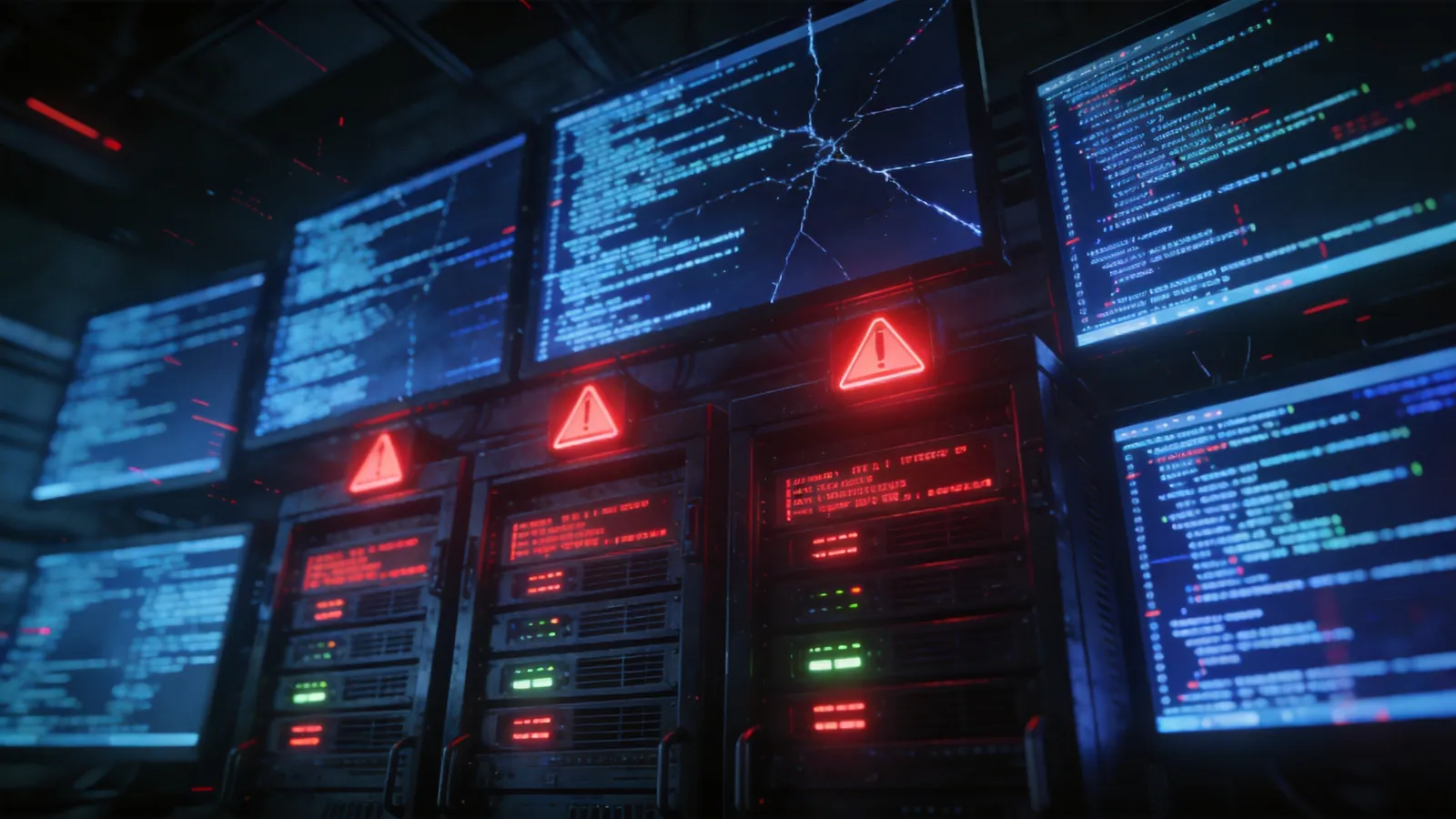
The OpenClaw engineers specifically highlighted a frequently overlooked consequence of over-relying on AI-generated code — a compute cost crisis. This is a risk dimension that is severely underestimated across the industry, with impacts far beyond what most developers imagine. While the initial development cost savings are immediately visible on the project timeline, the long-term compute cost penalties are diffuse, gradual, and therefore easy to ignore until they become catastrophic.
3.1 Direct Costs of Low-Quality Code
| Problem | Consequence | Cost Impact |
|---|---|---|
| Redundant logic | Wasted server resources | +30%~50% ops cost |
| Inefficient algorithms | Slower response, lower throughput | More compute needed to compensate |
| Security vulnerabilities | Skyrocketing attack risk | Remediation + compensation costs |
| Chaotic architecture | Hard to maintain and scale | Refactoring labor costs double |
| Missing caching | Repeated expensive operations | Database and API costs multiply |
| Poor error handling | Cascading failures | Downtime costs + SLA penalties |
When AI-generated code is just 10% less efficient, at scale this translates to hundreds of thousands or even millions in wasted compute. This is not a rounding error — it is a systemic risk that can impact a company's financial health. For a company spending $5 million annually on cloud infrastructure, a 10% efficiency penalty means $500,000 in pure waste — money that could have been invested in product development or market expansion.
3.2 The Snowball Effect of Hidden Costs
The cost of low-quality code is not paid once — it compounds continuously. Every line of AI-generated redundant code consumes extra CPU cycles, memory, and bandwidth. When a system runs on hundreds or thousands of servers, a 10% efficiency loss could mean millions in additional cloud computing expenses annually.
More critically, these low-quality code blocks obstruct future optimization efforts. When an entire system is built on an unstable foundation, any attempt to improve performance can trigger cascading failures, leading to a vicious cycle where "the more you change, the worse it gets."
The snowball effect manifests in several distinct ways. First, AI-generated code often contains hardcoded values and magic numbers that should be configurable, making the system brittle and resistant to change. Second, the lack of proper abstraction layers means that seemingly simple modifications require touching dozens of files, increasing the risk of introducing new bugs. Third, missing or inadequate test coverage — a common feature of AI-generated code — means that any change carries high risk of introducing new bugs, which in turn discourages developers from making necessary improvements.
A fourth, less obvious manifestation is the "complexity tax." AI-generated code tends to be verbose and over-engineered for simple tasks while under-engineered for complex ones. This inverted complexity profile means that the simple parts of the system consume disproportionate resources, while the critical paths lack the robustness they need. A fifth manifestation relates to dependency management. AI-generated code frequently imports unnecessary libraries or uses deprecated packages because the training data reflects historical usage patterns rather than current best practices. These unnecessary dependencies inflate the application size, increase the attack surface, and create maintenance burden when libraries need to be updated or replaced. Security teams have reported that AI-generated projects typically have 30-40% more dependencies than equivalent human-written projects, each representing a potential vector for supply chain attacks. Furthermore, AI-generated code often ignores platform-specific optimizations. Because AI models are trained on code from diverse environments, they tend to produce generic implementations that work everywhere but excel nowhere. A sorting algorithm that performs adequately on both Windows and Linux may be significantly slower than a platform-optimized version on either. For organizations running at scale, these micro-inefficiencies compound into substantial cost differences. Performance engineering teams at several large tech companies have reported that replacing AI-generated generic implementations with platform-specific optimizations yielded 15-25% performance improvements without any algorithmic changes.
3.3 Real-World Case: A SaaS Company's Hard Lesson
A mid-size SaaS company allowed its team to extensively use AI programming tools to accelerate development over a 6-month period. In the short term, feature delivery speed increased by 40%, and the team was ecstatic. But 6 months later, server costs had grown by 65% with no corresponding performance improvement. Investigation revealed that the AI-generated code contained massive amounts of duplicate queries, unoptimized database access, and redundant middleware layers. Ultimately, the company had to halt all new feature development and spend 3 months refactoring core modules.
The financial impact was severe: the company estimated that the total cost of the "AI speedup" — including excess compute costs, refactoring labor, and lost opportunity from delayed features — was approximately 2.3 times the savings from faster initial development. The lesson was clear: speed without quality is not speed at all; it is simply deferred cost.
The company's CTO later shared in a post-mortem that the most frustrating aspect was that the AI-generated code wasn't obviously bad. "It wasn't until we profiled the production system that we realized the database layer was making 47 queries per page load where 5 would have sufficed," he explained. "The code looked clean, followed our coding standards, and passed all our unit tests. But the unit tests were also AI-generated, and they only verified that the code returned correct results — not that it did so efficiently. This case study illustrates a broader pattern that the OpenClaw engineers identified: the cost savings from AI-assisted development are front-loaded and visible, while the quality costs are back-loaded and invisible. This temporal mismatch creates a dangerous incentive structure where teams are rewarded for using AI tools aggressively in the short term, even when the long-term consequences are clearly negative. Organizations need to develop metrics and incentive structures that account for the full lifecycle cost of code, not just the initial development speed."
IV. AI Programming Security Incidents Are Surging
Since 2026, security incidents related to AI programming have been occurring with alarming frequency. Each one is a sobering wake-up call that underscores the real-world consequences of uncritical AI code adoption. The pattern is clear: as AI-generated code proliferates, the attack surface expands in ways that traditional security models struggle to address.
4.1 OpenClaw Remote Code Execution Vulnerability
The open-source AI agent project OpenClaw disclosed a critical remote code execution (RCE) vulnerability. Attackers only needed to trick users into clicking a carefully crafted link to achieve full control of the victim's machine through the following attack chain:
- Token theft: Exploit the gatewayUrl parameter flaw to intercept authTokens
- Cross-Site WebSocket Hijacking (CSWSH): Bypass browser same-origin policy to directly manipulate local instances
- Sandbox escape: Leverage high-privilege APIs to disable protections and execute arbitrary shell commands
Security experts recommended that all users immediately upgrade to v2026.1.29 or later and rotate affected tokens. What makes this vulnerability particularly terrifying is its extremely low attack barrier — no specialized knowledge is required; a single link can grant full control over the victim's entire system.
The vulnerability was particularly impactful in enterprise environments where OpenClaw instances are deployed on shared infrastructure. In several documented cases, a single compromised instance provided attackers with a foothold to access other services on the same network, demonstrating how AI tool vulnerabilities can amplify traditional attack surfaces. One enterprise reported that the breach propagated to their CI/CD pipeline, potentially exposing build artifacts and deployment credentials for all their production services. The vulnerability also highlighted a troubling trend in how AI agent tools handle authentication. The token-based authentication system that was exploited was designed for convenience — making it easy for users to connect to their OpenClaw instances from different devices. However, this convenience came at the cost of security, a trade-off that is common in AI tool design and that reflects the broader tension between usability and security in the AI development ecosystem.
4.2 Source Code Leak Incident
Due to a packaging configuration oversight — the development team forgot to configure the .npmignore file and uploaded SourceMap files containing complete source code mappings to the public repository. 512,000 lines of unobfuscated TypeScript source code and 1,906 Anthropic internal core files were exposed on the public internet, with a total file size of 59.8MB. This seemingly minor oversight triggered a major earthquake in the AI security landscape.
The exposure included proprietary algorithms, internal API endpoints, authentication mechanisms, and development comments that revealed the team's internal architecture decisions. Security researchers who analyzed the leaked code identified multiple potential attack vectors that could have been exploited before the leak was discovered and mitigated. The incident raised fundamental questions about the security practices of AI companies and the adequacy of existing software supply chain protections. The implications of this leak extended beyond the immediate security concerns. Competitors gained insight into the company's technical architecture and strategic direction through the exposed development comments and internal documentation. Industry analysts estimated that the competitive intelligence value of the leaked source code could have been worth tens of millions of dollars to rival companies, particularly those developing competing AI coding tools.
4.3 Ant Security Lab Audit Findings
On March 30, Ant Group's AI Security Lab disclosed the results of a specialized audit of OpenClaw, discovering critical vulnerabilities including CVE-2026-33574 (path traversal) and CVE-2026-32978 (permission bypass). Attackers could use these to read and write files outside authorized boundaries or even execute arbitrary code.
The audit also revealed a pattern: many of the vulnerabilities were in code that handled user input and permission boundaries — precisely the areas where AI-generated code is most likely to cut corners. AI models, trained on general code patterns, often lack the security-specific knowledge needed to properly validate inputs and enforce access controls. The audit team noted that the vulnerable code segments exhibited characteristics typical of AI-generated output: functional but missing critical boundary checks and input sanitization. Furthermore, the audit revealed that some of the vulnerable code had been copy-pasted across multiple projects by developers who assumed that code used by many others must be secure — a variation of the 'many eyes' fallacy applied to AI-generated code. In reality, the widespread use of a particular AI-generated pattern simply means that the same vulnerability exists in many places simultaneously, creating a large-scale attack surface rather than distributing the risk.
These incidents reveal a brutal reality: while AI tools accelerate development, they also accelerate the creation of security vulnerabilities. If developers use AI-generated code without discrimination, they are essentially planting time bombs in their own projects. The cybersecurity community has begun referring to this phenomenon as "AI-accelerated vulnerability introduction," recognizing that the same speed benefits that make AI coding tools attractive also make them dangerous when used without proper safeguards. The economic dimension of these security incidents should not be overlooked. IBM estimated the average cost of a security breach involving AI-generated code at approximately 4.8 million dollars in 2026, which is 23% higher than breaches involving only human-written code. The premium is attributed to the increased difficulty of detecting and remediating vulnerabilities in code that the development team does not fully understand, as well as the longer dwell time when organizations cannot quickly trace the origin of a vulnerability to a specific developer or code review decision.
V. KaiheAiBox Perspective: The Security Baseline for 24/7 Operation
As an agent computer, the core use case for KaiheAiBox A1/B1 is running AI Agents 24/7. This means code quality considerations have deeper implications that go beyond typical software development concerns. The always-on nature of agent computing creates a fundamentally different risk profile compared to traditional applications.
-
Security is not optional — it is the baseline: Continuous operation means any vulnerability can be exploited persistently. A vulnerability discovered during the day could cause even greater damage at night when no one is monitoring the system. Unlike traditional applications that can be taken offline for patches, a 24/7 agent system must maintain availability even during security remediation. This creates a challenging tension between the need to fix vulnerabilities immediately and the need to keep the system running without interruption.
-
Code quality directly determines system stability: Low-quality code will inevitably expose problems during extended runtime. A memory leak that takes hours to manifest in a test environment might cause daily crashes in a 24/7 operational system. What is a minor inconvenience in a desktop application becomes a critical failure in an always-on agent. The cumulative effect of small quality issues compounds dramatically over time — a 0.01% error rate that is negligible in an application used for a few hours daily becomes a certainty in a system that runs continuously.
-
Physical isolation does not equal logical security: KaiheAiBox is physically isolated from the primary PC, but the code executed by Agents still needs quality assurance. Isolation can prevent lateral attack spread but cannot prevent the Agent itself from executing malicious code or making harmful API calls. Think of it as a safe room — it protects you from external threats, but if you bring contaminated materials inside, the safe room becomes a containment chamber rather than a refuge. For KaiheAiBox users specifically, this means that while the physical isolation of the device provides a strong security boundary against external attacks, the code quality of the agents running on the device remains a critical concern. A poorly written agent could still cause significant damage within its isolated environment, such as corrupting local data, consuming excessive resources, or making unauthorized network requests through the APIs it has been granted access to.
Our position is clear and non-negotiable:
- AI generation + human review, not AI generation + blind trust
- Layered usage: Simple utility functions can be AI-generated; core architecture and logic must be human-designed
- Continuous auditing: Regularly perform security scans and performance assessments on AI-generated code
The KaiheAiBox A1/B1 agent computer application management system includes built-in permission controls and sandbox isolation mechanisms, providing foundational guarantees for secure Agent operation. But even the best security infrastructure cannot replace rigorous code quality control. Security is a layered defense, and code quality is the innermost layer — if it fails, outer layers can only do so much. This is why KaiheAiBox has adopted a trust-but-verify approach to AI-generated code in its own development processes. Every piece of AI-generated code that runs on KaiheAiBox devices goes through a multi-stage review process that includes automated security scanning, performance benchmarking, and human review by at least one senior engineer. While this adds time to the development cycle, it ensures that the code running on devices designed for 24/7 operation meets the quality standards that continuous operation demands. The approach has already proven its value. During a recent internal security audit, the multi-stage review process caught a subtle privilege escalation vulnerability in an AI-generated module that had passed automated security scanning. The vulnerability would have allowed an agent to escalate its permissions beyond the intended scope, potentially accessing sensitive system resources. The human reviewer identified the issue by tracing the code's execution path through multiple function calls — the kind of deep architectural reasoning that automated tools and AI models still struggle with.
VI. Five Practical Recommendations for Developers
Drawing from both the OpenClaw engineers' warnings and real-world incident analysis, here are five actionable recommendations that every development team should implement:
-
Review every line of AI code with the same rigor you would apply to a new colleague's pull request. Don't lower your review standards just because "AI wrote it" — if anything, raise them. AI lacks contextual awareness and doesn't know your project architecture or business constraints. Consider implementing a policy where AI-generated code requires at least two reviewers instead of the usual one. Some organizations have gone further, requiring that AI-generated code include comments explaining the reasoning behind key design decisions, which forces reviewers to engage more deeply with the logic rather than just skimming for obvious errors. At least one Fortune 500 company has implemented an 'AI code tax' — an additional review hour required for every 100 lines of AI-generated code, above and beyond their standard review process. While some developers initially resisted the extra overhead, the policy has reportedly reduced production incidents attributable to AI-generated code by 60% in its first quarter of implementation.
-
Use specific, not vague, prompts to reduce the space for AI to "improvise." Tell AI your tech stack, performance requirements, and security constraints — not just "help me write an XX feature." The more context you provide, the more likely the generated code will fit your actual needs rather than a generic approximation. A well-structured prompt might include: the specific framework version, the database schema, the expected data volume, the latency requirements, and the security policies that must be followed. The difference in output quality between a vague prompt and a detailed one is often dramatic — not just in correctness, but in efficiency and security posture.
-
Establish AI code marking mechanisms — annotate which code was AI-generated in your repository for future tracking and priority review. Many teams have already added AI code detection steps to their CI/CD pipelines. This practice serves dual purposes: it enables targeted security auditing and helps track the long-term quality trends of AI-generated code versus human-written code. Over time, this data becomes invaluable for understanding where AI coding tools excel and where they consistently fall short, allowing teams to make more informed decisions about when and how to use them. Beyond repository annotation, some teams are implementing 'AI code provenance tracking' — a more sophisticated approach that records not just whether code was AI-generated, but which AI model generated it, what prompt was used, and what modifications were made by human reviewers. This provenance data has proven invaluable for post-incident analysis, allowing teams to identify patterns in which types of prompts or models produce the most problematic code and adjust their practices accordingly.
-
Regularly clean technical debt — don't let the "convenience" of AI code become a long-term burden. Reserve 20% of each sprint cycle for code quality improvement. Consider implementing automated tools that detect common AI code anti-patterns such as redundant null checks, unnecessary try-catch blocks, overly verbose implementations that could be simplified, and database queries that could be optimized. The investment in debt reduction pays dividends in reduced operational costs and improved developer productivity — developers working with clean, well-structured code are demonstrably faster and make fewer mistakes. One particularly effective approach is the 'AI code retirement' policy adopted by several forward-thinking organizations. Under this policy, any AI-generated code that has not been reviewed within 90 days of creation is automatically flagged for priority review or rewriting. This prevents the accumulation of unaudited AI code and ensures that technical debt does not grow unchecked. Teams that have implemented this policy report that it creates a healthy discipline around code review without significantly impacting development velocity, because the deadline creates urgency without being so tight as to be disruptive.
-
Keep learning — AI is a tool, not a replacement. Understanding code principles is essential for effective review. If you cannot judge whether AI-generated code is correct, it means you need to improve your own capabilities — not become more dependent on AI. Invest time in understanding the fundamentals of security, performance, and architecture that AI often glosses over. The developers who will thrive in the AI era are not those who use AI most, but those who can most effectively evaluate, correct, and improve AI-generated output. This requires deep domain knowledge that no AI tool can substitute for.
The bottom line is simple: AI coding tools are powerful accelerators, but acceleration without direction is just speed in a random direction. The convergence of these trends — increasing AI code adoption, rising security incidents, and growing compute costs — suggests that the industry is approaching a tipping point. Organizations that fail to establish robust AI code governance frameworks now will face exponentially greater challenges as AI-generated code becomes an even larger proportion of their codebases. The time to act is not after a major incident, but before one occurs. The OpenClaw engineers' warning should serve as a compass — not to stop using AI, but to use it with intention, discipline, and the recognition that quality always matters more than quantity. As we stand at this crossroads, the choice is not between using AI coding tools or not using them — that ship has sailed. The real choice is between using them responsibly, with appropriate safeguards and quality controls, or using them recklessly and paying the price later. The OpenClaw engineers have given us a clear map; it is up to each developer and organization to decide whether to follow it.
KaiheAiBox · OpenClaw Zone