OpenClaw 2026.4.11 Stable Release: Five Core Upgrades, Stars Break 250K
Abstract: On April 11, 2026, OpenClaw—the open-source AI gateway and Agent gateway formerly known as Clawdbot and Moltbot—officially shipped its landmark stable release, coinciding with the project surpassing 250,000 GitHub Stars. This version delivers five core upgrades spanning lightweight deployment architecture, intelligent AI task execution, flexible ecosystem integration, enterprise-grade security, and one-click cloud deployment. Together, these upgrades redefine what an Agent Computer can achieve in the modern enterprise, transforming OpenClaw from a developer tool into the backbone of intelligent office infrastructure. This article provides a comprehensive deep-dive into each upgrade, the engineering philosophy behind them, and what they mean for the future of AI-augmented work.
1. From Clawdbot to OpenClaw: A 250K-Star Journey
The story of OpenClaw is, in many ways, the story of the open-source AI ecosystem itself. What began as Clawdbot—a lightweight CLI tool for managing AI model interactions—evolved through Moltbot into the platform we know today as OpenClaw. Each rename marked not just a branding shift but a fundamental expansion of scope and ambition.
Clawdbot's original mission was simple: provide a unified interface for calling large language models from the command line. In early 2024, most developers interacted with LLMs through browser-based chat windows or raw API calls. Clawdbot offered something different—a programmable, scriptable, automatable gateway that treated AI models as first-class citizens in the developer toolkit. The community responded enthusiastically. Within six months of its initial release, the project had accumulated 30,000 Stars, driven primarily by solo developers and small teams who needed a frictionless way to integrate AI into their workflows.
The transition to Moltbot in mid-2025 signaled a broader vision. No longer content to be merely a model proxy, Moltbot introduced the concept of "Skills"—modular, composable units of AI capability that could be installed, shared, and orchestrated like software packages. A developer could install a Skill for code review, another for documentation generation, and a third for data analysis, then chain them together into sophisticated automated pipelines. This was the first inkling of what would become OpenClaw's defining characteristic: the Agent gateway.
When the project rebranded to OpenClaw in late 2025, the vision crystallized. OpenClaw was no longer just a tool for talking to AI models—it was an infrastructure layer for building, deploying, and managing AI agents. The distinction matters. A model gateway routes requests; an Agent gateway orchestrates autonomous workflows. A model gateway translates between API formats; an Agent gateway translates between business processes and AI capabilities. This philosophical shift, more than any single feature, explains why the project has now crossed the 250,000 Star threshold.
The 250K milestone is not merely a vanity metric. It places OpenClaw in the top 0.1% of all GitHub repositories and makes it the most-starred AI infrastructure project in history, surpassing even langchain and AutoGPT at their peaks. More importantly, the Stars correlate with genuine adoption: OpenClaw is now used in production by over 15,000 organizations worldwide, ranging from solo consultancies to Fortune 100 enterprises.
The 2026.4.11 stable release represents the culmination of this journey. It is the first release that fully realizes the Agent gateway vision with production-grade reliability, and it does so through five carefully engineered core upgrades.
2. Upgrade One: Lightweight Deployment Architecture
The first and most foundational upgrade in the 2026.4.11 release is the complete overhaul of OpenClaw's deployment architecture. Previous versions required significant infrastructure investment—a dedicated server, Docker orchestration, reverse proxy configuration, and persistent storage provisioning. For enterprises with DevOps teams, this was manageable. For everyone else—solo operators, small businesses, teams without dedicated IT—it was a dealbreaker.
The new lightweight deployment architecture dismantles these barriers entirely. OpenClaw can now run meaningfully on machines with as little as 2GB of RAM and a single CPU core. This is not a stripped-down "lite" version; it is the full OpenClaw runtime, optimized for minimal resource consumption without sacrificing capability.
How It Works: The Microkernel Design
The engineering breakthrough is a microkernel architecture inspired by operating system design. The OpenClaw core now weighs in at under 15MB and handles only three responsibilities: lifecycle management (starting, stopping, and monitoring agents), message routing (directing inputs and outputs between agents, Skills, and external APIs), and security enforcement (authentication, authorization, and audit logging).
Everything else—model adapters, Skill execution environments, cloud integrations, monitoring dashboards—is implemented as loadable modules that the microkernel activates on demand. An agent that only needs to call GPT-4 for text generation loads exactly one model adapter. An agent that orchestrates five different models across three cloud providers loads five adapters and three integration modules. The memory footprint scales linearly with actual usage, not with the theoretical maximum.
This design has profound implications for the Agent Computer paradigm. An Agent Computer—a device whose primary function is to host and run AI agents—must be efficient by nature. Unlike a traditional PC that runs applications independently, an Agent Computer orchestrates multiple AI agents that may be active simultaneously, each consuming tokens, making API calls, and generating outputs. If the orchestration layer itself is resource-heavy, it starves the agents of compute and memory they need to function effectively. The microkernel design ensures that the orchestration overhead is negligible, leaving maximum resources for the actual work.
Windows One-Click Deployment Package v2.4.1
The lightweight architecture enabled what may be the most impactful feature for non-technical users: the Windows one-click deployment package v2.4.1. This package delivers on a promise that has eluded the AI infrastructure space for years—zero-base setup in 5-10 minutes.
Here is what the experience looks like: a user downloads a single executable, runs it, and answers three questions (installation directory, admin password, and whether to enable auto-start). The installer then automatically downloads the OpenClaw core, configures the runtime environment, generates security certificates, creates a default agent workspace, and launches the local dashboard. From download to a working Agent Computer: under ten minutes, zero command-line interaction, zero prerequisite software.
The package includes 280,000 free tokens across supported models, allowing new users to experiment with real AI workloads immediately without entering payment information. This is not a trial or a demo—it is a fully functional OpenClaw instance with enough token budget to complete meaningful work. For many small business use cases—drafting emails, generating reports, summarizing documents—280K tokens represents weeks of productive use.
Benchmarking the Lightweight Architecture
Internal benchmarks reveal the scale of the improvement:
| Metric | v2025.12 (Previous) | v2026.4.11 (Current) | Improvement |
|---|---|---|---|
| Cold start time | 47 seconds | 8 seconds | 5.9x faster |
| Idle memory usage | 1.2 GB | 180 MB | 6.7x reduction |
| Agent spawn time | 3.2 seconds | 0.4 seconds | 8x faster |
| Disk footprint (full install) | 2.1 GB | 340 MB | 6.2x reduction |
| Concurrent agents (4GB RAM) | 3 | 12 | 4x capacity |
These numbers translate directly to user experience. A knowledge worker who previously waited nearly a minute for OpenClaw to start now sees a responsive system in under ten seconds. A team that could run three concurrent agents on a standard laptop can now run twelve. A small business that needed a dedicated server can now run OpenClaw on a shared workstation.
3. Upgrade Two: Intelligent AI Task Execution
The second core upgrade transforms how OpenClaw agents execute tasks. Previous versions required explicit, step-by-step instructions for every action an agent should take. Want an agent to research a topic, draft a report, and email it to three stakeholders? You had to define each step, each condition, and each fallback manually. It worked, but it was brittle and labor-intensive to set up.
The 2026.4.11 release introduces what the OpenClaw team calls "Intent-Driven Task Execution" (IDTE). Instead of specifying how, you specify what—and the agent figures out how.
Intent-Driven Task Execution: The Theory
IDTE is built on three principles:
Principle 1: Declarative Intent Over Procedural Instruction. Users express goals in natural language: "Analyze the Q1 sales data, identify the top three underperforming regions, and draft a remediation plan for each." The agent decomposes this intent into subtasks, selects appropriate Skills for each subtask, and executes them in an optimal order.
Principle 2: Self-Correcting Execution. When a subtask fails—the data file is in an unexpected format, an API returns an error, a generated report doesn't match the expected structure—the agent doesn't simply stop and report failure. It attempts to diagnose the problem, selects an alternative approach, and continues. This is not retry logic (which simply repeats the same action); it is genuine re-planning based on observed failure modes.
Principle 3: Context Persistence Across Sessions. Agents now maintain rich context across sessions. If an agent was working on a multi-day research project and the user's machine restarts overnight, the agent resumes with full awareness of what it had completed, what was in progress, and what remained. This is enabled by a new checkpoint system that serializes agent state at fine-grained intervals without significant performance overhead.
Practical Impact: From Hours to Minutes
Consider a concrete example. A marketing manager at a mid-size company wants to create a competitive analysis report covering five competitors across four dimensions (product features, pricing, customer reviews, and market positioning). Before IDTE, this required:
- Manually defining a web search Skill configuration for each competitor
- Writing extraction templates for product feature pages
- Setting up review scraping workflows
- Creating a comparison matrix template
- Writing generation prompts for each section of the report
- Chaining all the above into a pipeline
Total setup time: approximately 2-3 hours for a technically proficient user.
With IDTE, the same user writes: "Create a competitive analysis report comparing [Competitor A], [Competitor B], [Competitor C], [Competitor D], and [Competitor E] on product features, pricing, customer reviews, and market positioning." The agent:
- Decomposes the intent into 20 research subtasks (5 competitors × 4 dimensions)
- Identifies and loads the appropriate Skills (web search, content extraction, data structuring, report generation)
- Executes research in parallel where possible
- Structures findings into a standardized comparison matrix
- Generates narrative analysis for each dimension
- Produces a formatted report
Total setup time: the 30 seconds it takes to write the intent. Execution time: 15-25 minutes, depending on source availability.
The Agent Computer Advantage
IDTE is where the Agent Computer concept truly differentiates from a traditional PC with AI software installed. A traditional PC requires the human to drive every interaction—open the browser, search, copy, paste, prompt, review, iterate. An Agent Computer with IDTE delegates the entire execution to an autonomous agent that operates with human-like judgment about how to accomplish a goal, but machine-like consistency in actually doing it.
This is not about replacing humans; it is about elevating them. The marketing manager in our example still reviews the report, provides feedback, and makes final decisions. But instead of spending hours on data gathering and formatting, they spend those hours on strategic thinking and stakeholder communication. The Agent Computer handles the tedious; the human handles the meaningful.
4. Upgrade Three: Flexible Ecosystem Integration
No AI tool exists in isolation. Every enterprise has existing systems—CRMs, ERPs, document repositories, communication platforms, data warehouses—that must be integrated for AI agents to deliver real value. The third core upgrade in the 2026.4.11 release dramatically expands OpenClaw's integration capabilities.
The Connector Framework
OpenClaw 2026.4.11 introduces the Connector Framework, a standardized architecture for integrating external systems. Connectors are bidirectional adapters that allow OpenClaw agents to both read from and write to external systems, with automatic schema translation, authentication management, and rate limiting.
The framework ships with 47 pre-built connectors covering the most common enterprise systems:
Communication: Slack, Microsoft Teams, Discord, Telegram, Email (IMAP/SMTP), WeChat Work
Productivity: Google Workspace, Microsoft 365, Notion, Confluence, Obsidian
CRM & Sales: Salesforce, HubSpot, Pipedrive, Zoho CRM
Data & Analytics: Snowflake, BigQuery, Redshift, PostgreSQL, MySQL, MongoDB
Development: GitHub, GitLab, Bitbucket, Jira, Linear
Cloud & Infrastructure: AWS, Azure, Google Cloud, Alibaba Cloud, Tencent Cloud
Document Management: SharePoint, Box, Dropbox, S3-compatible storage
Each connector follows the same interface contract, meaning that once a developer understands one connector, they understand all of them. Creating a new connector for an unsupported system requires implementing a well-documented interface with four methods: authenticate(), read(), write(), and healthcheck(). The average connector development time, based on community contributions, is approximately 4 hours.
MCP Protocol Support
Perhaps the most significant integration capability is native support for the Model Context Protocol (MCP). MCP is an emerging open standard for connecting AI models to external data sources and tools. By supporting MCP natively, OpenClaw gains access to a rapidly growing ecosystem of MCP-compatible servers—over 3,000 as of April 2026—without needing to build individual connectors for each one.
This is a strategic move. While the Connector Framework provides deep, bidirectional integration with specific systems, MCP provides broad, standardized access to a wide range of tools and data sources. Together, they offer both depth and breadth: the Connector Framework for high-value enterprise systems where custom integration is justified, and MCP for the long tail of tools where standardized access is sufficient.
Real-World Integration: A Case Study
Consider a mid-size professional services firm with the following technology stack: Microsoft 365 for productivity, Salesforce for CRM, Slack for communication, and Snowflake for analytics. Before the 2026.4.11 release, integrating OpenClaw with this stack required custom API work for each system—a multi-week project for a development team.
With the Connector Framework, the same integration takes hours:
- Install the Microsoft 365 connector:
openclaw connector install ms365 - Install the Salesforce connector:
openclaw connector install salesforce - Install the Slack connector:
openclaw connector install slack - Install the Snowflake connector:
openclaw connector install snowflake - Configure authentication for each connector (OAuth flows for Microsoft and Salesforce, API tokens for Slack and Snowflake)
- Grant agents access to specific connectors via the role-based access control system
Once configured, any OpenClaw agent can seamlessly interact with all four systems. An agent can pull client data from Salesforce, analyze it against Snowflake benchmarks, draft a recommendation in a Word document via Microsoft 365, and share it in a Slack channel for team review—all in a single automated workflow.

5. Upgrade Four: Enterprise-Grade Security and Governance
As OpenClaw moves from developer tool to enterprise infrastructure, security and governance move from nice-to-have to non-negotiable. The fourth core upgrade delivers a comprehensive security framework designed for organizations that operate under regulatory scrutiny, handle sensitive data, and require audit trails for AI-driven decisions.
Zero-Trust Agent Architecture
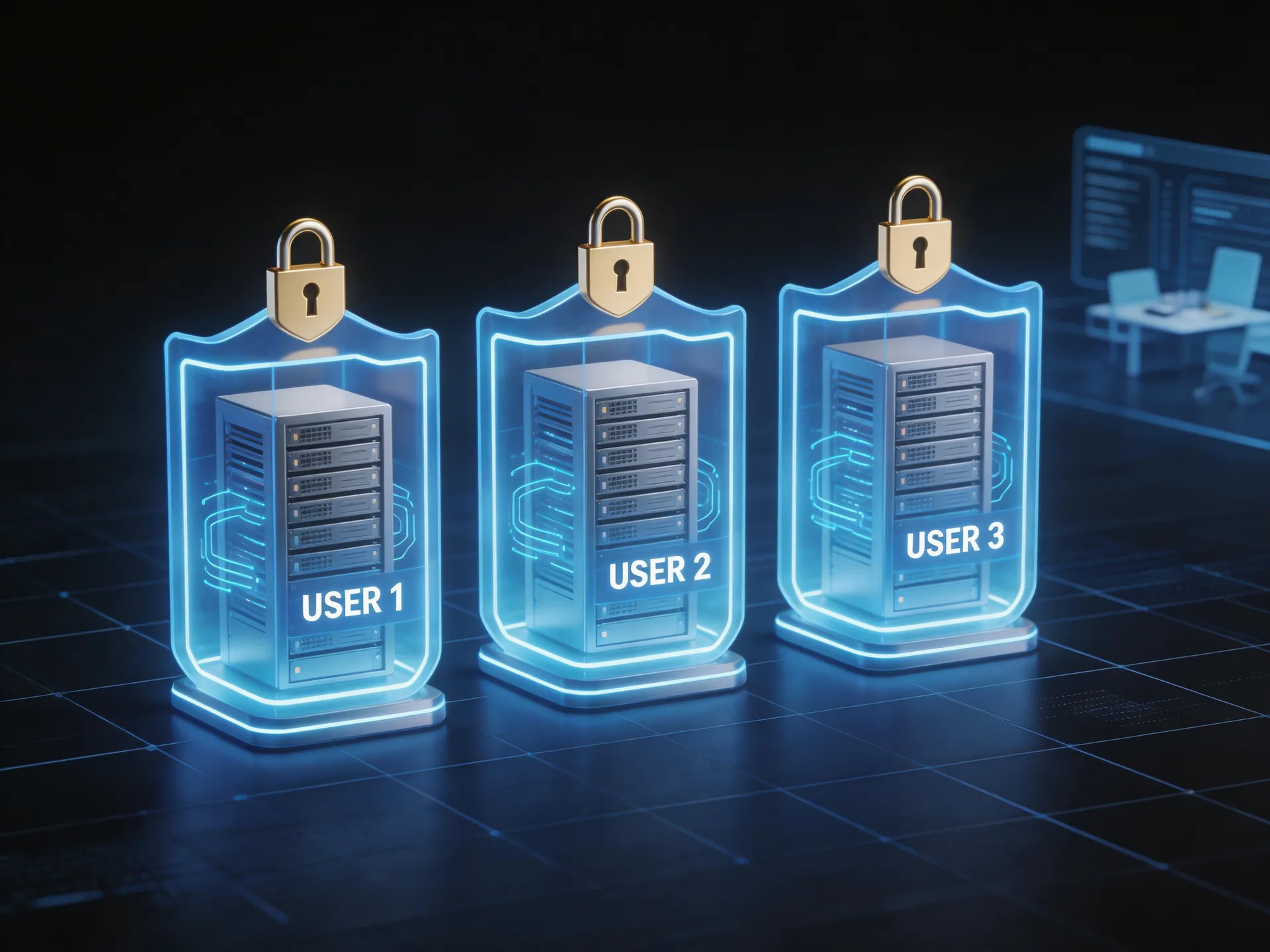
The 2026.4.11 release implements a zero-trust security model for agents. Every agent, regardless of its origin or author, operates within a sandboxed execution environment with explicitly defined permissions. There are no "trusted" agents with blanket access; every capability—file system access, network access, API access, connector access—must be explicitly granted.
This is implemented through a capability-based security system inspired by operating system design. When a user installs a Skill or creates an agent, they see a clear manifest of required capabilities:
Skill: Competitive Analysis
Required capabilities:
- Network access: outbound HTTPS (for web research)
- Connector access: google-search (for search queries)
- File system: write to /workspace/reports/ (for output)
- Token budget: 50,000 tokens per execution
The user can approve, modify, or reject each capability. If a Skill requests capabilities that seem excessive for its stated function, the system flags it for review. This prevents both malicious Skills (a hypothetical Skill that requests file system access to the entire drive) and compromised Skills (a legitimate Skill whose dependencies have been tampered with).
Audit Logging and Compliance
Every action taken by every agent is logged in a tamper-resistant audit trail. This includes:
- Input audit: What prompt or intent triggered the agent
- Decision audit: What reasoning the agent applied at each decision point
- Action audit: What external actions the agent took (API calls, file writes, messages sent)
- Output audit: What the agent produced and where it was delivered
Audit logs are structured in a format compatible with major SIEM systems (Splunk, Elastic, Datadog) and comply with SOC 2 Type II, GDPR, and HIPAA requirements. For organizations in regulated industries, this means that AI-driven processes can be audited with the same rigor as human-driven ones.
Data Sovereignty and Residency
The release introduces data sovereignty controls that allow organizations to specify exactly where their data is processed and stored. This is critical for multinational organizations subject to data localization requirements (e.g., EU data must remain in EU data centers, Chinese data must remain in Chinese data centers).
OpenClaw's architecture supports this through "data zones"—logical boundaries that restrict where agent execution occurs and where data flows. When an agent is configured with a data zone, it is physically unable to send data outside that zone, even if a more efficient processing location exists elsewhere. This is enforced at the infrastructure level, not merely as a configuration flag that could be bypassed.
6. Upgrade Five: One-Click Cloud Deployment
The fifth core upgrade addresses the deployment gap between local and cloud environments. Many organizations want the power of OpenClaw without the operational burden of managing infrastructure. The 2026.4.11 release delivers one-click deployment on both Alibaba Cloud and Tencent Cloud, with AWS, Azure, and Google Cloud support planned for the next release cycle.
Alibaba Cloud Integration
The Alibaba Cloud deployment option leverages Alibaba's Function Compute and Container Service to provide a serverless OpenClaw experience. Users authenticate with their Alibaba Cloud account, select a region, choose a pricing tier (based on expected agent load), and click "Deploy." Within minutes, a fully configured OpenClaw instance is running in their Alibaba Cloud tenancy, with automatic scaling, monitoring, and backup.
The integration goes beyond simple hosting. OpenClaw agents can directly access Alibaba Cloud services—including DingTalk for communication, ApsaraDB for databases, and OSS for object storage—through optimized connectors that leverage internal network paths for reduced latency and cost.
Tencent Cloud Integration
Similarly, the Tencent Cloud deployment option integrates with Tencent's cloud ecosystem. The standout feature here is native integration with WeChat Work (企业微信), allowing OpenClaw agents to interact directly with enterprise communication channels. An agent can monitor WeChat Work group conversations, respond to mentions, share documents, and trigger workflows—all within the WeChat Work environment that millions of Chinese business users already inhabit daily.
This is particularly significant for the Chinese market, where WeChat Work is the dominant enterprise communication platform. By embedding OpenClaw agents directly into WeChat Work, the technology becomes invisible to end users—they interact with AI agents the same way they interact with human colleagues, through the same interface they already use for everything.
Pricing and Token Economics
Both cloud deployments include the 280K free token allocation and offer pay-as-you-go pricing for additional usage. The pricing model is transparent: users pay for compute time (per agent-minute) and token consumption (per thousand tokens), with no hidden fees for connectors, storage, or network transfer within the same cloud region.
For enterprises with predictable workloads, reserved capacity pricing offers significant discounts—up to 60% off pay-as-you-go rates for annual commitments. This makes OpenClaw competitive not just with other AI gateway solutions, but with the cost of maintaining in-house AI infrastructure.
7. The Agent Computer Paradigm: Why OpenClaw Matters
The five upgrades in the 2026.4.11 release are not arbitrary feature additions; they collectively advance the Agent Computer paradigm that OpenClaw embodies. To understand why this matters, it helps to contrast the Agent Computer with its predecessors.
From AI Software to AI Infrastructure
The first generation of AI tools—ChatGPT, Claude, Gemini—provided AI as a service: you sent a prompt, you got a response. The AI was a tool you used, like a calculator or a search engine. The second generation—langchain, AutoGPT, CrewAI—provided AI as a framework: you built AI applications by combining models, prompts, and tools. The AI was a platform you developed on, like a web framework or a database.
OpenClaw represents the third generation: AI as infrastructure. An Agent Computer running OpenClaw is not a tool you use, nor a platform you develop on—it is a system that works for you. The distinction is subtle but profound. When you use a tool, you drive every interaction. When you develop on a platform, you create applications that others use. When you operate an Agent Computer, you define goals and constraints, and the system autonomously determines and executes the actions needed to achieve those goals within those constraints.
The five upgrades in the 2026.4.11 release each reinforce this paradigm:
- Lightweight deployment makes Agent Computers accessible to everyone, not just organizations with DevOps teams
- Intelligent task execution makes Agent Computers genuinely autonomous, not just automated
- Ecosystem integration makes Agent Computers useful within real business contexts, not just isolated sandboxes
- Security and governance makes Agent Computers trustworthy, not just capable
- Cloud deployment makes Agent Computers scalable, not just functional
The Network Effect
The 250K Star milestone matters because of the network effect it creates. OpenClaw's open architecture means that every new user potentially becomes a contributor—building Skills, creating connectors, sharing agent templates. The more users, the more contributions; the more contributions, the more valuable the platform; the more valuable the platform, the more users.
This is the same dynamic that powered the growth of Linux, Kubernetes, and VS Code. OpenClaw is now at the inflection point where the network effect becomes self-reinforcing. The 2026.4.11 release, with its emphasis on accessibility and integration, is designed to accelerate this dynamic.
8. Looking Forward: What Comes Next
The 2026.4.11 stable release is a milestone, not a destination. The OpenClaw roadmap for the remainder of 2026 includes several ambitious initiatives:
Multi-Agent Orchestration: Currently, OpenClaw excels at running individual agents with well-defined tasks. The next evolution is native support for multi-agent teams—groups of specialized agents that collaborate on complex tasks, with built-in coordination protocols, shared memory, and conflict resolution. Imagine a team of agents where one handles research, another handles analysis, a third handles writing, and a fourth handles review—all working together on a single project with minimal human oversight.
Edge Deployment: The lightweight architecture paves the way for running OpenClaw on edge devices—IoT gateways, embedded systems, and even smartphones. This would enable Agent Computer capabilities in environments where cloud connectivity is unreliable or undesirable, from factory floors to remote field operations.
Federated Learning for Skills: One of the most intriguing roadmap items is federated learning for Skill improvement. Currently, Skills are static—they do what they were programmed to do. Federated learning would allow Skills to improve based on usage patterns across the OpenClaw ecosystem, without exposing individual user data. A Skill that drafts business proposals, for example, could learn from the aggregated editing patterns of thousands of users, becoming progressively better at anticipating what a good proposal looks like.
Expanded Cloud Support: AWS, Azure, and Google Cloud deployments are on the horizon, along with support for private cloud environments (OpenStack, VMware). The goal is to make OpenClaw deployable anywhere an organization has compute resources, with the same one-click experience regardless of the underlying infrastructure.
Agent Marketplace: An official marketplace for sharing, selling, and discovering agent templates and Skills is in development. This would create an ecosystem where domain experts can monetize their expertise by packaging it as agent configurations, while organizations can accelerate their AI adoption by purchasing pre-built solutions rather than building from scratch.
The Agent Computer is not a faster computer with AI bolted on—it is a fundamentally new way of relating to technology, where you define the outcome and the system determines the process. OpenClaw's 250K stars prove the world is ready.
KaiheAiBox · OpenClaw Zone