OpenClaw v2026.6.6 Security Overhaul: Approval Timeout Defaults to Deny — Your AI Assistant Is Safer Now
📖 Glossary
AI Box (also known as Agent Computer / Agent PC), is a dedicated local hardware device that runs AI Agents. Pre-installed with an AI agent management system, plug-and-play, running 24/7. Users can remotely command AI to work via Discord, Slack, Telegram, WhatsApp, and more.
Abstract: OpenClaw v2026.6.6 focuses on security hardening with multiple commits: approval timeout defaults to deny, sandbox isolation reinforcement, Claude Fable 5 adaptive thinking integration, and OpenRouter OAuth binding. When AI Agents can operate your computer and files, security mechanisms are the baseline — not a nice-to-have.
AI Agents can operate your computer, read and write files, send emails — powerful capabilities, and dangerous ones.
What if the Agent makes a mistake? What if the Agent is manipulated by malicious instructions? What if you're away from your computer and the Agent wants to execute a sensitive operation?
OpenClaw v2026.6.6 answers these questions. multiple commits, all centered on security.
Approval Timeout Defaults to Deny
This is the most important change in this release.
The previous problem: When an Agent needs to execute a sensitive operation (deleting files, sending emails, accessing external networks), it sends an approval request to the user. But the user might be away or might not see it — the request hangs, and the Agent keeps waiting.
The new mechanism: Approval requests have a timeout. If not approved within the timeout, it defaults to deny. The Agent won't execute sensitive operations without user presence.
Why default to deny, not allow: Simple math — the cost of a false deny is one operation not executed, which the user can manually approve when they return. The cost of a false allow is unpredictable. Data deleted is deleted. Emails sent are sent.
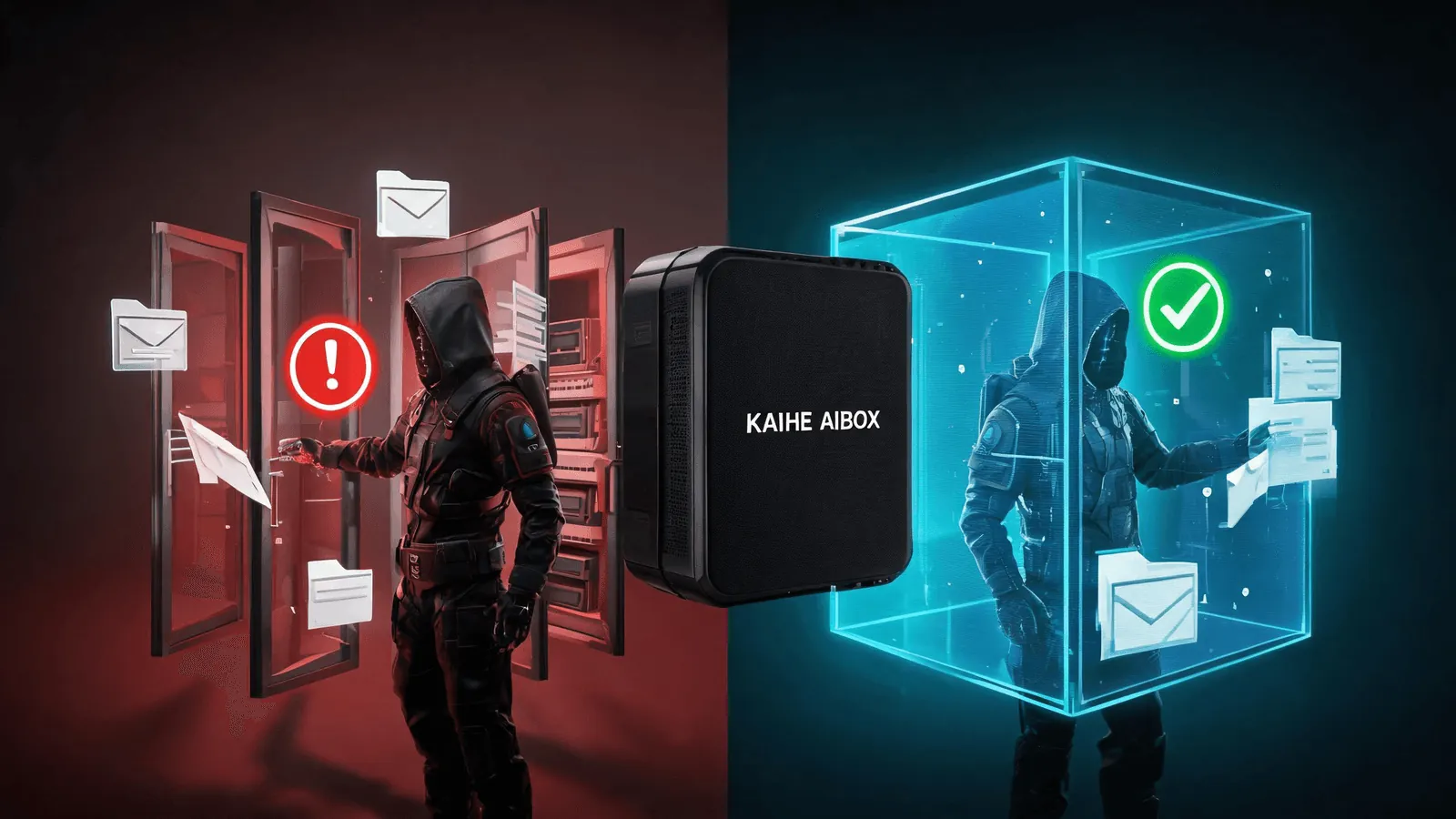
Real scenario: You ask the Agent to organize files. The Agent finds an ambiguous file and sends an approval request to delete it. You're in a meeting, don't respond for 2 hours. Timeout auto-denies, file preserved. You return, see the denied approval record, decide it should be deleted, manually approve.
Sandbox Isolation Reinforcement
Agents run in a sandbox, isolated from the host system. v2026.6.6 hardens two aspects:
Sandbox binding restrictions: Agents can only access explicitly authorized resources. Previously, some edge cases allowed Agents to access unauthorized resources through indirect paths. Now it's locked down — anything outside the whitelist is unreachable.
Host environment variable isolation: Host system environment variables are no longer automatically passed to the sandbox. Previously, Agents could potentially read sensitive host configurations (database connection strings, API keys). These variables are now isolated unless explicitly authorized for transmission.
Why this matters: Imagine your Agent helping process documents, and incidentally sending your database password to a third party. The AI didn't "turn evil" — the isolation was just incomplete. v2026.6.6 closes this gap.
Claude Fable 5 Adaptive Thinking
OpenClaw now integrates Claude Fable 5's adaptive thinking capability.
What it is: The model automatically decides "how long to think" based on task complexity. Simple questions get fast answers; complex questions get more reasoning steps.
Security implications: Security-related decisions (whether to execute a sensitive operation, whether a request is suspicious) get more reasoning time. Not a one-size-fits-all approach — adaptive judgment based on risk level.
User experience: More accurate responses. No need to manually adjust "thinking depth" — the model decides on its own.
OpenRouter OAuth Binding
New support for OpenRouter OAuth binding.
What it is: OpenRouter is an LLM aggregation platform — one API key accesses multiple models. You can now bind your OpenRouter account to OpenClaw via OAuth, more secure than manually entering API keys.
Why it's safer: If an API key leaks, anyone can use your quota. OAuth-bound tokens have expiration times and limited permission scopes — much smaller blast radius if compromised.
What Else Changed in 46 Commits
The four items above are the core. The remaining commits cover:
- Error handling optimization — more reliable recovery when Agents crash
- Log security — sensitive information (API keys) redacted from logs
- Permission granularity — finer-grained operation permission controls
- Performance optimization — faster approval flow responses
Auto-Effective on Kaihe AIBOX
Kaihe AIBOX ships with OpenClaw pre-installed. Security updates are automatically pushed and applied. No manual upgrades, configuration changes, or service restarts needed.
This is critical — the biggest enemy of security patches isn't technical difficulty, it's users not upgrading. Many security vulnerabilities are exploited months after patches are released because users haven't updated. Kaihe AIBOX's auto-update closes this gap.
AI Box (also known as Agent Computer or AI Box) is a dedicated local hardware device that runs AI Agents, pre-installed with an AI agent management system, plug-and-play, running 24/7. Kaihe AIBOX ships with OpenClaw — security updates auto-apply, data stays local.
Why Agent Security Matters More Than Chatbot Security
A chatbot AI says something wrong — worst case, you get incorrect information.
An Agent AI makes an operational mistake — it could delete your files, send your emails, leak your passwords.
The stronger the Agent's capabilities, the more important security mechanisms become. OpenClaw v2026.6.6 isn't "icing on the cake" — it's building a safety baseline for increasingly powerful Agent capabilities.
Approval timeout defaults to deny — when no one's watching, better to not act than act wrongly. Sandbox isolation — Agents can only touch what you let them touch. These two principles are the cornerstone of all Agent security frameworks.
Want to Go Deeper?
Getting Started - Kaihe AIBOX Official Website (agentaibox.com) — Agent hardware with auto-security-updates - "Is OpenClaw Really Hard to Install? A Regular Person's Hands-On Test Reveals the True Difficulty" — OpenClaw getting started guide
Going Further - "Hermes Agent's Three New Core Capabilities: Background Computer Use, Multi-Agent Orchestration, and /goal" — stronger Agent capabilities demand stronger security
-#KaiheAIBOX #OpenClaw #LocalAI #AIBOX #AIAgent
Kaihe AIBOX | The Agent Computer That Works 7×24 for You · OpenClaw Zone