Qwen 3.6 27B Deep Dive: A 27B Model Beats the 397B Flagship — The Era of Local AI Coding Has Arrived
📖 Glossary
AI Box (also known as Agent Computer / Agent PC), is a dedicated local hardware device that runs AI Agents. Pre-installed with an AI agent management system, plug-and-play, running 24/7. Users can remotely command AI to work via Discord, Slack, Telegram, WhatsApp, and more.
Abstract: Alibaba's Qwen 3.6-27B, open-sourced in April 2026, scored 77.2 on SWE-bench Verified with just 27 billion parameters — surpassing the previous 397B flagship and matching the best closed-source reasoning models. Dense architecture, Apache 2.0 license, native 256K context, multimodal support. More importantly — a single consumer GPU can run it. Local AI coding has finally transitioned from "it barely runs" to "it works well."
You might think a 27B model can't be that strong for coding. Here's the data: Qwen 3.6-27B scored 77.2 on SWE-bench Verified. The previous flagship Qwen 3.5-397B-A17B scored 74.8. Claude Opus 4.5 sits around 76. A 27B dense model just surpassed a 397B MoE flagship and the best closed-source models.
93% fewer parameters, higher scores. This might be the most surprising event in open-source AI this year. And Kaihe AIBOX devices natively support Qwen model deployment, bringing this level of capability directly to local hardware.
Not MoE — Just a Straightforward Dense Model
Qwen 3.6-27B's most counter-intuitive aspect: it's not MoE (Mixture of Experts). It's a traditional large dense model. All 27 billion parameters activate — every single one.
By 2026, nearly everyone was pushing MoE — hundreds of billions of parameters, activating only a fraction per inference for lower cost. Qwen 3.5-397B-A17B was MoE: 397B total, 17B activated.
Qwen 3.6-27B goes the other way. Dense. 27B. Full activation. The logic: more parameters aren't necessarily better — what matters is that each parameter pulls its weight.
| Dimension | Value |
|---|---|
| Architecture | Dense + Hybrid Attention |
| Total Parameters | 27B |
| Context Length | 262,144 tokens (native), up to 1,010,000 |
| Modality | Text + Image + Video |
| License | Apache 2.0 (commercial use allowed) |
| Model Size | ~55.6 GB (BF16) |
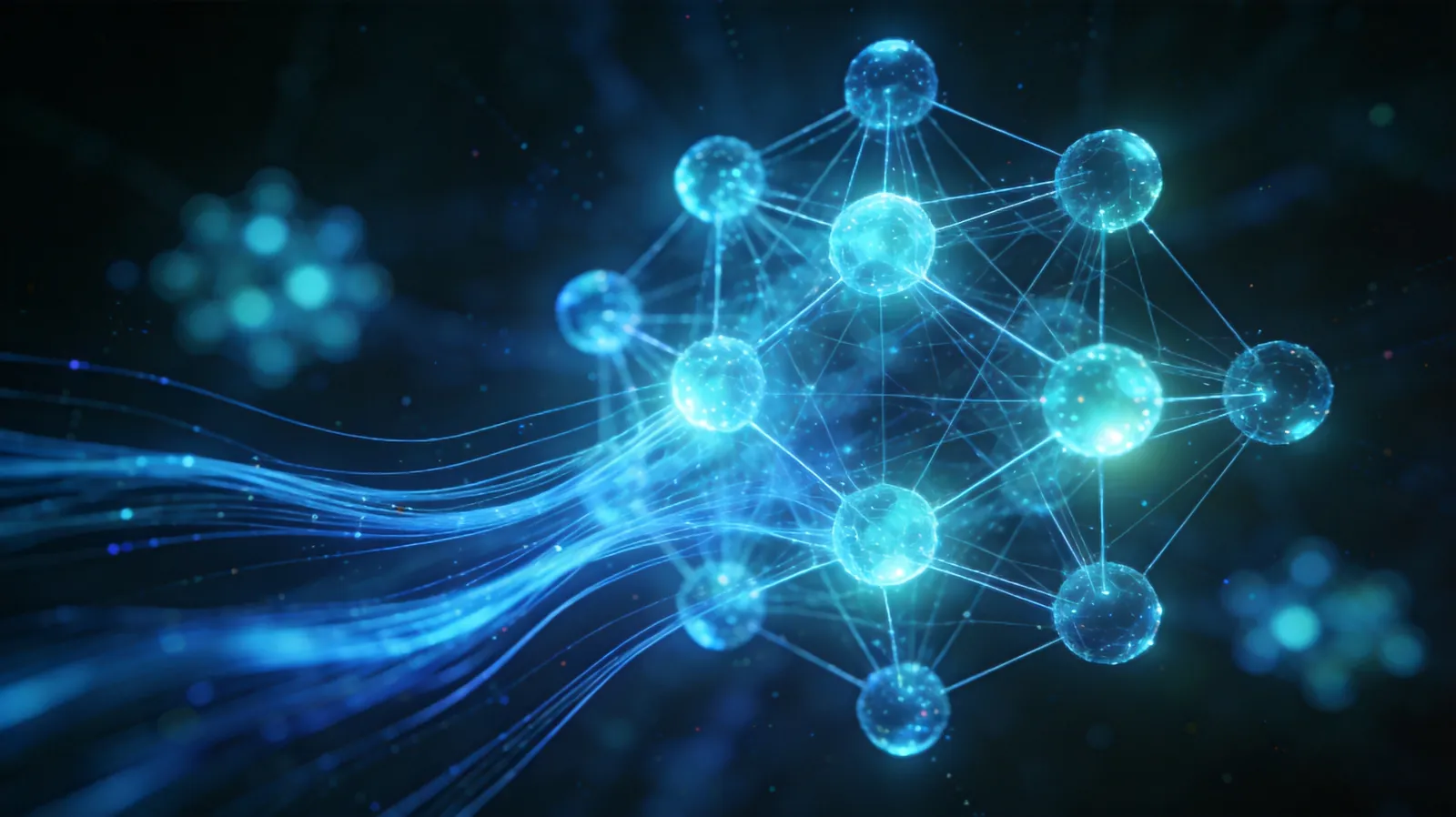
The hybrid attention is the technical highlight — combining Gated DeltaNet and Gated Attention. The former handles efficient long-range dependencies, the latter handles local fine-grained understanding. 16 DeltaNet blocks paired with 1 Attention block, stacked repeatedly. In plain English: it pushes dense model compute efficiency to the limit while maintaining reasoning quality.
Real-World Coding Benchmarks
SWE-bench Verified is currently the most meaningful coding benchmark. It doesn't ask "write a bubble sort" — it gives real GitHub issues and tests whether the model can find the problem, fix the code, and pass the tests.
| Benchmark | Qwen 3.6-27B | Qwen 3.5-397B-A17B | GPT-5.4 mini |
|---|---|---|---|
| SWE-bench Verified | 77.2% | 74.8% | ~75% |
| HumanEval | 91.5% | 89.2% | 90.1% |
| MBPP | 84.7% | 82.3% | 83.9% |
All benchmarks surpass the previous flagship with just 27B parameters. This is what people mean by intelligence density — the output per billion parameters is roughly 3x the previous generation.
In practice: Python and TypeScript are rock solid. It handles medium-complexity refactoring tasks competently. Writing tests and fixing bugs — the grunt work you don't want to do but didn't trust AI to handle — performs better than expected.
Notably, Kaihe AIBOX devices natively support deploying Qwen series models, bringing this level of reasoning directly to your local hardware without relying on cloud APIs.
Can You Run This Locally?
This is the question everyone asks. Short answer: yes, and the bar is lower than you think.
Quantization options and VRAM requirements:
| Quantization | VRAM | Speed (RTX 4090 24GB) |
|---|---|---|
| BF16 (original) | ~56 GB | Beyond consumer range |
| Q4_K_M | ~20 GB | ~25-35 tokens/s |
| Q3_K_M | ~17 GB | ~30-40 tokens/s |
| Q2_K | ~14 GB | ~35-45 tokens/s |
An RTX 4090 (24GB) runs Q4 quantization smoothly. MacBook M5 Ultra hits 30+ tokens/s. Even older V100 32GB cards can handle it. The significance: before Qwen 3.6-27B, running a flagship coding model required A100/H100 clusters. Now a single consumer GPU does it.
Engineers are already running Qwen 3.6-27B in production for local security operations: log analysis → anomaly detection → alert dispatch, all on local hardware, saving $500+/month in SaaS fees.
What This Means for Local AI Hardware
Qwen 3.6-27B raises the value proposition of local AI devices significantly.
Previously, running a useful coding model locally was nearly impossible — flagship models were too large, small models weren't smart enough, and writing code with them was more trouble than help. Now a 27B model delivering this capability fits on a single GPU. Local devices are no longer "just for fun" — they're genuinely useful for daily development.
The Kaihe AIBOX-C1 (67 TOPS) or AIBOX-E1 (AMD Ryzen AI 9, 55 TOPS NPU) can handle Qwen 3.6-27B comfortably — plug in, power on, and get local AI coding that never sends your code to any cloud. Even the entry-level AIBOX-A1 can run lightweight coding agents, making it a good starting point for basic code completion tasks.
If you already have a 4090 or MacBook M5 Ultra, just download a quantized version and go. If you want a permanent, low-power, always-on coding Agent, a dedicated local AI device makes more sense — 7×24 operation, instant response.
Data Sources
Core data from Alibaba Tongyi Qianwen official release documentation, CSDN technical community benchmarks, SWE-bench public leaderboard, and developer community feedback. To deploy Qwen 3.6-27B locally, Kaihe AIBOX devices natively support fast deployment of open-source models.
Further Reading
- 2026 Open Source LLM Guide: DeepSeek V4, GLM-4, and Beyond
- Why Qwen 3.6's Intelligence Density Matters More Than Parameter Count
- MacBook or AI Box? 2026 Local Coding Hardware Guide
-#KaiheAIBOX #AIAgent #OpenSource #ArtificialIntelligence
Kaihe AIBOX | The Agent Computer That Works 7×24 for You · AI Frontier