📖 Glossary
AI Box (also known as Agent Computer / Agent PC), is a dedicated local hardware device that runs AI Agents. Pre-installed with an AI agent management system, plug-and-play, running 24/7. Users can remotely command AI to work via Discord, Slack, Telegram, WhatsApp, and more.
Summary: Qwen has fully opened its Agent platform to third-party creators, allowing enterprises to build and operate AI agents independently. This marks China's AI Agent platform competition shifting from a "battle of tools" to a "battle of ecosystems" — a war for developers, scenarios, and users has officially begun.
1. Qwen Opens Its Doors: From Walled Garden to Open Platform
In the second half of 2025, Alibaba's Qwen (Tongyi Qianwen) APP did something few domestic tech giants had done before — it fully opened its Agent creation and onboarding channel to third parties. Enterprises, developers, and individual users can now create their own AI agents within the Qwen APP, set up dedicated knowledge bases, workflows, and interaction logic, and distribute directly to Qwen's hundreds of millions of users.
The significance of this move goes far beyond the feature itself.
Before this, the strategy of almost every Chinese LLM company was "I'll build the Agents myself." Whether it was Baidu's Wenxin Agents, ByteDance's Coze, or iFlytek's Spark Assistants, the underlying logic was the same: the large model is the core asset, Agents are just an application layer on top, and it's best to control everything in-house. Qwen's move to completely open the door is essentially saying: "I'm not just building models and tools — I'm building an ecosystem."
The core mechanisms of this opening include: third parties can create independently operated Agent spaces within the Qwen APP; support for custom knowledge base uploads, plugin calls, and workflow orchestration; Agents can directly reach Qwen APP's existing users; and creators can view operational data and user feedback. This mechanism is essentially replicating the "mini-program" logic — the platform provides traffic and infrastructure, developers provide scenarios and content, and users get a richer service experience.
The endgame of platform competition is never about whose model is stronger — it's about whose ecosystem is more thriving.
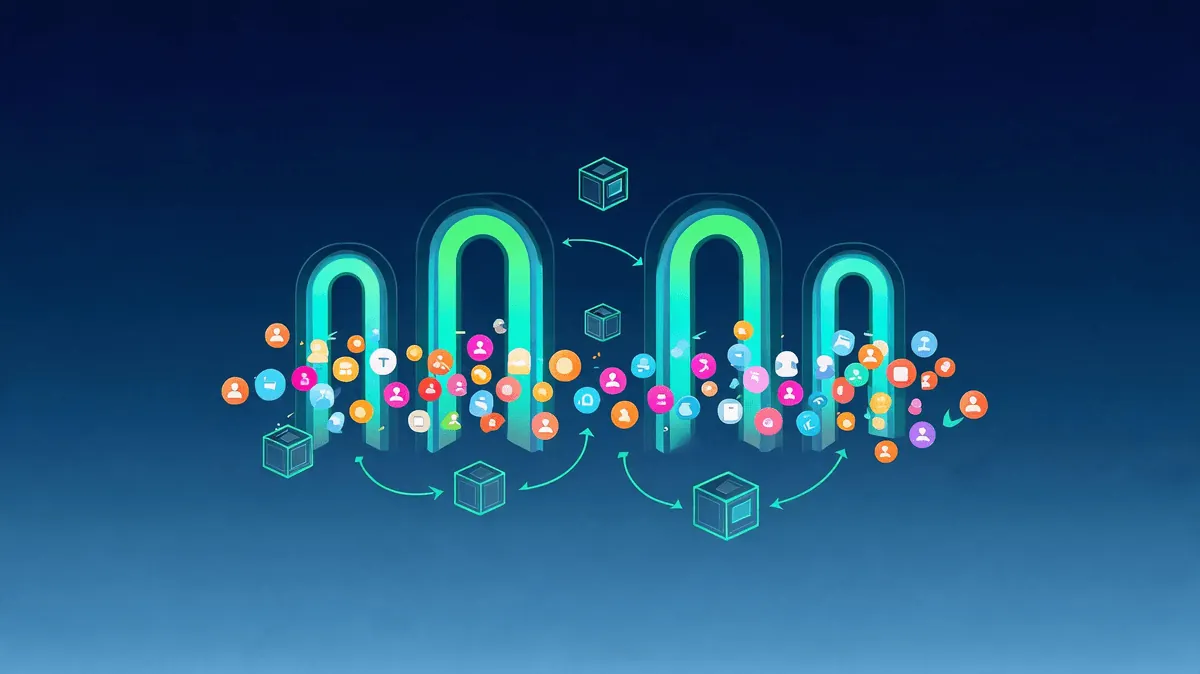
2. The Three-Way Battle: Qwen vs Coze vs Dify
With Qwen opening Agent onboarding, the Chinese AI Agent platform landscape has become much clearer. Three types of representative players have emerged:
Type 1: Traffic Platforms — Qwen, Wenxin Agents
The core advantage is "built-in traffic." Qwen APP has over 100 million monthly active users, and Wenxin has a considerable user base as well. For Agent developers, choosing this type of platform means zero-cost access to massive user reach. But the flip side is that the platform has absolute control over distribution rules — developers are essentially "doing business on someone else's turf," with traffic allocation, ranking logic, and revenue sharing all determined by the platform.
Type 2: Tool Platforms — Coze, FastGPT
Coze is ByteDance's Agent development platform, taking a "low-code + workflow" approach that emphasizes the building experience and plugin ecosystem. FastGPT targets technical users, providing knowledge base management and API integration capabilities. These platforms offer good development experience and high flexibility, but lack their own traffic — you still have to find users for the Agents you build.
Type 3: Open-Source Platforms — Dify, Langflow
Dify and Langflow target developer communities, providing fully open-source Agent orchestration frameworks. The advantage is maximum freedom — private deployment, complete data and process control. The disadvantage is that they're unfriendly to non-technical users and lack platform-level distribution capabilities.
Each type has its winning cards. But a key trend is emerging: traffic platforms are moving downward to absorb tool capabilities, while tool platforms are moving upward to find traffic entry points. Qwen's opening is a classic case of "downward compatibility" — originally it only did models and consumer apps, now it gives you development tools and traffic together, attracting you to build on its platform. Meanwhile, Coze is trying to connect with Douyin's ecosystem to fill its traffic gap.
When tool platforms chase traffic and traffic platforms build tools, their boundaries blur — the ultimate competition is who can close the "developer × scenario × user" flywheel first.
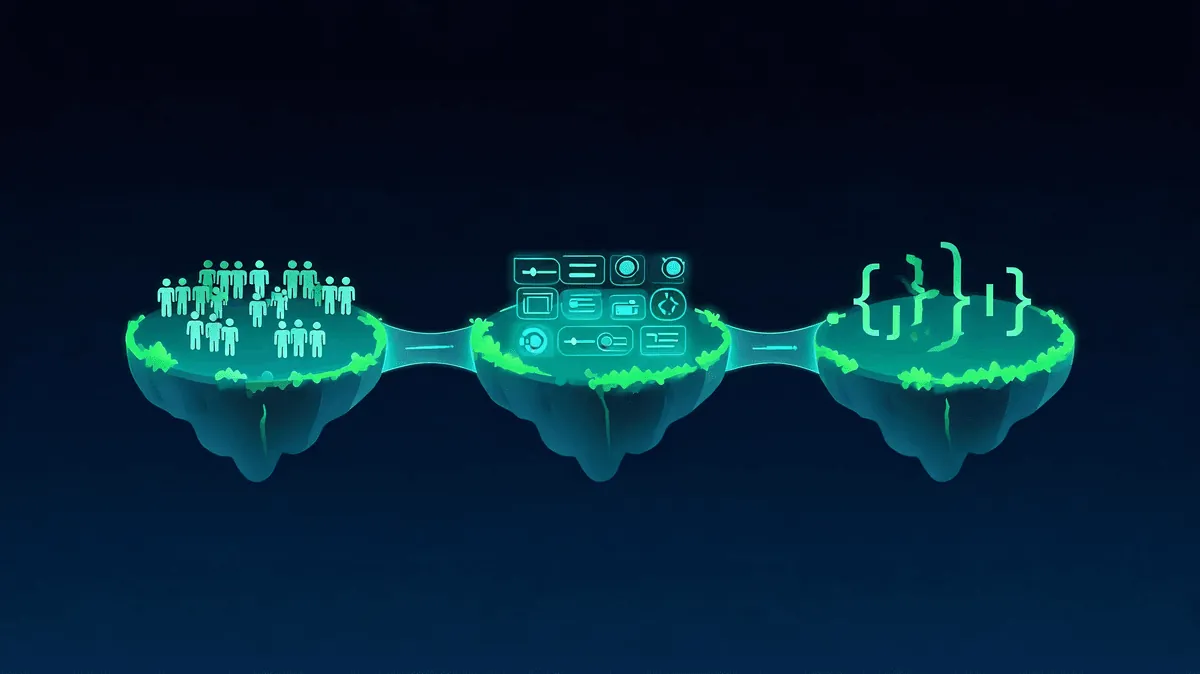
3. The Core Questions of the Agent Ecosystem: Who Runs It, Where, and How?
The Agent platform competition appears to be about winning developers, but the deeper questions are actually three:
First, who runs the agents? Most Agent platforms currently answer "cloud execution." Your created Agent runs on the platform's servers, and users interact through apps or web interfaces. This is convenient, but it also means your Agent is constrained by the platform's compute allocation, service stability, and data security policies. For enterprise scenarios — especially Agents handling customer data and internal processes — pure cloud execution isn't always the optimal choice.
Second, where do agents run? This is a question many overlook. An Agent isn't a one-time conversation — it needs continuous execution, scheduled tasks, and long-term memory. A customer service Agent needs to be online 24/7, a data monitoring Agent needs to check every 5 minutes. But your computer can't stay on forever, and cloud platform Agents often go dormant after a conversation ends.
Third, how do agents keep running? Continuous execution involves compute costs, network stability, and operational complexity. Cloud billing is usage-based, making long-term operation expensive; local execution requires devices to stay online and someone to maintain them. For small and medium enterprises and individual developers, this has been a puzzle without a good solution.
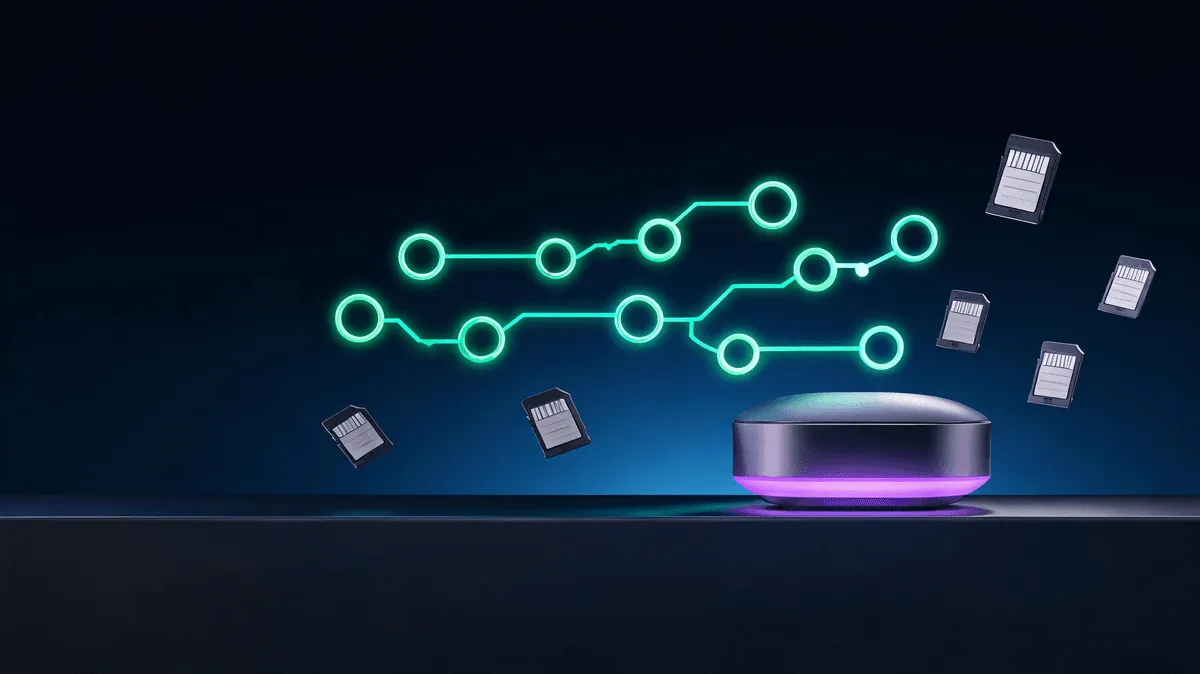
These three questions together point to an emerging need: a computing carrier specifically designed for AI agents — not a general-purpose computer, not a cloud server, but an "Agent Computer." It needs low-power always-on operation, local scheduling combined with cloud inference, and out-of-the-box usability without maintenance. The KaiheAiBox A1 moves in this direction: ARM architecture, 6 TOPS compute power, 24/7 Agent operation, pre-installed proprietary application management system, WeChat scan-to-start. Its positioning is not a general-purpose PC, but a "computing device specifically for running agents," suited for users who don't want to deal with servers but need their Agents continuously online.
The future of agents isn't "use once, shut down once" — it's "always on, always responsive" — and that requires a dedicated computing carrier, not a computer that shuts down.
4. The Essence of the Ecosystem War: From "Whose Model Is Stronger" to "Who Has More Agents"
Returning to Qwen's opening of Agent onboarding itself, its strategic intent is clear: attract developers through openness, enrich scenarios through developers, and retain users through scenarios. Once this flywheel starts spinning, Qwen is no longer just a "chatbot" — it becomes an "Agent supermarket."
But this path isn't easy. There are at least three checkpoints:
Checkpoint 1: Developer Incentives. Why would developers come to your platform? Traffic is one aspect, but the more critical factor is the monetization path. WeChat mini-programs thrived because developers could make money. If Agent developers can't earn on Qwen, the flywheel won't turn. Currently, the commercialization models of domestic Agent platforms are still being explored — ad revenue sharing, subscription fees, and API usage billing are all being tested, but no mature model has emerged yet.
Checkpoint 2: User Awareness. Ordinary users are still unfamiliar with the concept of "Agent." They know ChatGPT can chat and Qwen can write copy, but the mindset of "I should use an Agent to help me do something" hasn't been established. Platforms need a large number of quality Agents to educate the market, but the development of quality Agents depends on validating user demand — this is a chicken-and-egg problem.
Checkpoint 3: Data and Privacy. When Agents penetrate enterprise workflows and personal lives, the data they touch becomes increasingly sensitive. Customer service Agents handle customer information, financial Agents access financial data, health Agents know your biometric indicators. Placing this data on third-party platforms creates extremely high trust costs. This is precisely where localized execution solutions find their entry point — when data doesn't need to leave your device, privacy and security become natural selling points.
Qwen's opening is an important step in the platformization of AI Agents, but the outcome of this war won't be determined by who opens first — it will be determined by who first builds a dense enough ecosystem network. Developers' time is limited, users' attention is limited, and the platform that first closes the "development-distribution-monetization" loop will be the ultimate winner.
For users, the benefit of this competition is obvious: more and more Agent platforms mean lower development barriers and richer agent choices. And when you truly want an Agent working for you 24/7, what you need isn't just a platform — you need a "home" where it can keep running, whether that's the cloud, local, or a dedicated Agent Computer.
KaiheAiBox | Agentaibox that lets AI work for you 24/7 · AI Agent