July 2026 turned out to be a ridiculously busy week for AI. In the span of 48 hours, ByteDance dropped Seedream 5.0 Pro — a massive leap in text-to-image with native Chinese typography support. OpenAI released GPT-5.6 with a 30% reasoning improvement over 5.5. And SpaceXAI launched Grok 4.5 with best-in-class coding benchmarks and a sharper context window.
For most people, this news triggers a specific kind of anxiety: "Great, another model I need to figure out. Which one do I pick? Do I switch? Will my old prompts still work?" This anxiety is real and it's exhausting. But it's also unnecessary — if your AI setup lets you use all of them interchangeably.
That's the difference between using AI through a cloud subscription and running it on your own hardware. With a cloud subscription, every new model launch is a decision: stick with what you have or migrate everything. With a Kaihe AIBOX, every new model launch is just another tool you can reach for. No migration. No commitment. No switching cost.
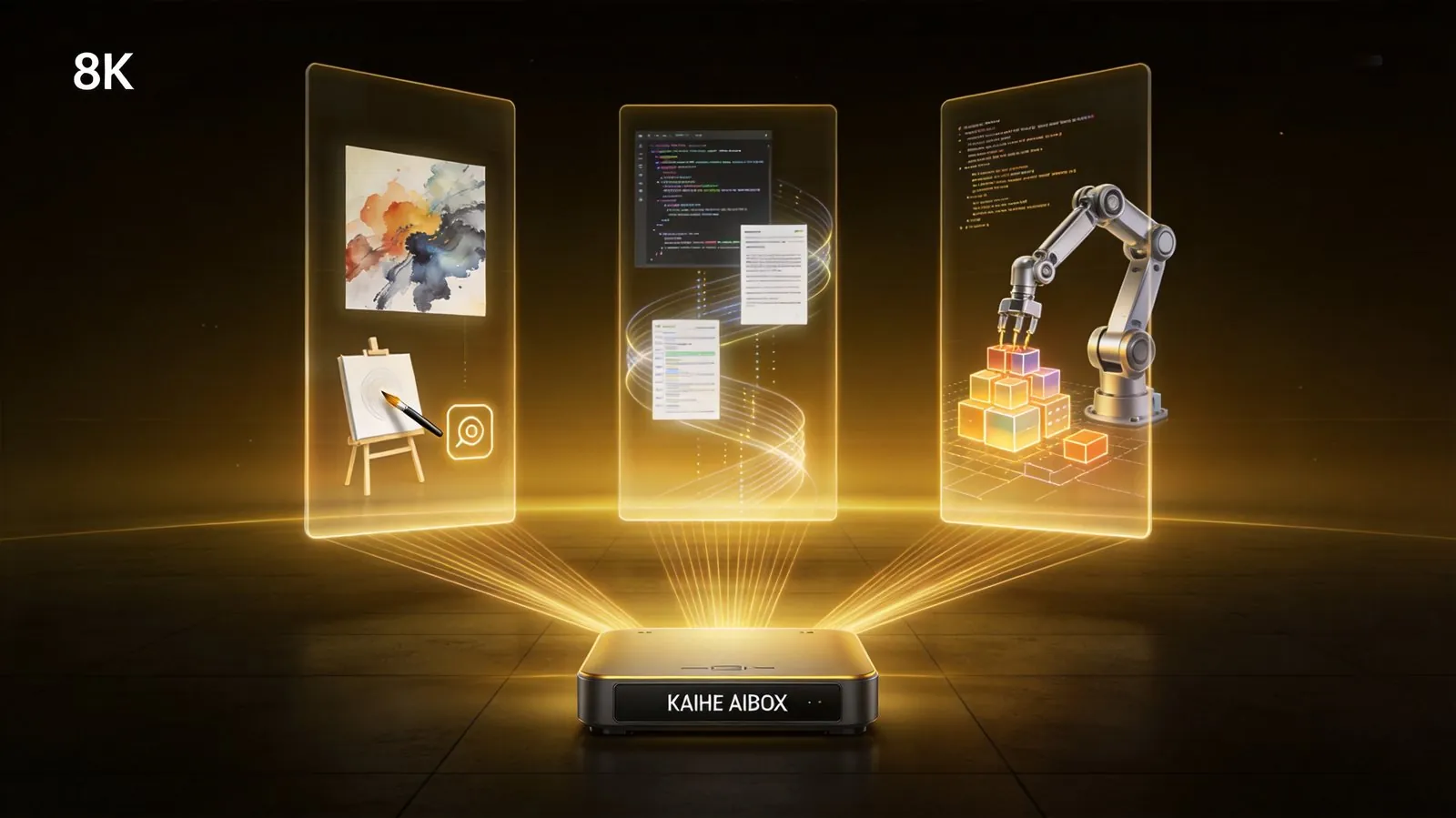
What Each Model Actually Excels At
📖 Glossary
AI Box (also known as Agent Computer / Agent PC), is a dedicated local hardware device that runs AI Agents. Pre-installed with an AI agent management system, plug-and-play, running 24/7. Users can remotely command AI to work via Discord, Slack, Telegram, WhatsApp, and more.
Let's cut through the hype and look at what each model does best based on real testing, not benchmarks.
Seedream 5.0 Pro is the image generation champion. The standout feature is native Chinese text rendering — previous models would produce garbled characters when asked to include Chinese text in images. Seedream 5.0 renders clean, readable Chinese typography on posters, product images, and social graphics. For content creators and e-commerce sellers who need Chinese-language visuals, this is a game-changer. Image quality is noticeably sharper than the previous version, especially in lighting and texture detail.
GPT-5.6 is the reasoning workhorse. The 30% improvement shows most clearly in multi-step logical tasks — contract analysis, technical documentation, data interpretation that requires connecting multiple data points. If you need an AI to read a 50-page report and answer specific questions about inconsistencies or implications, this is the model you want on the job. It's also noticeably better at not hallucinating when faced with ambiguous queries — it'll tell you it's not sure rather than making something up.
Grok 4.5 is the coding specialist. Its benchmark scores for code generation, debugging, and code explanation are genuinely impressive. The context window improvement means it can handle much larger codebases without losing track of what it was doing. If your work involves software development or technical automation, Grok 4.5 is the engine you want handling those tasks.
The Real Story Isn't the Models — It's the Freedom to Switch
Here's what nobody in the AI press is talking about: the most valuable capability in 2026 isn't having the best model. It's having the freedom to use any model, any time, without friction.
Cloud AI users face a real dilemma. Every new model launch is a potential migration project. Your prompts need tweaking. Your workflows need testing. Your pricing might change. You're constantly evaluating whether the upgrade is worth the switching cost. This is exhausting and it slows down your actual work.
Kaihe AIBOX users don't have this problem. Want to use Seedream for images, GPT-5.6 for analysis, and Grok 4.5 for code? You just configure them once and they're all available. The box handles the switching. You don't even think about which model is handling which task — you just tell the AI what you need done, and it routes to the right model automatically.
This architecture is fundamentally different from the cloud model. Cloud AI is like having a Netflix subscription — you pick one and you're stuck with their catalog. Local AI on a Kaihe AIBOX is like owning the hardware and being able to install whatever software you want. The models are tools, not services. You own the tools.
What This Means for Your Daily Work
Let me make this concrete. Say you're running a small business. In a single day, you might need to: create a promotional poster with Chinese text (Seedream 5.0 Pro), analyze your quarterly financials and flag anomalies (GPT-5.6), and build a small automation script to pull daily sales data into a report (Grok 4.5).
On a cloud AI setup, you'd need at least two subscriptions — probably three — and you'd be copy-pasting between different interfaces all day. With a Kaihe AIBOX, you send all three requests the same way (WeChat, web interface, whatever you prefer) and the results come back. You don't manage models. You manage tasks.
The Bigger Pattern: AI Models Are Becoming Commodities
Here's a prediction that's already coming true: individual AI models are rapidly becoming interchangeable commodities. The differences between the top models are shrinking with every release cycle. What matters more and more isn't which model you use — it's whether your infrastructure lets you use all of them freely.
The people still worrying about "GPT vs. Claude vs. Gemini" are asking the 2024 question. The 2026 question is: "How do I set up my AI environment so that model launches are exciting rather than stressful?" The answer starts with owning your hardware. A Kaihe AIBOX means a new model launch is just a notification, not a decision. Download, install, available. That's it.
The three models launched this week are all impressive. Each one does something better than the others. The Kaihe approach is simple: take all of them. Why choose when you don't have to?
Further Reading
- Doubao & Qianwen Killed Their Agent Features Same Day — Here's How to Migrate in 3 Minutes
- Why Not Just Install AI on Your PC? 5 Reasons a Standalone AI Box Is Better
Want to learn more about Kaihe AIBOX
Contact: [email protected]