Three Departments Issue AI Agent Regulations: 19 Scenarios Defined — Industry Moves From Wild Growth to Regulated Development
📖 Glossary
AI Box (also known as Agent Computer / Agent PC), is a dedicated local hardware device that runs AI Agents. Pre-installed with an AI agent management system, plug-and-play, running 24/7. Users can remotely command AI to work via Discord, Slack, Telegram, WhatsApp, and more.
Abstract: The Cyberspace Administration of China, NDRC, and MIIT jointly issued the "Implementation Opinions on Standardized Application and Innovative Development of AI Agents," covering five major directions and 19 typical application scenarios. From scientific research to social governance, the policy marks the AI Agent industry's transition from unregulated growth to a rule-based framework.
China's AI Agent industry finally has its official roadmap.
Recently, the Cyberspace Administration of China (CAC), the National Development and Reform Commission (NDRC), and the Ministry of Industry and Information Technology (MIIT) jointly issued the "Implementation Opinions on Standardized Application and Innovative Development of AI Agents." This is China's first dedicated policy document for AI agents, establishing both safety boundaries and innovation space.
Five Major Directions, 19 Scenarios
The Implementation Opinions categorizes agent application scenarios into five directions:
1. Scientific Research R&D theoretical reasoning, simulation agents. Software development agents covering the full pipeline: requirements analysis, architecture design, code generation, and testing.
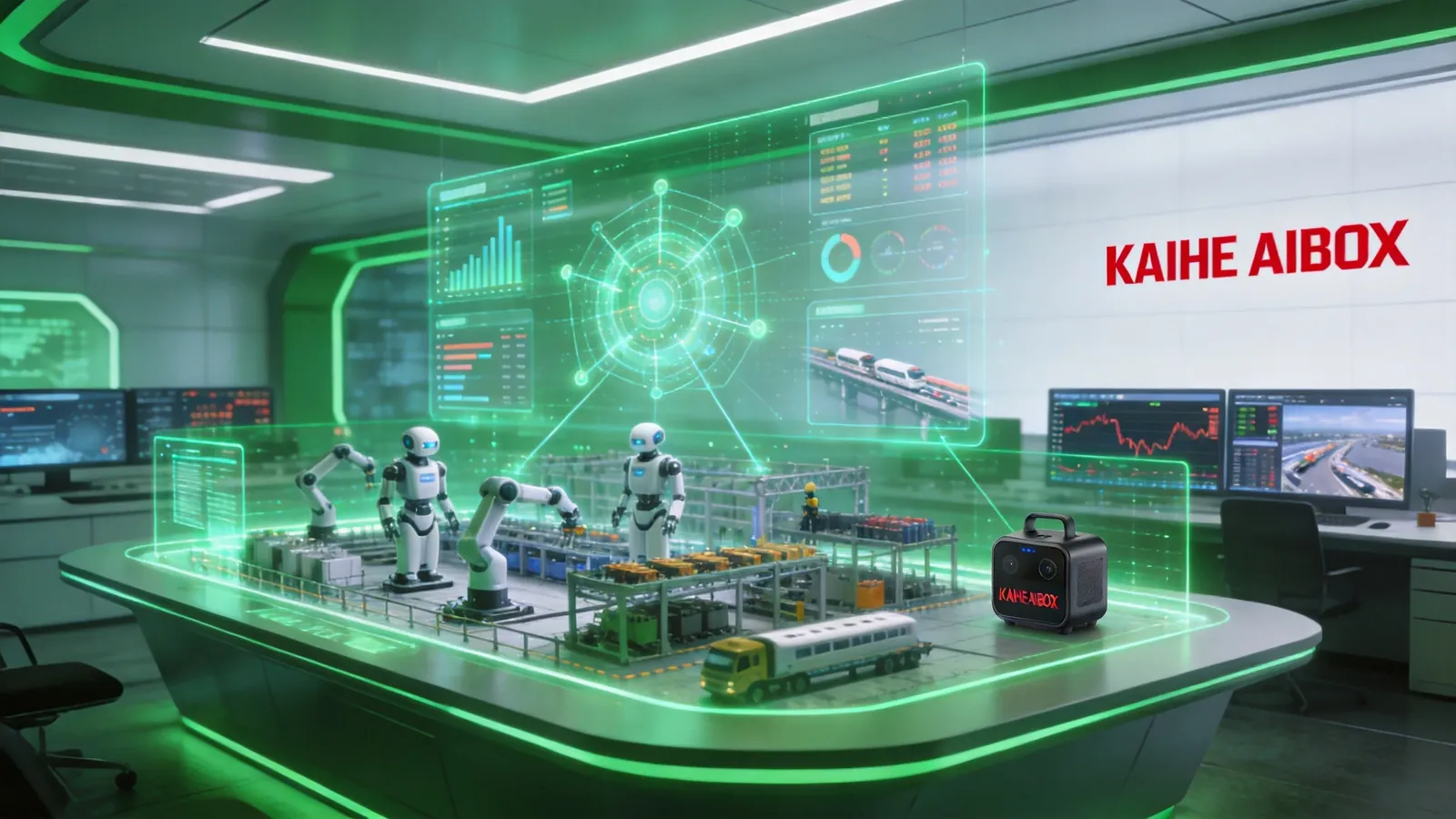
2. Industrial Development Covering smart manufacturing, energy resources, transportation, agriculture, and financial services. Specifically mentions integrating agents with CNC machines, industrial robots, and automated production lines; developing power dispatch agents; and researching transportation safety monitoring, agricultural services, and financial risk control agents.
3. Boosting Consumption Agent applications for consumers, improving experience and service efficiency.
4. Public Welfare Education, healthcare, elderly care, and other livelihood-oriented agent deployments.
5. Social Governance Public safety, emergency management, and urban governance.
19 scenarios span the full chain from "national infrastructure" to everyday applications.
Why This Document Matters
The AI agent industry had several clear problems before:
Ambiguous definition. What counts as an AI agent? What doesn't? How is it different from traditional automation scripts? No official definition — every company had its own story.
Unclear scenarios. Where can agents actually be used? What sectors have access barriers? Companies wanted to invest but held back, afraid of crossing lines.
Missing safety boundaries. Agents can execute tasks autonomously — who's responsible when things go wrong? How is data security guaranteed? Where are the privacy lines?
The Implementation Opinions isn't limiting growth — it's drawing a clear track. You can run, but within these boundaries. Knowing where the edges are actually makes companies more willing to invest.
What It Means for Developers
Scenarios are clearer. 19 typical scenarios give developers a roadmap. Many wanted to build agents but didn't know where to start. Now there's an official guide.
Compliance costs drop. Previously, building agent applications meant figuring out compliance on your own. Now there's a policy framework — what you can and can't do is defined, reducing trial-and-error costs.
Industry barriers rise — and that's good. In the wild growth phase, anyone could build an agent and quality was all over the map. With standards in place, the losers are low-quality players; the winners are those who build serious products.
Local Deployment and Compliance
The Implementation Opinions specifically emphasizes data security and privacy protection. For agent applications, data security is an unavoidable proposition — the process of an agent executing tasks is a process of handling data.
This means scenarios involving core enterprise data and user privacy have natural demand for on-device deployment where data never leaves. Cloud for convenience scenarios, local for security scenarios — two parallel paths is a rational choice under the policy framework.
Three Directions Worth Watching
Financial risk control agents. Explicitly named. Financial industry data is sensitive — it needs AI capability but has hard requirements for data security. Local deployment solutions have clear advantages in this scenario.
Software development agents. Requirements analysis, architecture design, code generation, testing — full pipeline coverage. This means the policy officially recognizes AI coding as a typical agent application, a positive signal for the coding Agent sector.
Transportation safety monitoring agents. Violation detection, risk early warning, emergency dispatch — these scenarios demand real-time performance and reliability. Local deployment + edge inference has genuine demand in this direction.
Want to Go Deeper?
"AI Agent Market Explosion: 449 Billion RMB, 107% Annual Growth" — market scale and growth "2026, Year One of the Agent Era: From Chatting to Getting Things Done" — industry trends
-#AIAgent #AgentRegulation #AIPolicy #ArtificialIntelligence #Compliance
Kaihe AIBOX | The Agent Computer That Works 7×24 for You · AI Agent