China's Three Telecom Operators Now Sell AI Tokens: 9.9 Yuan for 10M Tokens — Computing Power Becomes Phone Bill
📖 Glossary
AI Box (also known as Agent Computer / Agent PC), is a dedicated local hardware device that runs AI Agents. Pre-installed with an AI agent management system, plug-and-play, running 24/7. Users can remotely command AI to work via Discord, Slack, Telegram, WhatsApp, and more.
Abstract: On World Telecommunications Day 2026 (May 17), China Telecom pioneered a nationwide trial commercial Token package starting at 9.9 yuan/month. China Mobile and China Unicom followed shortly after. The collective entry of China's three major telecom operators into AI computing retail signals that Tokens are transitioning from "a technical concept for developers" to "a subscription-based infrastructure service for ordinary people." But how's the actual rollout? Our investigation reveals: hype precedes delivery.
I. What Are Token Packages? Explaining for the Non-Technical Reader
If you haven't yet interacted with large language models, "Token" might be an opaque term. Here's a simple explanation: a Token is the basic unit of text processing in AI models—a Chinese character typically consumes 1-2 Tokens, while an English word consumes 1-4 Tokens. Every time you send a message to or receive one from an AI model, Tokens are being consumed.
To make this concrete: sending a question like "What's the weather in Beijing today?" might consume about 15-20 Tokens. The AI's response ("The weather in Beijing today is sunny with a high of 22°C...") might consume 200-300 Tokens. A single back-and-forth conversation of moderate length could easily consume 3,000 to 5,000 Tokens. A longer interaction that involves analyzing a document, writing an email, or debugging code could consume 50,000 to 200,000 Tokens in a single session.
Traditionally, Tokens have been the exclusive domain of API developers—a pay-per-use model requiring registration on cloud platforms, API key configuration, and code integration. For ordinary users, accessing AI meant either using free tiers (with limited features, rate limits, and watermarked outputs) or subscribing to monthly plans (costing dozens to hundreds of yuan). Tokens were far removed from daily life—a technical abstraction that only engineers and AI enthusiasts needed to understand.
What the three major telecom operators have done is a game-changing move: bundling Token packages with phone bills, making AI computing power as simple as recharging a phone.
To understand why this matters, consider the evolution of mobile data. In the early 2000s, mobile internet access was billed per kilobyte—accessing a single webpage could cost several yuan. For most users, this meant mobile internet was effectively unusable for anything beyond the most basic tasks. When flat-rate monthly data plans appeared, mobile internet usage exploded because the pricing model aligned with how people actually used the service. Users no longer had to mentally ration every webpage load or app refresh. They could browse freely, and their only constraint was the total data cap of their plan.
Token packages follow the same logic: by bundling consumption into predictable monthly costs, they eliminate the anxiety of per-use billing and make AI usage feel like a utility rather than a metered service. When you know you have 10 million Tokens per month, you stop worrying about whether each question "costs too much" and start focusing on whether the AI's answer is useful. That psychological shift—from scarcity mindset to abundance mindset—is where the real impact lies.
When AI computing power shifts from "pay-per-call" to "monthly subscription," its positioning transforms from "professional service" to "infrastructure"—just as data plans shifted from "per-KB billing" to "monthly packages."
II. The Full Picture: Comparing All Three Operators' Token Packages
China Telecom: The Most Aggressive, First Nationwide Trial Commercial Launch
On World Telecommunications Day, May 17, 2026, China Telecom launched the first nationwide trial commercial Token package, covering both individual and enterprise scenarios. This was not a pilot program in a single city or province—it was a coordinated nationwide rollout, signaling that China Telecom had completed the backend integrations required to support Token billing at scale.
Individual Plans: - Light Enjoy (轻享版): 9.9 yuan/month, 10 million Tokens - Standard Enjoy (畅享版): 29.9 yuan/month, 40 million Tokens - Premium Enjoy (尊享版): 49.9 yuan/month, 80 million Tokens
Enterprise Plans: - Starter (入门版): 39.9 yuan/month, 15 million Tokens - Professional (标准版): 99.9 yuan/month, 50 million Tokens - Enterprise Pro (专业版): 299.9 yuan/month, 150 million Tokens
China Telecom's core value proposition: direct phone bill deduction. Tokens are charged from your mobile phone bill—no need to register on any additional platform, no need to set up payment methods, no need to understand what an API key is. Supports cross-model invocation of over 30 mainstream LLMs, including DeepSeek, Zhipu GLM, Baichuan, and other popular models.
The significance of phone bill deduction cannot be overstated. For most Chinese consumers, mobile phone bills are already a settled, familiar expense. Adding AI Token costs to an existing bill eliminates the friction of managing yet another subscription service. Users don't need to understand API keys, cloud platforms, or technical concepts—they just see a line item on their monthly phone bill, exactly like data overages or international calling fees.
There's also a psychological dimension to phone bill bundling. When you subscribe to a standalone AI service (like ChatGPT Plus), you consciously evaluate the value proposition every billing cycle: "Am I using this enough to justify 20 USD/month?" When AI is bundled into your phone bill, that conscious evaluation happens less frequently—it becomes part of the background of your monthly expenses. This reduces churn and increases the likelihood that users will continue using AI services long-term, even during periods when they use them less frequently.
China Mobile: Regionally Differentiated Pricing
China Mobile's Token packages show distinct regional variation, reflecting the operator's decentralized approach to product rollout. Unlike China Telecom's unified nationwide offering, China Mobile has allowed regional subsidiaries to design their own Token packages, resulting in significant price and feature differences across regions.
- Shanghai: 1 yuan/400,000 Tokens (pay-per-use, lowest entry point). This is the most aggressive per-unit pricing among all offerings, but it requires users to actively manage their Token consumption to avoid surprise bills.
- Beijing: 24.99 yuan/month, 10 million Tokens (flat-rate monthly). This directly competes with China Telecom's Light Enjoy plan but is priced 2.5x higher for the same Token amount—a pricing decision that suggests China Mobile's Beijing subsidiary either has higher costs or is targeting a different customer segment.
- Cloud PC Existing Users: Starting from 5.99 yuan, bundled with Cloud PC package. This is effectively a loyalty discount for users already subscribed to China Mobile's Cloud PC services.
The most noteworthy offering is Beijing Mobile's Cloud PC fusion package with built-in OpenClaw—this isn't a simple Token bundle, but an integration of AI agent capabilities directly into the Cloud PC product. Users can access AI agents directly from within the Cloud PC interface, with Token consumption automatically deducted from their package. The Cloud PC itself is a virtual desktop environment hosted on China Mobile's cloud infrastructure—by embedding OpenClaw agents into this environment, China Mobile is essentially offering "AI-powered cloud computing" as a bundled service.
This integration represents a subtle but profound shift: AI isn't being sold as a separate product but as a feature of existing telecom infrastructure. Users who already pay for Cloud PC services get AI capabilities without taking on an additional subscription. It's the telecom equivalent of how utilities bundle electricity, water, and gas—each supplementary but all managed through a single account. The user doesn't need to understand that OpenClaw is a separate product from the Cloud PC—they just see that their cloud desktop now has an AI assistant built in.
China Unicom: Free Strategy for New User Acquisition
China Unicom's strategy is more "internet-style"—using free Tokens for new customer acquisition:
- Shanghai OPC Customers: Free 30 million Tokens upon registration. OPC (Optical-fiber Premium Customer) is Unicom's branding for high-speed broadband customers. By targeting this segment, Unicom is using Token giveaways to increase the stickiness of its existing broadband customer base.
- Hubei New Users: Free 30 million Tokens + 8-core/16GB AI Cloud Desktop. This is a more aggressive acquisition offer, targeting new customers in Hubei province with a combination of free AI computing and free cloud desktop infrastructure.
Unicom's logic is straightforward: Tokens aren't the profit center themselves. They're a customer acquisition tool that locks users into AI Cloud Desktop services. An 8-core/16GB AI Cloud Desktop has intrinsic value of several dozen yuan per month—and giving away 30 million free Tokens is the acquisition hook. Once users have their AI Cloud Desktop set up, their files stored, and their workflows established, the switching cost becomes high enough that they'll likely continue paying for the service even after their free Tokens are exhausted.
This mirrors the strategy of free-tier freemium models in software: give away a valuable but limited resource, then upsell to premium services as users discover the value. In Unicom's case, once users have experienced AI Cloud Desktop with 30 million free Tokens, they've likely integrated it into their daily workflow. Converting them to a paid plan at that point is a natural next step—much like how Spotify converts free-tier users to Premium after they've built playlists and listening habits.
III. The Math: Is It Actually Worth It?
Let's make a direct price comparison between Token packages and purchasing API access directly. This is where the value proposition becomes concretely measurable.
Understanding Token Consumption in Practice
Before diving into the math, it's worth understanding what Token consumption looks like in real-world usage. These are approximate figures based on typical usage patterns:
- A simple Q&A exchange (5-10 message turns): 5,000-15,000 Tokens
- A moderate writing task (drafting a 500-word article with revisions): 30,000-80,000 Tokens
- A code debugging session (pasting error logs, getting fixes, iterating): 50,000-200,000 Tokens
- A document analysis task (uploading a 10-page PDF, asking questions): 40,000-100,000 Tokens
- A long-form content generation task (writing a 2000-word article): 80,000-150,000 Tokens
These ranges vary significantly based on the model used (frontier models consume more Tokens per interaction), the complexity of the task, and how iterative the user's workflow is. A user who iterates heavily (asking for multiple revisions, exploring different angles) can easily consume 2-5x more Tokens than a user who asks a single question and accepts the first answer.
Scenario 1: Daily AI Chat User
A single AI agent conversation typically consumes 50,000 to 300,000 Tokens (depending on conversation length and model). At five deep conversations per day, monthly consumption reaches approximately 7.5 million to 45 million Tokens.
Using China Telecom's pricing: - Light Enjoy (9.9 yuan/10M Tokens): 7.5M Tokens = 7.425 yuan; 45M Tokens = 44.55 yuan - Standard Enjoy (29.9 yuan/40M Tokens): 7.5M Tokens = well within plan; 45M Tokens = ~33.6 yuan (slightly over plan)
Using direct API purchase (DeepSeek reference price, approximately 0.1-0.5 yuan per 10,000 Tokens): - 7.5M Tokens = 75-375 yuan - 45M Tokens = 450-2,250 yuan
Telecom Token packages are 1/10th to 1/50th the cost of direct API purchases.
The math becomes even more striking when you factor in usage patterns. Most casual users consume far fewer Tokens than they imagine. A typical day of asking an AI questions, getting writing assistance, and running a few code snippets might total 200,000-500,000 Tokens. Under the 9.9 yuan plan, this daily usage costs less than 0.005 yuan—approximately one-tenth of a Chinese fen. Users are effectively getting AI capabilities at a cost so low it's almost imperceptible.
Scenario 2: Power User / Small Studio
Monthly consumption exceeding 100 million Tokens: - China Telecom Enterprise Pro: 299.9 yuan/150 million Tokens → approximately 0.02 yuan per 10,000 Tokens - Direct API purchase → approximately 0.1-0.5 yuan per 10,000 Tokens
Even compared to the cheapest API pricing, telecom packages maintain a 3-5x cost advantage. For small studios running AI-assisted workflows—automated content generation, AI-powered video scripting, multilingual translation—the savings are substantial. A studio that previously spent 1,000 yuan/month on AI API costs could reduce that to 200-300 yuan under a telecom enterprise plan, while gaining access to a broader model selection.
For context on what 100 million Tokens per month looks like in practice: a small content studio producing 200 articles per month (each requiring drafting, editing, and SEO optimization via AI) could easily consume 50-100 million Tokens. Add video scripting, social media content generation, and customer service automation, and 100+ million Tokens per month is realistic for a busy small studio.
Scenario 3: Complete Beginner
9.9 yuan/month, 10 million Tokens—what can you actually do?
- Approximately 300-600 deep AI conversations (assuming 15,000-30,000 Tokens per conversation)
- Or generate approximately 50-100 long-form articles (1,500-2,000 words each)
- Or complete approximately 200-500 code assistance sessions
- Or run approximately 50-100 complex data analysis tasks
- Or translate approximately 300-500 pages of documents
By comparison, ChatGPT Plus costs approximately 145 yuan/month (about 20 USD). China Telecom's Light Enjoy plan is approximately 15 times cheaper. Of course, ChatGPT Plus provides a complete product experience (web interface, memory, plugins, image generation), while a Token package only provides computing power—you still need to know how to access and use the models. But this is precisely the disruptive dimension: you're not paying for a specific AI product; you're paying for raw computing power, with the freedom to choose which model to use.
The comparison to mobile data is instructive. When flat-rate data plans emerged, they didn't just reduce costs slightly—they fundamentally changed user behavior. People stopped rationing their data usage and started treating the internet as always-on and unlimited (within the package). Token packages could produce the same behavioral shift for AI: from "using AI sparingly" to "using AI without hesitation."
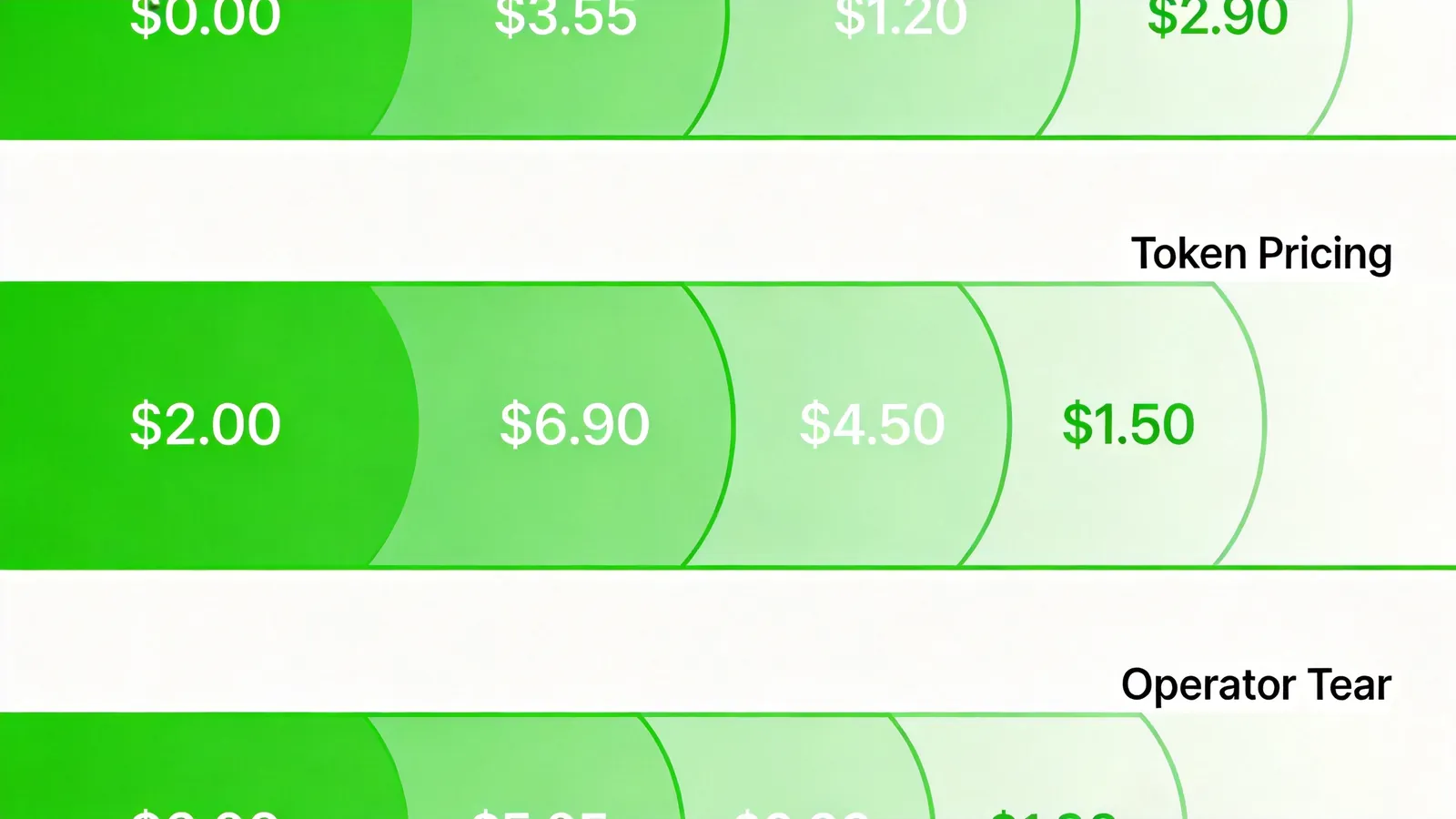
1 yuan/250,000 Tokens versus 10-50 times more expensive for direct API access—this isn't just "a bit cheaper." It's "reduced by an order of magnitude."
IV. The Reality on the Ground: Hype Outpaces Delivery
The packages look beautiful on paper, but what does actual rollout look like? Field investigation by multiple journalists reveals a less optimistic picture that exposes the gap between marketing announcements and operational reality.
China Telecom: Fully Available, but with Regional Variations
China Telecom's claimed "nationwide rollout" is genuinely operational, but with important caveats. In major cities (Beijing, Shanghai, Guangzhou, Shenzhen), customers can order Token packages through the telecom App, and the service activates within 24 hours. Phone bill deduction works correctly, and the cross-model invocation interface is accessible.
However, in smaller cities and rural areas, the situation is mixed. Some prefecture-level cities show the Token package option in the App but with limited model selection (only 5-8 models available, versus the claimed "30+ models"). Customer service representatives in these regions often have limited knowledge about the service and may provide inaccurate information about pricing, model availability, or technical requirements.
The enterprise packages face additional friction. While individual packages can be ordered entirely through the App, enterprise packages require a separate sign-up process, including business license verification and a minimum commitment period. Several businesses that applied for enterprise Token packages reported waiting 7-14 days for activation, suggesting that the backend systems for enterprise billing are not yet fully automated.
China Mobile: "Online Available, Offline Absent"
China Mobile's Token packages are available through its mobile App and website, but the offline experience is fundamentally broken. Journalists visited five Beijing Mobile retail locations; only one staff member had heard of the Token package service, and that person stated, "Currently, we cannot process applications in-store."
This online-offline gap is a significant strategic vulnerability. China Mobile's greatest strength has always been its physical retail footprint—thousands of service centers nationwide, particularly in smaller cities and rural areas where digital literacy varies widely. For these demographics, walking into a retail store and talking to a human being is the preferred (and sometimes only comfortable) way to sign up for new services. If Token packages are only available online, China Mobile is effectively ceding the most opportunity-rich segments of its customer base.
The regional pricing differentiation also creates confusion. A China Mobile customer in Shanghai sees a completely different Token package offering than a customer in Beijing. When customers travel or relocate, their Token package doesn't transfer cleanly. This fragmentation undermines the "utility" positioning of Token packages—utilities (like electricity and water) don't have region-specific pricing for the same service level.
China Unicom: "Not Yet Launched" Despite the Publicity
China Unicom's situation is the most problematic. Despite high-profile announcements featuring free Token giveaways and bundled AI Cloud Desktop offerings, in most regions, Unicom's App has no Token package portal as of late May 2026. Customer service representatives, when asked about Token packages, either deny the service exists or state that "this service has not yet officially launched."
This suggests that Unicom's World Telecommunications Day announcement was a preemptive marketing move rather than a genuine product launch. By announcing Token packages before they were technically ready, Unicom ensured it wouldn't be left out of the media narrative created by China Telecom's launch. But the gap between announcement and delivery damages credibility—when the service does eventually launch, potential customers may be skeptical based on the earlier disconnect between marketing and reality.
Unicom's free Token strategy also raises questions about sustainability. Giving away 30 million Tokens (worth approximately 30 yuan at market API prices) plus an 8-core/16GB cloud desktop (worth approximately 50-80 yuan/month) means Unicom is spending 80-110 yuan to acquire each new customer. The payback period on that customer acquisition cost depends on conversion rates to paid plans and subsequent retention—metrics that are unproven for AI cloud desktop services in the Chinese market.
The distance from "announced" to "actually usable" is often longer than the distance from "zero" to "announced." True nationwide, all-channel coverage for Token packages will likely require another 3-6 months of ramp-up.
V. Cross-Model Invocation: The Telecom Operators' True Killer Feature
The most underrated value of Token packages isn't the price—it's cross-model invocation.
To understand why this matters, consider how AI model usage works today. If you subscribe to ChatGPT Plus, you can only use OpenAI's models (GPT-4o, o1, etc.). If you subscribe to Wenxin Yiyan (Baidu's ERNIE Bot), you can only use Baidu's models. If you want to try a new open-source model like DeepSeek or Qwen, you need to sign up for a separate service or configure API access.
This platform lock-in serves the AI companies well—it creates switching costs and encourages users to stay within a single ecosystem. But it's terrible for users. Different models have different strengths. DeepSeek R1 excels at mathematical reasoning and code generation. Zhipu GLM-4 handles Chinese language tasks with nuance that English-centric models struggle to match. Qwen-2.5 performs exceptionally on multilingual tasks. For any given task, there's likely a "best model"—but users currently can't access it without maintaining multiple subscriptions.
Telecom Token packages break the binding: with one monthly subscription, you can freely switch between 30+ LLMs. You don't need to pay separately for each model—what you use deducts from your unified Token balance.
This mirrors the logic of "data packages" exactly. You don't buy separate data plans for accessing Baidu versus accessing Google—you buy one data package that's universal across all websites. Token packages make AI computing power a truly universal infrastructure.
The practical implications are substantial:
For individual users: You can use DeepSeek for code debugging, Zhipu GLM for Chinese document summarization, and Qwen for English-to-Chinese translation—all from the same subscription, with a single unified bill. You don't need to evaluate which single model gives you the best overall value; you can use the best model for each specific task.
For enterprises: Cross-model invocation eliminates the need to maintain multiple AI service subscriptions. A business workflow that involves document summarization (best with Zhipu GLM), code generation (best with DeepSeek), and customer service responses (best with a fine-tuned proprietary model) currently requires three separate AI service subscriptions. With cross-model Token packages, one subscription covers all bases—simplified procurement, unified billing, and reduced administrative overhead.
For AI companies: Cross-model invocation creates a merit-based competitive environment. When users can seamlessly switch between models, AI companies must compete on model quality rather than user lock-in. Companies that provide superior models will attract more usage and higher Token consumption; those that fall behind will see their market share erode. This is a fundamentally healthier competitive dynamic than the current platform-centric model.
When you can use the right model for every task without paying a premium, the quality of AI outputs improves across the board. Cross-model invocation isn't just a technical feature—it's a fundamental shift in how we interact with AI services.
VI. The Hidden Economic Logic: Why Are Telecom Operators Doing This?
The strategic logic behind telecom operators' entry into Token sales is more nuanced than it first appears. To understand why this makes sense for the operators, it's necessary to examine the financial pressures they face and the strategic opportunities they see.
The Revenue Challenge for Telecom Operators
For China's three major telecom operators, the traditional revenue model—voice minutes and SMS—has been in structural decline for over a decade. Mobile internet data services became the primary revenue driver in the 2010s, but ARPU (average revenue per user) has been plateauing as unlimited data plans became standard. In 2025, the three operators reported flat or declining ARPU despite growing data consumption—a clear signal that the traditional telecom business model is reaching its limits.
The operators need new revenue streams that can be layered onto their existing customer relationships. Token packages are an ideal candidate: they leverage existing billing systems, require minimal new infrastructure investment, and create recurring monthly revenue (a subscription model) that directly increases ARPU.
Importantly, Token packages don't require the operators to build or host AI models themselves. They simply need to contract with AI companies to resell computing power, just as they currently contract with content providers to offer video streaming bundles. The operators provide the billing relationship and customer touchpoints; the AI companies provide the models and computing infrastructure. It's a classic resale model with favorable economics for the operators.
The Strategic Value of Customer Lock-In
Token packages also serve as a customer retention tool. Once a user subscribes to a Token package through their telecom provider, switching costs increase. The billing relationship is sticky—users are less likely to change phone numbers or carriers when their AI services are tied to their existing telecom account. In a market where the three operators compete fiercely for customers (often through aggressive pricing on data plans), Token packages provide a differentiating service that competitors can't easily match.
There's also a defensive rationale. If the operators don't offer Token packages, their customers might eventually switch to AI-native platforms that bundle connectivity and AI services in new ways. By preemptively offering Token packages, the operators protect their position in the customer relationship stack. They remain the primary interface between the user and digital services, rather than being reduced to a "dumb pipe" that provides connectivity while others capture the value of the applications running on top of it.
Why AI Companies Want Telecom Operators as Distribution Partners
From the AI companies' perspective, telecom operators are attractive distribution partners for several reasons.
First, customer acquisition. Reaching ordinary users who don't have the technical knowledge to sign up for API access is expensive and difficult. Telecom operators have hundreds of millions of existing customers with established billing relationships. A single promotional push to the existing customer base can bring AI services to an audience that would otherwise take years to reach through organic growth.
Second, credibility and trust. Many ordinary users are wary of unfamiliar internet services, particularly for financial transactions. A Token package billed through their existing phone company feels more legitimate and secure than signing up for a separate AI service subscription. Telecom branding reduces perceived risk and lowers the barrier to trial.
Third, cross-model invocation benefits AI companies competitively. When a user chooses a Token package, they're not locked into a single AI provider. This creates healthy competition: AI companies must compete on quality rather than just customer lock-in. Companies that provide superior models will attract more usage; those that fall behind will see their Token consumption decline. While this creates competitive pressure, it also incentivizes continuous improvement across the industry—a dynamic that benefits users and expands the overall market.
VII. The Meaning for Agent Computers (and the Future of AI Hardware)
The launch of Token packages has profound implications for agent computers—devices like KaiheAiBox that operate 7×24 autonomous AI agents.
The core proposition of agent computers is 24/7 autonomous AI operation—agents that continuously consume Tokens to understand instructions, execute tasks, and generate content. Until now, Token costs represented a significant operational barrier. A 24-hour online agent might consume tens of millions of Tokens per month, potentially costing hundreds of yuan in API fees. For most consumers, this was a prohibitive ongoing expense that made agent computers economically unviable for personal use.
When telecom operators drive Token prices down to less than 0.01 yuan per 10,000 Tokens, the operational cost of agent computers becomes negligible. A 9.9 yuan/month Token package is sufficient to support an agent running 24/7 for an entire month. The cost of AI computing drops below the cost of electricity for most devices.
The phone bill deduction model is the critical enabler that makes this practically viable. Agent computers don't need to bind to any cloud platform's API keys or maintain complex authentication systems. As long as there's a telecom network connection, Token consumption automatically deducts from the phone bill. This makes deploying and maintaining agent computers extraordinarily simple: insert a SIM card, power on, run—exactly like using a phone.
This is the pre-condition for large-scale AI hardware adoption. When an agent computer becomes a "just plug in and use" device, the technical barrier to entry collapses. You're no longer asking users to configure cloud platforms, manage API quotas, or understand the concept of Tokens—you're asking them to do exactly what they already know how to do: insert a SIM card and pay a monthly bill.
The integration of OpenClaw into Beijing Mobile's Cloud PC fusion package illustrates this trend concretely. OpenClaw—an AI agent platform—isn't being marketed as a technical product. It's being offered as a feature of a telecom subscription, bundled alongside cloud computing and connectivity. Users interact with AI agents without ever encountering the technical complexity underneath. The agent computer paradigm shifts from "something you build and configure" to "something you just buy and use."
When Tokens become phone bills, agent computers become "plug-and-use" devices. This is the pre-condition for the mass adoption of AI hardware.
The long-term trajectory is significant: as agent computers proliferate and Token consumption grows, telecom operators become increasingly important intermediaries in the AI value chain. They control the billing relationship with end users, own the connectivity infrastructure, and sit at the intersection of telecommunications and AI services. This is a structurally powerful position—one that could reshape how AI services are distributed, priced, and consumed.
For AI hardware startups and agent computer platforms, the implication is clear: partnerships with telecom operators aren't just a distribution channel; they're a fundamental enabler of the business model. An agent computer that requires users to separately configure API access and manage Token budgets will fail in the consumer market. An agent computer that comes with a SIM card and a bundled Token package has a genuine path to mass adoption.
VIII. Global Context: A Uniquely Chinese Development (For Now)
It's worth noting that this telecom-Token convergence is a distinctly Chinese phenomenon—or at least, one that's furthest along in China.
In Western markets, telecom operators have been largely absent from AI services. The dominant AI products (OpenAI's ChatGPT, Anthropic's Claude, Google's Gemini) are software-first companies that distribute through app stores and web interfaces. Telecom operators in the US and Europe have shown limited interest in bundling AI capabilities, partly because their regulatory environments and competitive dynamics differ from China's.
Several factors make China uniquely suited to this development:
The telecom market structure. China's three dominant state-backed operators (China Telecom, China Mobile, China Unicom) collectively serve over 1.7 billion mobile subscriptions. They have the billing infrastructure, the customer relationships, and the government backing to experiment with new service models quickly. When all three announce Token packages within days of each other, it signals coordinated strategic intent rather than individual company initiative.
The AI ecosystem maturity. China has a thriving domestic AI model ecosystem, with companies like DeepSeek, Zhipu, Baichuan, and Qwen producing world-class open-source and commercial models. This gives the operators multiple potential AI partners to work with, creating competitive tension that keeps pricing reasonable.
The regulatory environment. China's government has explicitly prioritized AI development as a national strategic priority. Token packages align with the government's goal of making AI computing power widely accessible—they're effectively a form of AI infrastructure policy implemented through commercial channels.
The competitive dynamics. China's telecom market is intensely competitive, with all three operators aggressively matching each other's offerings. This competitive pressure accelerates rollout and keeps pricing low—exactly the conditions needed for rapid adoption.
This "national team" approach to AI infrastructure has advantages: rapid scaling, subsidized pricing, and nationwide reach. It also has risks—potential regulatory capture, reduced competition among AI model providers, and homogenized service offerings. The next 12-18 months will reveal whether Chinese consumers benefit from this coordinated push or whether the absence of competitive differentiation limits innovation.
Internationally, however, the Chinese model is likely to be studied closely. If telecom-Token bundling proves to significantly expand AI adoption among ordinary consumers, other countries may attempt similar approaches. The precedent of mobile carriers bundling third-party services (from Netflix to Spotify) is well-established; extending that model to AI services is a logical next step.
In the United States, for example, AT&T, Verizon, and T-Mobile have all experimented with bundling streaming services and cloud storage. Extending that model to AI services would be a natural evolution. The technical integrations required are manageable; the primary barriers are contractual (revenue sharing with AI companies) and strategic (whether telecom operators see AI as a priority area for investment).
IX. Regulatory Considerations and Open Questions
The emergence of Token packages raises several regulatory questions that are still being worked out, both in China and internationally.
Billing Transparency
When AI consumption is bundled into a phone bill, how clearly does the consumer understand what they're paying for? A user who casually uses an AI agent might accumulate significant Token consumption without realizing it. Telecom billing systems need to provide granular visibility into Token usage—not just the total cost, but which models were used, how many Tokens were consumed per session, and how the current usage compares to the package limit.
China's telecom regulations already require operators to provide itemized billing for value-added services. Token packages would presumably fall under these regulations, meaning operators must provide detailed usage breakdowns on request. Whether the current billing systems are sophisticated enough to provide model-level granularity is an open question.
Consumer Protection
If AI services generate harmful or misleading content, where does liability lie? The telecom operator who provides the computing power, the AI company who hosts the model, or the user who prompted the output? Current Chinese consumer protection law doesn't clearly address this question in the AI context.
The telecom operators, anticipating this issue, have included disclaimer language in their Token package terms of service—stating that they're merely providing computing infrastructure and aren't responsible for model outputs. But the legal enforceability of these disclaimers in the Chinese regulatory environment is uncertain. If AI-generated content causes harm and a court determines that the entity that billed for the service bears some liability, the operators could face significant exposure.
Cross-Model Pricing Equity
Cross-model invocation means users consume Tokens at the same rate regardless of which model they use. But different models have vastly different computational costs to run. A frontier model like GPT-5 or Claude Opus costs more to serve than an open-source model like DeepSeek-Lite or Qwen-2.5-Instruct. If Token packages don't differentiate pricing by model, there's a hidden cross-subsidy that could distort market signals.
In practice, the operators are likely negotiating revenue-sharing agreements with AI companies that account for these cost differences. But the lack of price differentiation on the consumer side means users have no financial incentive to choose more efficient (and less computationally expensive) models. This could lead to suboptimal resource allocation in AI computing—with the most expensive models being overused relative to their actual quality advantage.
Interconnection and Portability
Can a Token package purchased from China Telecom be used to access models hosted by Baidu or ByteDance? The cross-model invocation technically supports this, but business agreements between operators and AI companies determine actual interoperability. If portability is limited, Token packages become less valuable than they appear.
There's also the question of whether Tokens are portable across operators. If a user switches from China Telecom to China Mobile, do their remaining Tokens transfer? Currently, the answer is no—each operator's Token package is a separate product with separate Terms. This creates switching costs that could reduce competition among operators over time.
X. The Timeline: From Announcement to Mass Adoption
Based on the current rollout evidence and the historical pace of telecom service adoption in China, here's a realistic timeline for Token package mass adoption:
2026 Q2 (Now - June): Announcement Phase
All three operators have announced packages. China Telecom has genuine commercial availability in major cities. China Mobile has online availability with limited offline support. China Unicom is in pre-launch status in most regions. The primary audience is early adopters, tech-savvy users, and businesses that actively monitor AI developments.
During this phase, uptake will be limited by awareness rather than capacity. Most ordinary users don't yet know that Token packages exist. The operators' marketing efforts—which have been relatively muted so far—will need to ramp up significantly to drive mass awareness.
2026 Q3-Q4: Expansion Phase
Expect China Mobile to roll out offline support more broadly, possibly with promotional campaigns in key markets. The effectiveness of these campaigns will depend on whether in-store staff are adequately trained—a significant operational challenge given the technical nature of the product.
China Unicom's official launch is anticipated in Q3, though the timeline remains uncertain. When it does launch, the free Token strategy could drive significant customer acquisition, particularly if the AI Cloud Desktop product is genuinely competitive with alternatives.
Enterprise packages will see more uptake as businesses begin to integrate cross-model AI workflows. The enterprise sales cycle is longer, but the cost savings are compelling enough to drive adoption even in this initial phase.
2027 Q1-Q2: Maturation Phase
Full offline availability across all three operators. First-generation users begin to deplete Tokens and make renewal decisions. Actual churn rates and usage data will determine whether pricing is sustainable. If the 9.9 yuan/10M Token price point proves unprofitable for the operators, prices may rise—undermining the affordability advantage that drove initial adoption.
Regulatory frameworks begin to solidify around billing transparency and consumer protection. The first regulatory guidance on Token package disclosures and liability allocation may emerge during this period.
2027 H2 and Beyond: Integration Phase
Token packages become standard features rather than promotional offerings. Bundled AI services begin to appear in more telecom products—not just individual plans but family packages, enterprise contracts, and device bundles (perhaps even integrated into smartphones and home IoT devices at the point of sale).
AI hardware products (agent computers, AI assistants, smart home devices with embedded AI) begin to ship with pre-installed SIM cards and trial Token packages. The "unbox and use" experience becomes the default for consumer AI hardware.
The Wildcard: Competitive Response from AI-First Companies
This timeline assumes no major competitive disruption from AI-first companies (OpenAI, Anthropic, Google, or Chinese equivalents like Baidu and ByteDance). If these companies perceive telecom-bundled Token packages as a threat to their direct-to-consumer business, they could respond with aggressive pricing of their own—potentially undercutting the operators' price advantage.
Alternatively, the AI companies might embrace the operators as distribution partners, viewing them as a channel to reach non-technical users who wouldn't otherwise subscribe to AI services. The most likely outcome is a hybrid: AI companies maintain direct-to-consumer offerings for power users while partnering with telecom operators to reach the mass market.
XI. What Users Should Actually Do Today
For ordinary users considering Token packages, here's a practical assessment based on the current rollout status:
Who Should Buy (Now)
-
Users in China Telecom coverage areas who are comfortable using mobile Apps for service sign-up. The Light Enjoy plan (9.9 yuan/10 million Tokens) is the lowest-risk entry point—you can experiment with cross-model AI access, understand your actual consumption patterns, and upgrade to higher tiers only if your usage justifies it.
-
Users who frequently interact with multiple AI models and want cross-platform flexibility without managing multiple subscriptions. If you currently use both DeepSeek and Zhipu GLM (even on their free tiers), a Token package gives you paid-tier access to both through a single subscription.
-
Power users running automated workflows, AI-assisted coding, or content generation at scale. The cost savings compared to direct API purchase are genuine and substantial.
-
Businesses evaluating AI integration who want simplified procurement and billing. The enterprise packages, once fully operational, could significantly reduce AI procurement complexity.
Who Should Wait
-
Casual users who only occasionally need AI assistance. Free tiers of individual AI Apps may be sufficient for light usage. The 10 million Token allowance of the Light Enjoy plan might go mostly unused, making the 9.9 yuan/month cost unjustifiable.
-
Users in regions with poor offline availability. The China Mobile offline gap, in particular, means you may not get the customer support you need if something goes wrong. Wait until offline support is confirmed in your city.
-
Users with very high Token consumption needs (1 billion+ per month). The enterprise packages top out at 150 million Tokens (China Telecom's Enterprise Pro). If your needs exceed this, you may need to supplement with direct API purchases regardless.
A Practical Testing Strategy
If you're curious but unsure whether a Token package makes sense for you, here's a low-risk way to find out:
- Sign up for China Telecom's Light Enjoy plan (9.9 yuan/10M Tokens).
- Use AI normally for one month, tracking which models you use and roughly how many Tokens you consume (most models display Token usage in their interface).
- At the end of the month, compare your actual consumption to the plan allowance. If you used less than 5 million Tokens, the Light Enjoy plan is more than sufficient. If you consistently exceed 8 million Tokens, consider upgrading to Standard Enjoy.
This testing approach gives you real data on your usage patterns rather than relying on generalized estimates. Your actual Token consumption might surprise you—many users overestimate how much they use AI, while others underestimate it significantly.
XII. The Broader Implications: AI as Public Utility
Stepping back from pricing details and rollout timelines, Token packages represent a philosophical shift: the treatment of AI computing as a public utility rather than a premium product.
Public utilities share several characteristics: essential service, universal access, regulated pricing, and infrastructure-level investment. Electricity, water, and telecommunications are all organized around utility principles—even in largely free-market economies, these services are considered too essential to be left entirely to market dynamics. Price regulation, universal service obligations, and quality-of-service standards are the norm.
The telecom-Token model moves AI in this direction. When a 9.9 yuan/month subscription provides sufficient AI computing for most individual needs, AI capabilities become as fundamental as mobile data. It's not something you budget for separately; it's part of the baseline cost of participating in modern life. Just as you need electricity to live in a modern home, you need AI computing access to fully participate in the modern information economy.
This shift has profound implications for digital equity. If AI capabilities remain expensive, they become yet another technology that benefits the wealthy and educated disproportionately. Lower-income users, rural populations, and older demographics who are less likely to pay for premium AI subscriptions miss out on productivity gains and information access. Affordable Token packages democratize AI access—not fully, but meaningfully.
The "phone bill" metaphor is apt for another reason: it normalizes AI usage. When AI is a mysterious, expensive, technical product, people are cautious about using it. When AI is a line item on a familiar monthly bill, it becomes part of ordinary life—just like checking email or watching streaming video. Behavioral normalization precedes cultural integration.
There's also a macroeconomic dimension. When the cost of accessing AI computing drops by an order of magnitude, the number of economically viable AI applications expands dramatically. Use cases that were previously too expensive to automate become feasible. A small business that couldn't justify 500 yuan/month for AI-powered customer service might find 9.9 yuan/month a trivial expense. At that price point, AI adoption becomes a question of awareness and technical capability, not cost.
This is how infrastructure transitions happen. When electricity was expensive, it was used only for the most essential applications. As the cost dropped, electricity became ubiquitous—powering not just factories but homes, not just lighting but appliances, not just cities but rural areas. Token packages could trigger a similar expansion in AI adoption: from "AI for the most valuable tasks" to "AI for everything."
In 2013, the popularization of data packages ignited the mobile internet era. In 2026, could Token packages ignite the AI application era? History doesn't repeat exactly, but it often rhymes.
XIII. Potential Risks and Unintended Consequences
No analysis of a major technological shift is complete without considering what could go wrong. Token packages, for all their promise, carry several risks worth identifying early.
The Quality Degradation Risk
If Token packages succeed in driving massive adoption, the operators will face significant computing infrastructure costs. To maintain profitability at the 9.9 yuan price point, there will be pressure to use cheaper (and lower-quality) models to fulfill Token requests. If the operators quietly downgrade users to less capable models without transparent disclosure, the quality of AI outputs could degrade even as access expands.
This risk is mitigated by competition—if one operator downgrades model quality, users can switch to another. But if all three operators face similar cost pressures, the entire market could see a quality degradation that undermines the value proposition of AI services.
The Innovation Reduction Risk
Cross-model invocation is valuable because it allows users to choose the best model for each use case. But if Token packages succeed in making AI computing a low-margin utility business, the profit potential for AI model development could diminish. Why would a startup invest in developing a better model if the marginal revenue per Token is driven to near-zero by operator bundling?
This is the classic "utility trap" for innovation. When a technology becomes a low-margin utility, the incentive to invest in next-generation improvements diminishes. Electricity and water utilities are not known for rapid innovation—they're mature, stable, and incrementally improving at best. If AI computing follows the same path, the pace of model improvement could slow dramatically once Token packages achieve scale.
The counterargument is that AI model development is currently well-funded by venture capital and big tech companies, and that isn't likely to change in the near term. Even if Token resale margins are thin, the API businesses of AI companies remain high-margin. Token packages might merely be a distribution channel for excess computing capacity rather than the primary profit center for AI companies.
The Privacy and Surveillance Risk
When AI usage is bundled into phone bills, the telecom operator gains visibility into users' AI usage patterns. Which models you use, how frequently you use them, and (if the operators log prompt content, as some terms of service suggest they might) what you're using AI for—all of this becomes data that the operator possesses.
In China's regulatory environment, this data could be accessible to government authorities under existing cybersecurity and data governance laws. For users who value privacy, bundling AI services with telecom services creates a consolidated surveillance target that didn't exist when AI usage was scattered across separate platforms.
The Monopolization Risk
If Token packages succeed, the three operators could become the dominant gatekeepers of AI access in China. Just as they currently control mobile connectivity and (to some extent) internet access through data plan design, they could control AI access through Token package design. If the operators use this gatekeeper position to favor certain AI models over others (perhaps because of revenue-sharing agreements), the competitive dynamics in the AI model market could be distorted.
This risk is somewhat mitigated by the cross-model nature of the Token packages—users can switch models freely, so the operators can't easily force users onto a specific model. But the operators could still influence model choice through interface design (promoting certain models more prominently) or pricing (negotiating better revenue-sharing rates with some AI companies, which could indirectly affect which models are promoted to users).
XIV. Closing Thoughts
The collective entry of China's three major telecom operators into Token sales is a landmark event in the AI industry's development—not because of any single product offering, but because it signals a structural shift in how AI computing power is distributed, priced, and consumed.
The 9.9 yuan/10 million Tokens pricing sets a new benchmark for AI accessibility, reducing unit costs to levels previously unimaginable. Cross-model invocation breaks the user's lock-in to any single AI platform. Phone bill deduction makes accessing AI computing as simple as recharging a phone.
But we must also see the current reality honestly: rollout remains in the ramp-up phase. China Mobile has "online available, offline absent," China Unicom is "not yet officially launched"—only China Telecom has deployed fully. From announcement to genuine nationwide coverage, there's still a road to travel. The gap between marketing and operations is real, and it will take sustained execution—not just announcements—to close it.
Regardless of the pace, the direction is clear: AI computing is becoming a basic communications service, just like data plans and SMS. When that day truly arrives—when Token packages are as ubiquitous and unremarkable as mobile data—agent computers, AI hardware, and smart terminals will all experience explosive growth.
The emergence of AI as infrastructure changes not just how AI is priced, but how it's perceived. AI moves from "something special and powerful" to "something ordinary and available"—and it's in that ordinariness that its true transformative power lies. When everyone has access to AI computing power as a background utility, the applications that emerge will be limited only by human creativity, not by computing budgets.
The future of AI may not be in building more powerful models alone. It may be in making the models we already have accessible to everyone, at a price point that allows them to be used without hesitation. Token packages are a step in that direction—and if they succeed, they'll be remembered as the moment AI computing became a public utility.
KaiheAiBox | An agent computer that works 24/7, simple enough for anyone · AI Agent Tracking