The Token Economy: From Human Consumption to Machine-Driven Value Leaps
📖 Glossary
AI Box (also known as Agent Computer / Agent PC), is a dedicated local hardware device that runs AI Agents. Pre-installed with an AI agent management system, plug-and-play, running 24/7. Users can remotely command AI to work via Discord, Slack, Telegram, WhatsApp, and more.
When AI agents open their eyes and start working 24/7, tokens stop being "metering units" and start becoming value itself.
Introduction: A New Economic Variable Is Born
At GTC in March 2026, Jensen Huang held up a championship belt labeled "InferenceX" and delivered a defining statement: a data center is no longer a compute warehouse — it's a "token factory." Raw materials in: data and electricity. Finished product out: tokens — the most valuable output of the AI era.
That same month, China's National Data Administration dropped a headline figure: the nation's daily token consumption had broken through 140 trillion, up from 100 billion in early 2024 — a more than 1,000x increase in two years. Global weekly token volume surpassed 20.4 trillion, with China accounting for 36% and surpassing the U.S. for three consecutive weeks.
To put this in perspective: if tokens were oil, humanity was riding bicycles two years ago and is now flying to the moon in a spaceship.
But the truly significant shift isn't the number. It's who is consuming those tokens.
Act One: A Fundamental Shift in the Consumer
Over the past two years, the primary token consumer has undergone a quiet transformation.
Phase 1: Humans Seek AI (2023–2025)
Users type prompts into ChatGPT: "Write my weekly report," "Translate this code," "Draw a cat." Each interaction consumes 1,000–3,000 tokens, then stops. This is fundamentally human-driven consumption — bounded by typing speed, attention span, and the need for sleep. A person asking 100 questions a day is already extreme; beyond that, it's practically an "AI addiction" diagnosis.
Phase 2: AI Works on Humans' Behalf (2025–Present)
Agent frameworks like OpenClaw ("Lobster") changed everything. Agents don't wait to be asked — they operate on a "Plan → Act → Observe → Reflect" loop, making dozens or even hundreds of model calls per task:
- Moderate-complexity task: 100,000 tokens
- Complex task: over 1 million tokens
- Cline + MCP + Claude Sonnet 3.7 executing a standard travel itinerary: 930,000 tokens
The industry gave it a nickname: the "Token Shredder."
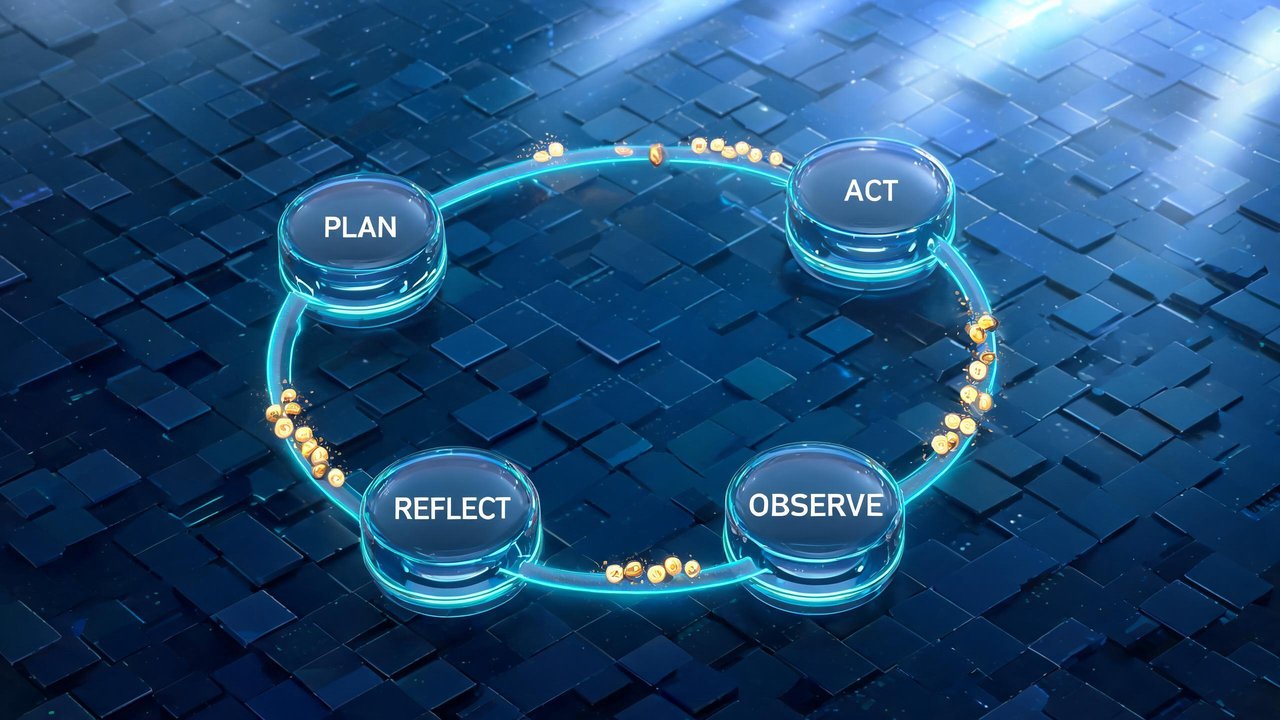
More importantly, agents don't sleep. They run 24/7. A human might burn a few thousand tokens a day; an agent burns tokens continuously. The primary consumer is shifting from humans to machines.
Huawei ICT BG CEO Yang Chaobin revealed at MWC25 that daily token usage grew 33x in eight months, with paid tokens growing 15x. By 2030, token-driven traffic is expected to exceed 3.5x current total mobile internet traffic.
This is not "growth." This is a species-level leap.
Act Two: The Three-Stage Rocket — Where Demand Comes From
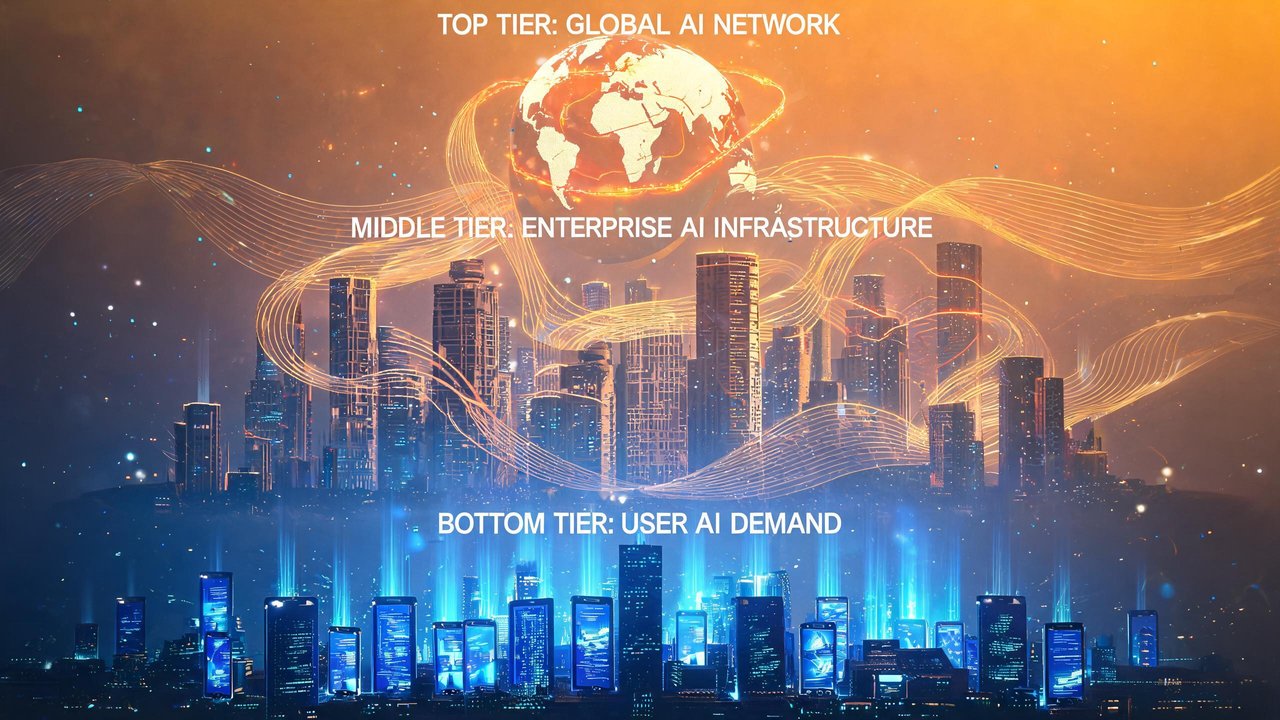
Token demand is not a single explosion but three rockets firing in sequence:
Stage 1: Consumer AI Agents Go Mainstream
Individual users evolved from "chatting with AI" to "letting AI do the work" — handling email, writing code, planning trips, generating presentations. A power user's daily consumption jumps from dozens to thousands of tokens, with potential to reach tens of thousands as multimodal tasks (video generation, real-time translation) become common.
Xiaomi and OPPO have deeply integrated agents into phone OS. OPPO's XiaoBu assistant surpassed 150 million monthly active users. Phone-side token consumption is quietly taking off.
Stage 2: Enterprise Production-Grade Adoption
Companies no longer see AI as an experiment — they're treating tokens as a core production factor. Enterprises like Kunlun Wanwei and 58.com already consume over 1 trillion tokens monthly. Manufacturing, finance, healthcare, and government AI upgrades are unlocking trillion-level demand:
- Tonghuashun's AI investment advisory serves over 100 million retail investors, burning 80+ billion tokens daily
- SUPCON's industrial AI platform averages 5+ million tokens annually per factory
- Rundar Medical's AI diagnosis system is deployed in 3,000+ hospitals, processing 20+ billion medical text tokens daily
Stage 3: Global Export Demand Explodes
Chinese LLM token pricing is 1/5 to 1/3 that of Claude and GPT overseas — a cost-to-performance ratio that's impossible to ignore. In Q1 2026, Chinese cloud providers' overseas token revenue grew 320% year-over-year, rapidly expanding across Southeast Asia, the Middle East, and Latin America.
Act Three: The "Three Glass Ceilings" on Supply
Demand is spreading like wildfire, but supply-side bottlenecks are equally staggering.
Bottleneck 1: Hardware monopoly + ultra-long capacity expansion cycles. HBM (High Bandwidth Memory) is the "heart" of AI servers, with Samsung, SK Hynix, and Micron controlling over 95% of global capacity. Expansion cycles run 24–36 months. The 2026 HBM shortage exceeds 40%, with knock-on effects including a 300% price hike for standard DDR5 in six months and AI server delivery times stretching from 3 to 12 months.
Bottleneck 2: Power is the most underestimated hard constraint. AI compute center cabinet power draw is 10–20x that of traditional data centers, with electricity accounting for over 60% of token production cost. Training GPT-4 once consumed 240 million kWh; a 6,000 PFLOPS compute center in Shenzhen spends over 70% of its operating budget on electricity. The IEA forecasts global data center consumption reaching 945 TWh annually by 2030 — while grid construction cycles run 5–10 years.
Bottleneck 3: Infrastructure and operations can't keep up. Liquid cooling penetration jumped from 15% in 2024 to 45% in 2026, but technical talent and construction capacity are severely short, leaving many completed compute clusters operating below capacity.
These three bottlenecks mean one thing: tokens will remain a scarce resource in the medium term, with pricing power firmly on the supply side.
Act Four: Token Economics — A Paradigm Shift in Value Measurement
If "exploding demand" is quantitative change, the qualitative revolution in token economics is this: it is rebuilding the value measurement framework of the digital world.
Not Money, But a Measurement Protocol
Academics debate: are tokens "the currency of the AI era"? Strictly speaking, no — they lack universal acceptance, general equivalency, and free circulation, the three defining features of money. But they possess something arguably more important: measurability, priceability, and tradability.
Tokens are more like the "kilowatt-hour" of the industrial era — not money, but a unit no productivity calculation can bypass.
Three-Layer Pricing Logic
Token pricing isn't a single variable but a multi-anchor system:
- Short term (1–2 years): chips are the primary anchor. GPU capacity determines supply; whoever owns chips owns pricing power.
- Medium term (3–5 years): electricity becomes the binding constraint. Green energy cost advantages translate directly into token cost advantages — which is why China's "East Data, West Compute" initiative is a strategic play.
- Long term (5+ years): talent and knowledge density dominate pricing. Tokens will shift from "material scarcity" to "intelligence scarcity."
Business Models: Goodbye Burn Rate, Hello Profitability
The industry has moved past the absurd era of "giving tokens away for free, losing money on every token sold." 2026 Q1 saw major cloud providers' AI business gross margins rise above 35%, achieving scalable profitability for the first time. The playbook is clear: subsidize C-end to build habits, charge B-end precisely based on consumption.
Act Five: Three Future Scenarios
Scenario 1: China as the World's Token Factory
China possesses a unique combination for becoming the "world's token factory" — the lowest green electricity costs globally, over 60% of global server production capacity, the richest application scenarios, and the most cost-effective LLMs. Just as China became the manufacturing "workshop of the world" through cost advantages, the combination of energy + compute + scenarios is now positioning China to dominate global token production and supply.
OpenRouter data shows that since February 2026, Chinese LLM token pricing has been 1/6 to 1/10 of overseas competitors, with weekly call volume repeatedly surpassing U.S. counterparts. This isn't winning on price — it's a reflection of systemic cost advantage.
Scenario 2: The Ultimate Agentification
When agent DAU reaches the billion scale, daily compute needs would equal approximately 141,500 NVIDIA H100 SXM GPUs. But the bigger story: the primary token consumer will have definitively shifted from humans to machines. 2026–2028 marks the critical inflection zone.
In this phase, enterprise competitiveness won't hinge on model capability alone, but on agent orchestration efficiency and token-to-business-value conversion rates. Whoever ties token consumption to real business outcomes builds a sustainable model.
Scenario 3: Localized Compute — The "Distributed Revolution" in Token Economics
A deeper tension in token economics is surfacing: centralized token factories are efficient, but enterprises face a trilemma of data sovereignty, privacy compliance, and recurring token costs. When a manufacturer's MES system calls cloud AI at hundreds of billions of tokens daily, data leaves the factory floor and enters an uncontrollable zone.
This is precisely where local AI computers like KAIHE AI-BOX enter the market — shifting token production from public cloud to enterprise premises. Preloaded with the OpenClaw agent system, data stays on-device and tasks incur zero token fees. It's not about replacing cloud token factories; it's about opening the "localized compute" lane in the token economy landscape — much like factories installing rooftop solar panels and battery storage alongside the mega power grid.
Epilogue: An Irreversible Fact
The token economy is not a trend, not a bubble, not hype. It is a fact.
When AI agents open their eyes and start working, when enterprises write tokens into every employee's annual budget, when investment in power grids, chip fabs, and liquid cooling pipelines runs into the trillions, when China evolves from "world's factory" to "world's token factory" — the question is no longer "if," but "how fast."
In the digital economy of tomorrow, tokens may become the universal unit of account spanning AI services, data trading, and compute leasing. It's not money. But it is becoming the most fundamental value language of the intelligent age.