WeChat AI Core Internal Testing + A2A Protocol: How Agent-to-Agent Communication Standards Are Reshaping the Internet Social Ecosystem
Two seemingly unrelated events in the first half of 2026 are quietly rewriting the underlying logic of internet social interaction: WeChat is internally testing AI Agent capabilities, and Google has released the A2A Protocol (Agent-to-Agent Communication Protocol).
The former means a social giant with 1.3 billion monthly active users is about to let AI directly participate in your conversations. The latter means AI Agents from different vendors will, for the first time, have a standard language to "talk to each other."
When WeChat AI meets the A2A Protocol, the rules of internet social interaction will be completely rewritten.
I. WeChat AI Core Internal Testing: Beyond "Chatbots"
WeChat's AI capabilities under internal testing go far beyond the scope of a "chatbot." Based on publicly available testing information, WeChat AI Core includes three major capability modules:
Message Understanding: AI can not only read text but also understand the semantics of images, voice, and video messages. You send a restaurant photo, and AI knows what cuisine it is, the average price per person, and which business district it's in.
Smart Replies: AI automatically generates reply suggestions based on conversation context. Note: these aren't "template replies" but replies customized to your personal style. It learns how you usually speak and helps you reply in your voice.
Task Execution: AI can not only reply to messages but also help you complete tasks within the WeChat ecosystem—booking restaurants, buying movie tickets, adding addresses from chats to your calendar. This is the qualitative shift from "helping you talk" to "helping you do."
WeChat AI's ultimate goal is not to replace you in conversations but to become your "social avatar"—handling routine social affairs when you're busy and providing smart suggestions when you need them.
II. A2A Protocol: The "TCP/IP" of the Agent World
To understand why the A2A Protocol matters, recall the history of the internet.
Before 1983, different computer networks were "islands"—IBM's network and DEC's network couldn't communicate with each other. It wasn't until the TCP/IP protocol unified network communication standards that the internet truly became the "internet."
Today, AI Agents face the same problem: OpenAI's Agent, Anthropic's Agent, WeChat's Agent, and DingTalk's Agent cannot communicate with each other. Your WeChat AI Agent wants your DingTalk AI Agent to check an approval status? Can't do it. Your OpenAI Agent wants to call your Feishu AI Agent to retrieve a document? Also can't do it.
The A2A Protocol is the "TCP/IP" of the Agent world. Proposed by Google in early 2026, it defines the standard format for communication between Agents, including five core concepts:
- Agent Card: An Agent's "business card," declaring who it is, what it can do, and how to invoke it
- Task: The format for task requests and responses between Agents
- Message: The format for message passing between Agents
- Artifact: The deliverables produced by Agents (documents, images, code, etc.)
- Push Notification: The asynchronous notification mechanism between Agents
With the A2A Protocol, Agents from different vendors have a "common language" for the first time. Your WeChat AI can communicate with your DingTalk AI, and your OpenAI Agent can invoke your Feishu AI's capabilities. Agents have gone from "islands" to a "network."
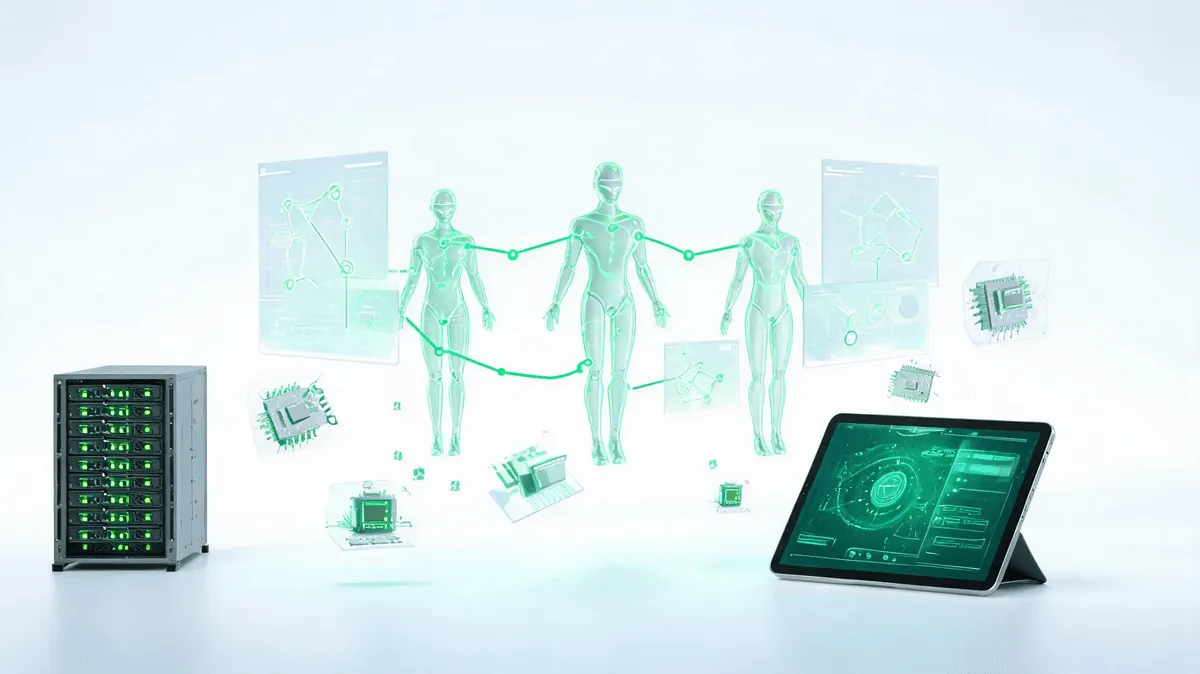
III. From "Single Agent" to "Agent Internet"
The true significance of the A2A Protocol is not letting two Agents chat with each other, but enabling Agents to form collaborative networks—just as the internet didn't just let two computers communicate, but connected billions of devices worldwide into a network.
Imagine a scenario: you want to invite a friend to dinner on Saturday.
In today's "single Agent" mode, you need to interact with WeChat AI, Dianping AI, and Calendar AI separately, manually coordinating time, restaurant, and schedule.
In the "Agent network" mode under the A2A Protocol, you only need to tell your WeChat AI: "Help me invite Xiao Wang to dinner on Saturday. He likes Sichuan food, budget under 100 per person." Then:
- WeChat AI contacts Xiao Wang's WeChat AI via A2A Protocol to confirm Saturday's availability
- WeChat AI contacts Dianping AI to search for Sichuan restaurants, filtering for under 100 per person with Saturday availability
- WeChat AI contacts your Calendar AI to confirm Saturday evening time slots
- All information is aggregated, and WeChat AI pushes a message: "Saturday 7 PM, XX Sichuan Restaurant, reservation made, Xiao Wang confirmed."
You only said one sentence. Three Agents automatically collaborated—cross-platform, cross-application, cross-vendor.
This is the Agent Internet—AI is no longer an isolated tool but a networked collaboration node.
IV. Three Stages of Social Ecosystem Evolution
The combination of WeChat AI and the A2A Protocol will drive the social ecosystem through three stages of evolution:
Stage One: AI-Assisted Social (2025-2026, Current)
AI exists as an assistive tool: helping you write replies, summarize group chats, translate messages. You remain the protagonist of social interaction; AI is just the "secretary." WeChat AI's current internal testing features are essentially at this stage.
Stage Two: AI-Agent Social (2027-2028)
AI appears as your "social agent": you can authorize AI to handle routine social affairs—replying to regular messages, processing group notifications, arranging dinners, sending birthday wishes. Your Moments can be set to "AI-managed" mode, where AI maintains your social relationships in your style.
The biggest change in this stage: your social contacts might be chatting with your AI, and you wouldn't even know. This is the power of the A2A Protocol—Agents can communicate directly without human intervention.
Stage Three: AI Social Ecosystem (2029+)
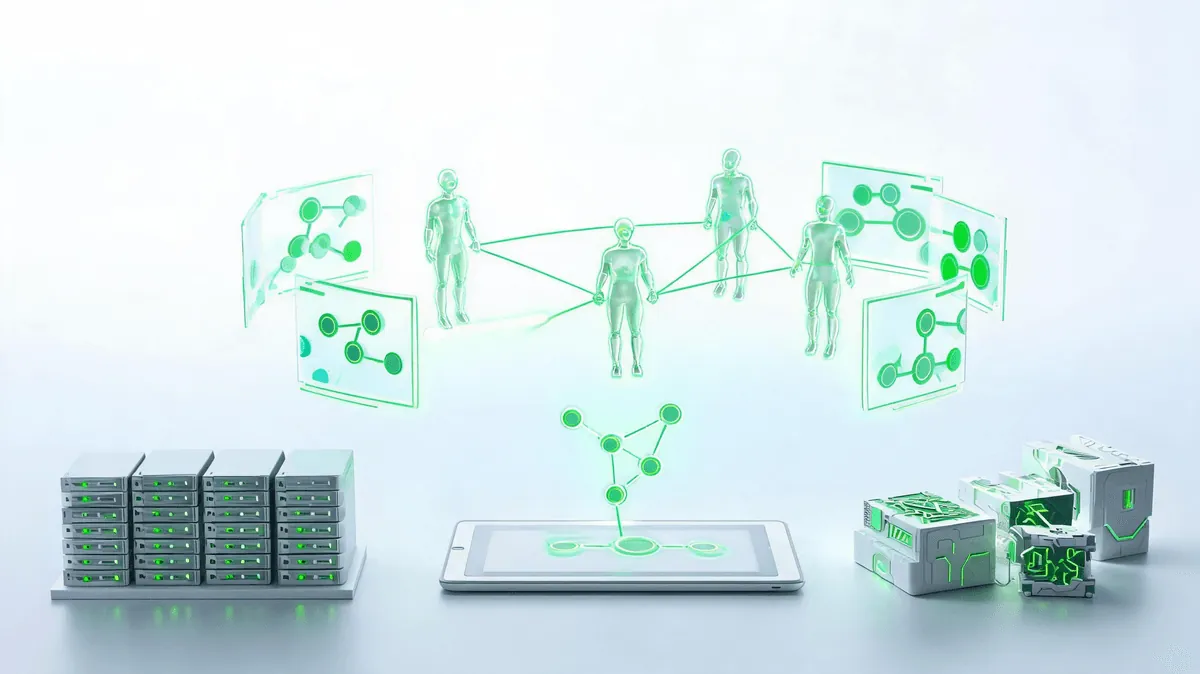
AI Agents become independent nodes in the social network: each Agent has its own "social graph," and Agents automatically match, collaborate, and transact with each other. Human social interaction and Agent social interaction are deeply integrated—you can't tell whether the person on the other end is a real person or an AI agent, and you don't need to.
The social network at this stage is more like a "human-machine hybrid" ecosystem. The Moments you post, the comments you write, the recommendations you make—perhaps half are completed by AI, but you feel no difference from "doing it yourself."
V. Privacy and Trust: The Greatest Unresolved Challenge
The three-stage evolution sounds promising, but there is a core contradiction: the prerequisite for AI-agent social interaction is that you hand over your social data to AI, and social data is the most sensitive privacy data.
Your chat records, social relationships, consumption preferences—if all this data is processed by cloud AI, it means you are completely transparent to the platform. WeChat AI can help you reply to messages, but the prerequisite is that it can read all your messages. The A2A Protocol enables Agents to communicate with each other, but the prerequisite is that Agents share your personal information.
This is the privacy paradox: the smarter the AI, the more privacy data it needs; the stronger the privacy protection, the more limited the AI's capabilities.
Local Agents are the key to breaking this impasse. If Agents run on your local device, data never leaves your domain. AI can fully understand your social habits while your data never leaves your device. A2A Protocol communication can happen between local Agents without uploading raw data to the cloud.
The KaiheAiBox AIBOX-A1, as a locally-running Agent Computer, is a practice in this direction—Agents run on your device, social data, chat records, and personal information are all stored locally and never transmitted to the cloud. You can enjoy the convenience of AI-agent social interaction and the security of local data simultaneously.
VI. Conclusion
WeChat AI Core's internal testing and the A2A Protocol's release are the two most important signals for internet social interaction in 2026. The former means the largest social platform is about to let AI deeply participate in social interaction; the latter means AI Agents from different vendors will form collaborative networks.
The future of social interaction is not "humans vs. AI" but "humans + AI"—AI is your social avatar, your collaboration node, your information filter. You only need to ensure one thing: your AI is under your control, and your data is yours to decide.
-#WeChatAI #A2AProtocol #AgentCommunication #KaiheAiBox
KaiAIBox| Agentaibox that lets AI work for you 24/7· AI Agent