WeChat AI Avatar Goes Live: Cloud Agents Are Cool, But Local Agents Are the Future
📖 Glossary
AI Box (also known as Agent Computer / Agent PC), is a dedicated local hardware device that runs AI Agents. Pre-installed with an AI agent management system, plug-and-play, running 24/7. Users can remotely command AI to work via Discord, Slack, Telegram, WhatsApp, and more.
Tencent has built an AI avatar for WeChat.
This is probably the most exciting AI news for ordinary people in the first half of 2026. No need to download a new app, no need to learn a new interface — just a gentle swipe in WeChat, and your AI assistant appears. It can reply to messages on your behalf, book restaurants, track packages, generate weekly reports, and even ask your boss for a day off.
Sounds like science fiction becoming reality? It certainly does. But take a step back and think carefully, and the emergence of the WeChat AI avatar actually exposes an increasingly clear dividing line between cloud-based agents and local agents — a line that will define the next decade of AI development.
WeChat AI Avatar: The Ultimate Cloud Agent Experience
Let us first examine what the WeChat AI Agent actually does. Tencent's approach can be summarized as "AI Avatar plus Super Portal": an AI avatar embedded within the WeChat chat interface that can read your chat context, invoke WeChat Pay, access the Mini Program ecosystem, and even operate your Official Account backend.
The experience is genuinely impressive. You simply say "book a Starbucks for 3 PM tomorrow," and the AI avatar automatically opens the Meituan Mini Program, searches for nearby Starbucks locations, selects the time, confirms the reservation, and even places your order in advance. The entire process happens without ever leaving WeChat.
This represents the pinnacle of cloud-based agent technology: leveraging Tencent Cloud's computing power, the behavioral data of WeChat's 1.4 billion users, and the complete closed loop of Mini Programs, payments, and social interactions, the WeChat AI avatar achieves near-perfection in terms of convenience.
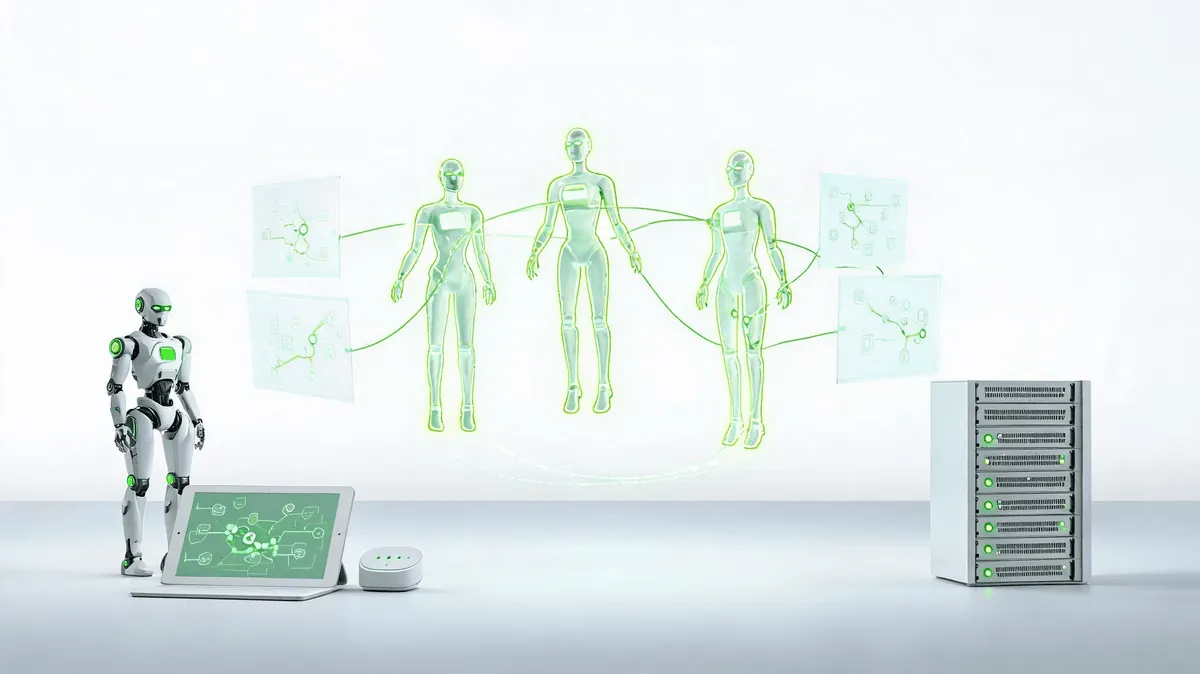
The Ceiling of Cloud Agents: Offline Means Useless
But behind the convenience lie three inherent and insurmountable flaws of cloud-based agents.
First, no network means no agent. All capabilities of the WeChat AI avatar depend on cloud-based inference. The moment your network fluctuates or the server goes into maintenance, your AI avatar becomes a greyed-out profile picture. Imagine you are on a business trip and want the AI to organize your meeting notes on the plane, only to discover there is no WiFi — sorry, nothing can be done. For business travelers, remote workers, and anyone who values reliability, this is a deal-breaker.
Second, privacy runs naked. Your chat history, payment data, and location information all must be uploaded to Tencent Cloud for the AI avatar to process. Tencent naturally assures users that data is secure, but anyone who has experienced a data breach knows there is a vast gulf between "security promises" and "zero risk." When your most sensitive personal and business communications flow through cloud servers, you are fundamentally trusting a third party with the raw material of your digital life.
Third, 7×24 is forever out of reach. The operating time of cloud agents is limited by service availability and API call quotas. You cannot have the WeChat AI avatar monitor server alerts at 3 AM automatically, nor can you have it run continuously for 72 hours to process a batch of data cleaning tasks. At its core, it remains a tool that is available on demand but stops when you stop calling it — fundamentally different from a true autonomous agent.
Local Agents: An Alternative Possibility with KaiheAiBox
In stark contrast to cloud agents is the local agent — represented by an entirely new species of device: KaiheAiBox A1 and E1.
The core logic of local agents is simple and powerful: compute is in your hands, data stays in your home, and the agent never goes offline.
A1 targets home and light commercial scenarios, while E1 serves commercial environments. Both share a defining characteristic: a built-in complete agent runtime environment supporting mainstream frameworks like OpenClaw and Hermes, ready to run the moment you plug it in, capable of completing local tasks even without network connectivity.
What does this mean in practice? It means you can have KaiheAiBox automatically organize your emails at 3 AM, process documents on an airplane, run data analysis in a disconnected environment, and execute any agent task at any time, in any place — without worrying about network interruptions, data leaks, or service outages. The agent runs on your hardware, under your control, following your rules.
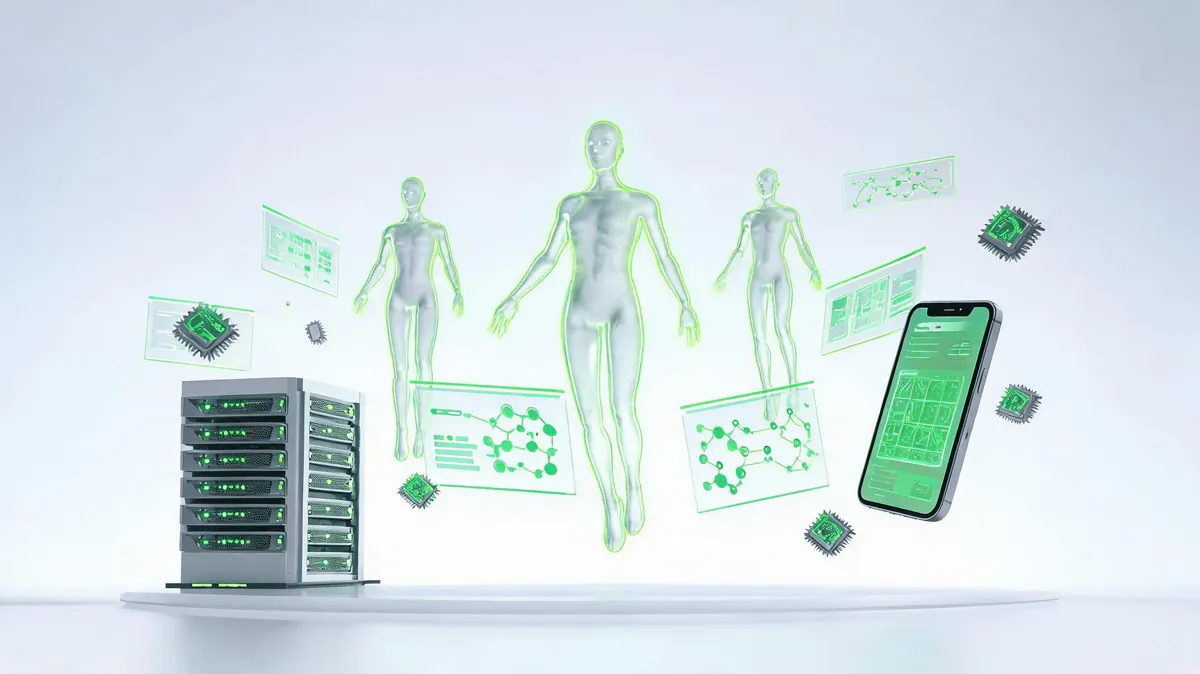
Not Either-Or, But Complementary
It is important to be clear that cloud agents and local agents are not mutually exclusive alternatives. The real future lies in recognizing what each does best and deploying them accordingly.
The WeChat AI avatar has a natural advantage in quickly invoking ecosystem services — it can complete tasks like ordering food, making payments, and social interactions within the WeChat ecosystem, capabilities that are difficult for local agents to replicate because they require deep integration with proprietary platforms and services.
However, local agents have irreplaceable value in continuous autonomous operation — they can execute tasks 24/7 without interruption, independent of network conditions, without exposing sensitive data to third-party servers. For tasks that require persistence, privacy, or reliability, local agents are not just preferable; they are essential.
The ideal approach is a dual-track model: simple, one-time tasks go to the WeChat AI avatar, while complex, long-cycle tasks go to KaiheAiBox local agents. Each handles what it does best, and together they create a more complete and resilient AI workflow.
From "One Swipe" to "Always On"
The "swipe to activate" convenience of the WeChat AI avatar has lowered the barrier to AI usage, allowing more people to experience the convenience of agents for the first time. This is a commendable starting point and an important milestone in bringing AI to the masses.
But the true Agent era is not defined by "one swipe" — it is defined by "always on." You should not need to remember AI, open an app, or swipe an interface, because AI is always there, always working for you. This is the vision of KaiheAiBox: not stuffing AI into a phone waiting for you to summon it, but making AI a never-off workstation beside you, executing tasks, processing information, and managing workflows around the clock, seven days a week.
The WeChat AI avatar is the door-knocker of the Agent era, introducing the concept to billions. But KaiheAiBox is the infrastructure of the Agent era, providing the persistent, private, and powerful foundation that true autonomy requires.
6. Practical Recommendations
For individual users, WeChat's built-in AI Agent is perfectly adequate for daily tasks like message summarization and quick translations. No setup required, no hardware investment needed.
For small teams and freelancers, a local Agent setup on KaiheAiBox A1 provides better value. Full control over workflows, data privacy, and 24/7 operation without WeChat dependency makes it the more practical choice for business use.
For enterprises, the hybrid approach works best: use WeChat's AI Agent for customer-facing interactions and deploy KaiheAiBox E1 for internal operations requiring data security and custom automation. This dual-track strategy avoids platform lock-in while benefiting from both cloud convenience and local control.
The key insight: WeChat's AI Agent is impressive for what it is, but true autonomy requires infrastructure you control. That is where KaiheAiBox Agentic Computer enters the picture, providing the persistent and private foundation that enterprise-grade autonomy demands.
KaiheAiBox| Agentaibox that lets AI work for you 24/7· AI Agent
7. The Bottom Line for Businesses
The choice between WeChat's cloud-based AI Agent and a local Agent running on KaiheAiBox comes down to three factors: control, privacy, and autonomy.
WeChat's AI Agent gives you convenience at the cost of control. Your data flows through Tencent's servers, your Agent's capabilities are limited to what Tencent allows, and the service stops when you close the app. For casual users, this trade-off is acceptable. For businesses, it is a hard pass.
A local Agent on KaiheAiBox gives you control without sacrificing convenience. The setup takes 12 minutes, data stays on your device, and the Agent runs 24/7 regardless of whether you are actively using it. The trade-off is a one-time hardware cost of ¥1,130 for the entry-level A1 model and monthly API fees proportional to your usage volume.
For most small and medium businesses processing more than 500 interactions per month, the local-first approach delivers better value within the first six months. By year two, the savings compared to per-message cloud pricing become substantial.
The future is not a choice between cloud and local—it is a hybrid where each handles what it does best. WeChat connects you to your customers; KaiheAiBox powers the backend automation that makes customer interactions meaningful.
The hybrid cloud-local architecture framework presented here represents the most pragmatic approach for organizations that value both convenience and control. WeChat excels at consumer-facing interactions where ecosystem reach matters. KaiheAiBox excels at backend automation where data sovereignty and continuous operation are non-negotiable. Together, they form a complete AI Agent strategy that serves both external customer needs and internal operational requirements without compromise or unnecessary complexity.