What is Hermes? A Complete Guide to Nizwo's Second AI System
📖 Glossary
AI Box (also known as Agent Computer / Agent PC), is a dedicated local hardware device that runs AI Agents. Pre-installed with an AI agent management system, plug-and-play, running 24/7. Users can remotely command AI to work via Discord, Slack, Telegram, WhatsApp, and more.
Nizwo (Kaihe) has more than just OpenClaw. This article gives you a comprehensive look at Hermes—an AI agent system that's fundamentally different in both design philosophy and user experience.
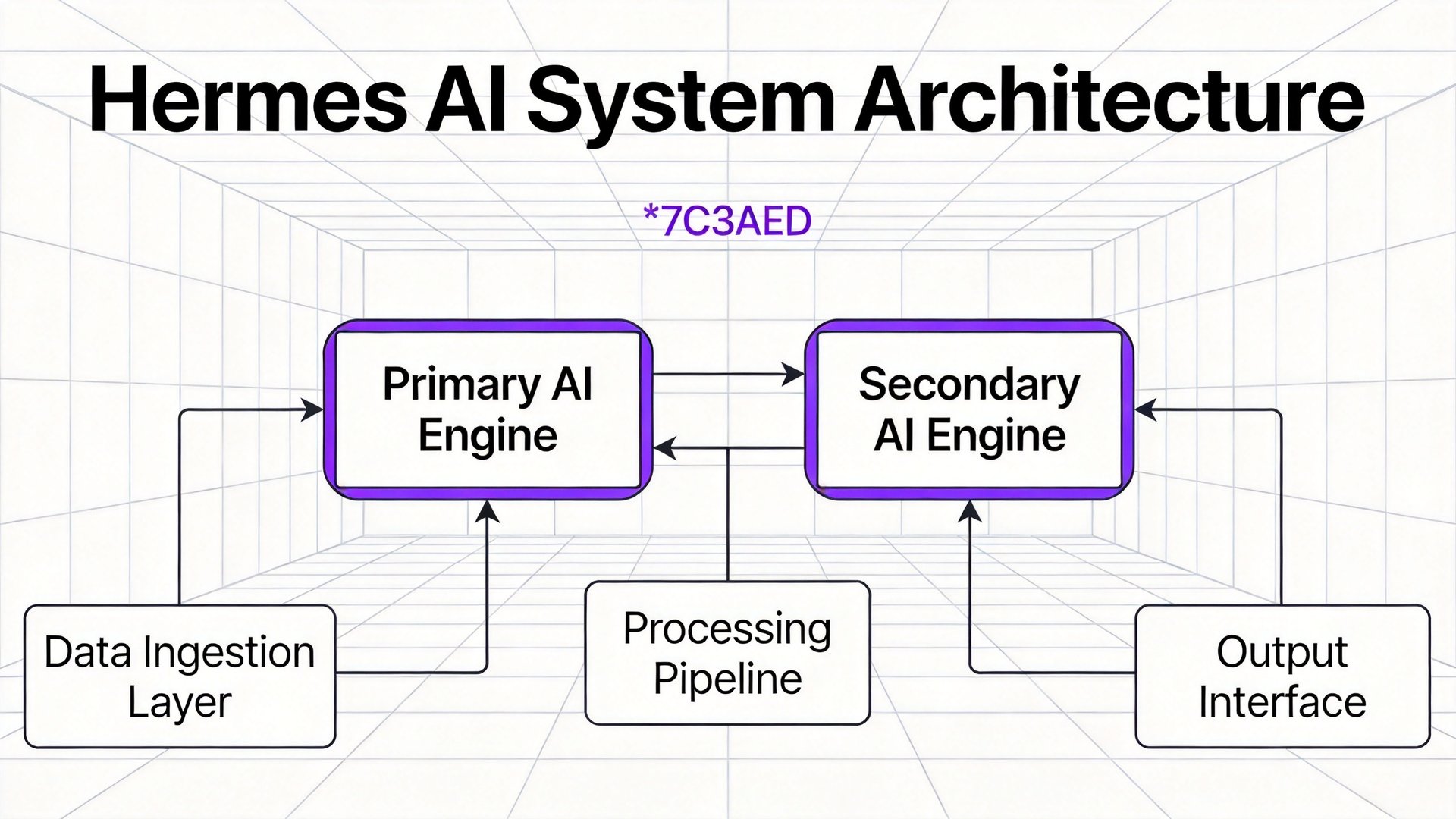
Why Does Nizwo Need Two AI Systems?
If you're new to Nizwo, you might be confused: OpenClaw and Hermes are both AI agent systems—why maintain two simultaneously?
The answer is simple: because they solve two completely different types of problems.
OpenClaw is a Swiss Army knife—flexible, configurable, capable of infinitely extending capabilities through a Skill mechanism. It's for users who enjoy hands-on work. You can use it to build email assistants, calendar managers, customer service bots... practically any AI application scenario you can imagine.
Hermes is a professional butler—it doesn't require you to manually configure various Skills. It comes with a complete "personality" and "capability package" right out of the box. More importantly, it gets to know you better the more you use it.
Three Core Features of Hermes
1. Self-Evolution Capability
This is Hermes' most unique selling point.
With ordinary AI systems, every time you use them it's like "meeting them for the first time." They'll forget the preferences, habits, and working methods you've told them before. Hermes is different: it has a complete feedback loop.
When you tell it, "This response is too verbose, keep it shorter next time," it remembers. When you habitually ask it to organize the day's work progress at 3 PM, it will proactively prepare at that time. If you prefer a certain report format, it will automatically apply it.
After a month, Hermes is no longer a "general-purpose AI"—it's your AI.
2. Multi-Agent Collaboration
Hermes has a built-in multi-agent collaboration architecture. This means it's not a single "super brain" solving all problems, but rather multiple specialized sub-agents working together with division of labor.
For example, if you give a complex command: "Create a Q3 market analysis report, needing competitive comparison, sales data analysis, and trend forecasting"—
- Agent A is responsible for searching and organizing competitor materials
- Agent B connects to your sales database for analysis
- Agent C generates trend forecasts based on the outputs of the first two
- Agent D integrates everything into a structured report
Each sub-agent only handles what it's best at, just like colleagues from different departments in a company.
3. Personality System
Hermes is not a cold, detached tool. It has a customizable personality system.
You can set Hermes to be a "rigorous academic advisor"—every conclusion must have citations and data support. Or a "direct execution partner"—no small talk, just solutions. Or even a "creative thinking partner"—using heuristic questions to help open up your thinking.
This isn't just a skin swap—it genuinely changes the AI's behavioral patterns and decision-making preferences.
Hermes vs OpenClaw: A Quick Comparison Table
| Dimension | OpenClaw | Hermes |
|---|---|---|
| Design Philosophy | Skill-driven, on-demand expansion | Full-stack agent, out-of-box ready |
| Onboarding Difficulty | Requires Skill and rule configuration | Zero config, plug and play |
| Learning Ability | Rules and Skill updates | Self-evolution, continuous user preference learning |
| Multi-tasking | Single session sequential execution | Multi-agent parallel collaboration |
| Personality Customization | System Prompt adjustment | Complete personality system |
| Target Users | Geeks, developers, power users | Business users, teams, those who want simplicity |
| Strengths | Flexible customization, plugin ecosystem | Self-evolution, multi-agent, zero config |
Who Is Hermes For?
To be honest, if you enjoy the process of configuring AI yourself and love digging into Skill development and Prompt engineering, OpenClaw is your ideal tool.
Hermes is designed for a different need: you don't need to "raise" an AI, you need an AI to work for you.
It's especially suitable for: - Individual users who want to quickly get an AI assistant without wanting to study configuration - Teams that need a unified AI tool that everyone can use right away - Enterprises deploying an AI middleware platform, needing multi-agent collaboration to handle complex processes - People whose expectation of AI is "the more I use it, the more handy it gets," not "re-tuning each time"
Hermes' Localization Capabilities
Like OpenClaw, Hermes fully supports local deployment. All data, memory, and model inference run on your device.
What's particularly worth noting is Hermes' local model adaptation. It supports a wide range of configurations from 2B small models to 70B large models. On small models, it pursues inference speed; on large models, it pursues deep analysis—you can flexibly choose based on actual needs and hardware conditions.
Conclusion
OpenClaw and Hermes are not in a "who replaces whom" relationship. They are the two wheels of Nizwo's dual-engine strategy—one serving those who "want to build it themselves," one serving those who "want to use it right away."
Which system to choose depends on your usage habits and needs, not technical level.
In the next article, we'll directly compare OpenClaw and Hermes through specific scenarios to help you make the best choice.