The Short Version
📖 Glossary
AI Box (also known as Agent Computer / Agent PC), is a dedicated local hardware device that runs AI Agents. Pre-installed with an AI agent management system, plug-and-play, running 24/7. Users can remotely command AI to work via Discord, Slack, Telegram, WhatsApp, and more.
On September 2, Tencent launched the WorkBuddy Open Platform (open.WorkBuddy.cn), bringing in over 100 ecosystem partners on day one and opening its underlying Agent capabilities across three layers — smart hardware, industry applications, and developers. For KAIHE AIBOX users, the signal isn't "another AI tool" — it's Tencent validating a thesis: the future isn't about how capable a single Agent is, it's about who builds the "base plus ecosystem" first.
Myth 1: This is just another AI office product
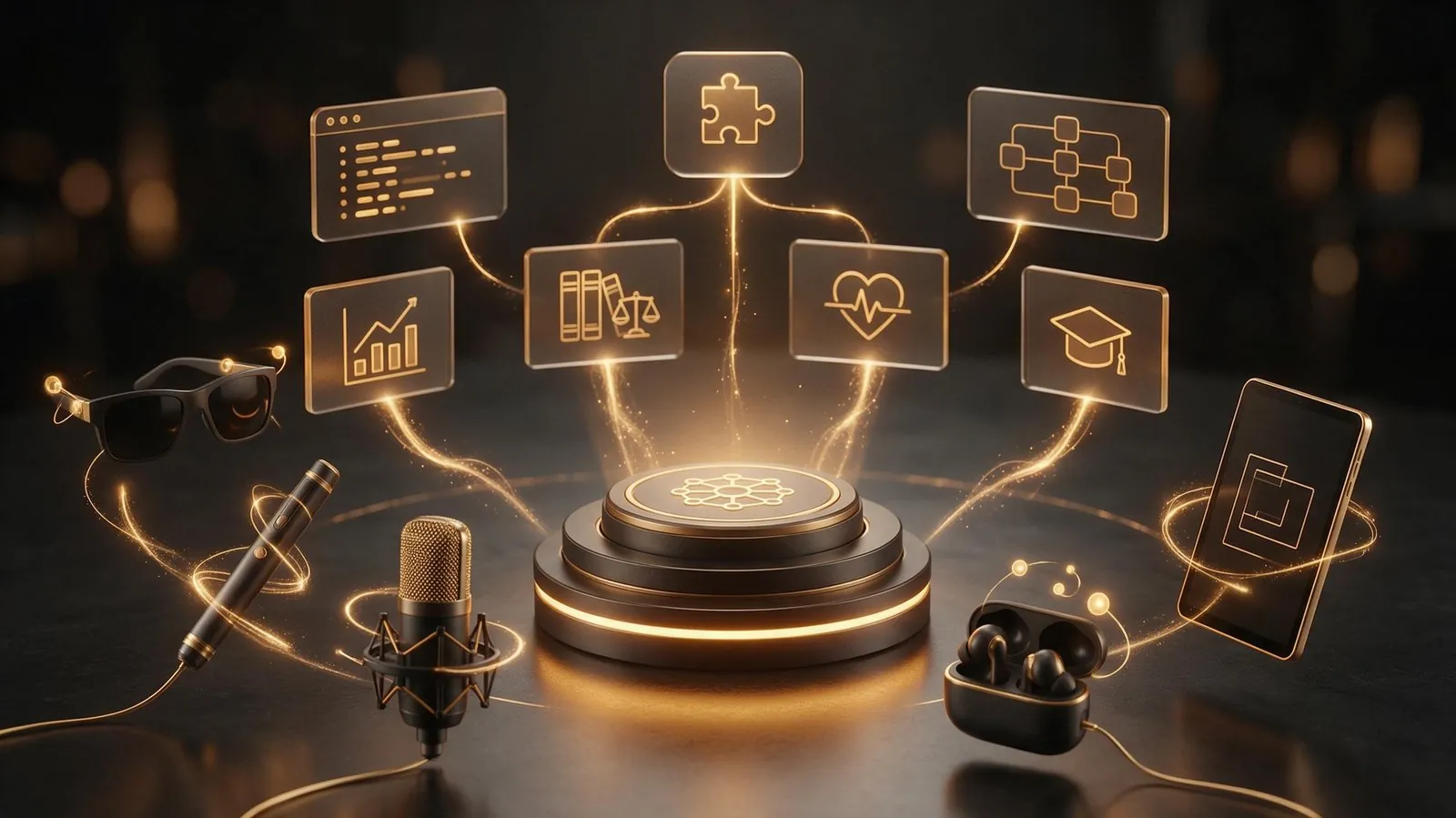
Many still think of WorkBuddy as the desktop assistant that runs tasks on your PC. That's wrong now. The Open Platform essentially takes WorkBuddy's Agent base and breaks it open to the outside — WorkBuddy steps back to be the "operating system," and partners build applications on top.
The three layers are clear. Layer one is hardware: around five touchpoints — listen, see, record, talk, collaborate — it has already connected smart glasses, recording cards, microphones, earphones, PCs, tablets across more than 10 categories and 30+ brands. Nine co-branded hardware products launched on stage, with partners including Plaud, Rokid, Insta360, iFlytek, Anker, Hollyland, and JD Jingzao. Hardware makers don't build their own AI; one integration and accounts, tasks, and memory flow across glasses, phone, PC, and web.
Layer two is industry applications, called "Buddy Apps": partners bring their own business context, tools, and brand to spin up a complete AI Agent office product without building AI themselves. It already covers 20+ domains — finance, legal, healthcare, education, public welfare — with 30+ partners like Tonghuashun, GF Securities, E Fund, Pkulaw, Weimob, Beisen, Fanruan, and Meitu building them. The "Public-Welfare Buddy" is one example: it plugs into Tencent's charity platform data, distilling 11 scenario capsules, 42 capabilities, and 15 coordinated agents covering grant applications to invoice processing; certified organizations can claim 5,000 WorkBuddy credits monthly through 2026.
Layer three is developers: it opens Skill, Expert, and Connector capabilities, supports both MCP and CLI, and can connect any external service. Tencent Cloud VP and WorkBuddy lead Liu Yi put it plainly: build it into "the operating system for the Agent era — not a stronger tool, but a platform that carries all tools."
Myth 2: KAIHE AIBOX can plug into this platform too
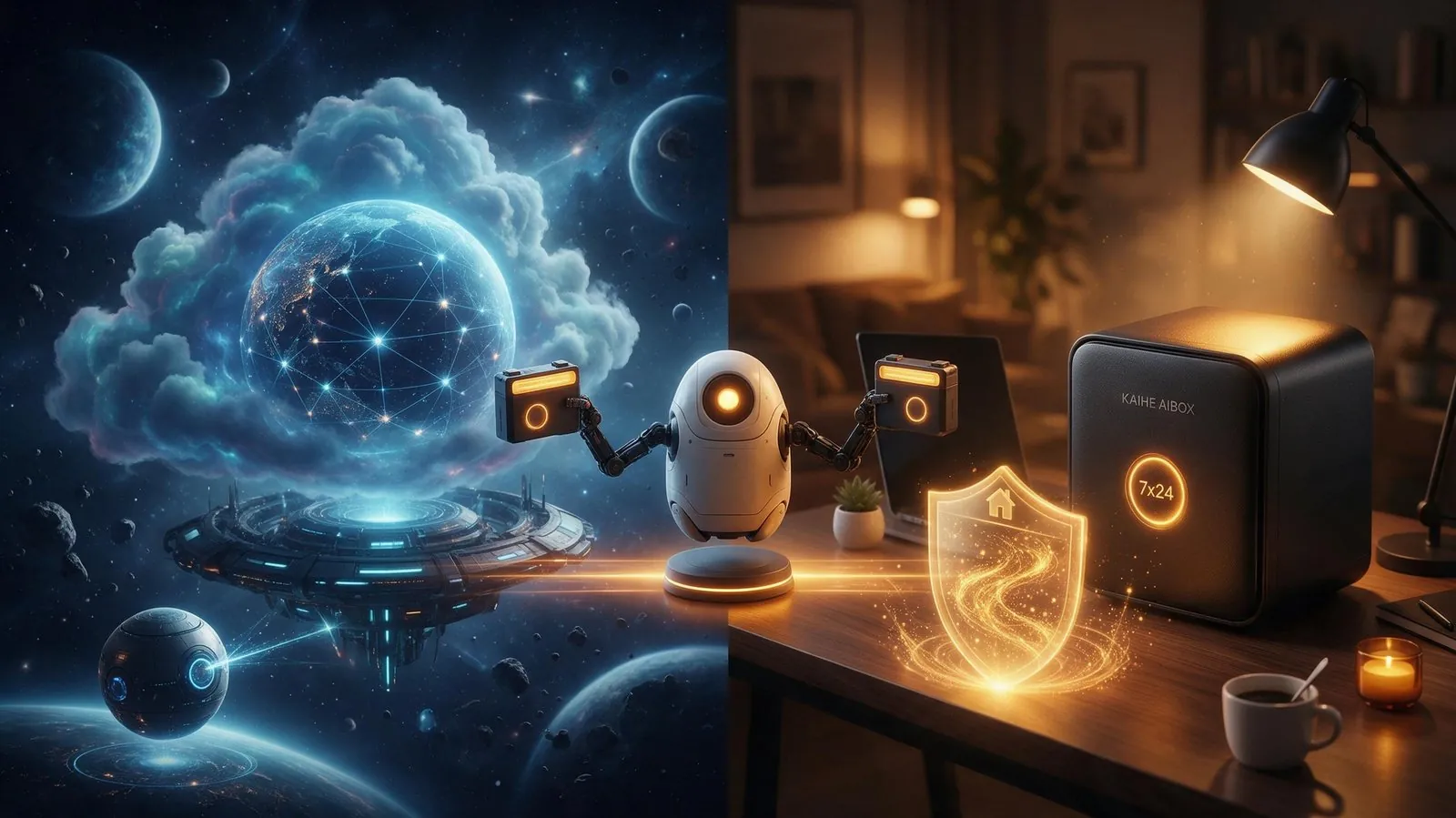
Let's be clear: KAIHE AIBOX does not run WorkBuddy, and it cannot plug into WorkBuddy's cloud base — that stack runs on Tencent Cloud, carried by Tencent Cloud accounts and cloud compute, which is a different beast from a local hardware base. But one thing is worth acknowledging: by using an Open Platform to nail down the very concept of "Agent base," WorkBuddy proves the base war has begun. KAIHE AIBOX walks a different road — the local base.
KAIHE AIBOX is a locally-running agent computer: plug in and it works, 7×24 low-power standby, data stays in your home. It runs on local Hermes agent orchestration; models come in through channels like TokenHub and OpenRouter as tools, swappable like a battery. Tencent puts the base in the cloud and uses an open ecosystem to grab entry points; KAIHE puts the base in your home and trades on local execution for data privacy and no interruption. Two roads, each with its stance — neither eats the other.
Myth 3: Open platform means free lunch
Don't get carried away by "100+ partners" and "free credits." 21st Century Business Herald pointed out the industry reality on the spot: Agents demo well but land poorly in real business, and partner accountability and commercial revenue-sharing are nowhere near settled. Lin Zuolu himself admitted "100 partners are just those with high initial willingness, not the ecosystem result," caring more about scenarios being used frequently by users and partners getting paid. Tencent says payment and distribution channels are accelerating, but "who pays, how to split" is far from formed across the industry.
In other words, the Open Platform solves "can it connect," not "how does it survive after connecting." This holds for every base player, and KAIHE AIBOX's local route can't dodge it either — why should a user pay extra for "local"? It has to stand on real reasons: data stays home, works offline, not locked to a cloud vendor.
The essence in one line: base war, two roads — cloud and local
The signal from the WorkBuddy Open Platform is clear: the Agent track is moving from "who can generate" to "who can finish the job and plug into real scenarios." Tencent chose a cloud base plus open ecosystem, using hardware entry points to grab the first gate of context — glasses, microphones, recorders, these wearable devices are the scarcest production material for Agents (first-hand voice, gaze, memory).
KAIHE AIBOX's stance fills the other side: when every cloud base is grabbing your data entry, a device keeps your memory, workflows, and private context at home, running even when the PC is off and the network is down. A base's value isn't in being big, it's in being controllable.
Three-dimension comparison: cloud base vs local base
| Dimension | WorkBuddy cloud base | KAIHE AIBOX local base |
|---|---|---|
| Where it runs | Tencent Cloud, on cloud accounts and compute | Your home, local, plug-in-and-run |
| Where data goes | Into Tencent Cloud context | Stays in your home |
| Ecosystem form | Open platform, partners build apps/hardware | Local Hermes orchestration, free model access |
| Offline usable | Depends on cloud, stops when disconnected | 7×24 offline standby |
| For whom | Teams heavy on collaboration and multi-device sync | Individuals/homes heavy on privacy and continuity |
| Biggest question | Can revenue-sharing work | Will users pay for "local" |
This table isn't about ranking — it's about positioning. Tencent bets on ecosystem and network effects; KAIHE bets on privacy and control. Both are right for some people.
Back to our own users
Just watch the word "base." Models change generation by generation — WorkBuddy is strong today, another flagship drops tomorrow — but "I keep my workflows local and my data at home" is a bottom line no cloud release rewrites. The Hermes orchestration on KAIHE AIBOX lets you plug in Hy4, GLM, or any compatible-interface model like swapping a battery; workflows stay in your hands.
Simply put, the WorkBuddy Open Platform proved one thing: the Agent endgame is base and ecosystem, not a single flashy tool. KAIHE AIBOX chose the local-base road — it doesn't grab entry points, it guards your home.
Further Reading
- Why AI still works after your PC is off — the 7×24 standby logic of a local agent computer
- Why KAIHE doesn't live inside your PC — standalone hardware base vs desktop fundamentally differ
- Codex no-code office automation — how local orchestration finishes repetitive work
Learn More — search 【KAIHE AIBOX】
Contact: [email protected]
KAIHE AIBOX #Local AI #Private AI Assistant #WorkBuddy #AIBOX #Hermes #Agent Computer
https://agentaibox.com/articles/workbuddy-open-platform-kaihe-aibox