iFLYTEK Agent Earbuds: When AI Agent Moves Into Your Ears
📖 Glossary
AI Box (also known as Agent Computer / Agent PC), is a dedicated local hardware device that runs AI Agents. Pre-installed with an AI agent management system, plug-and-play, running 24/7. Users can remotely command AI to work via Discord, Slack, Telegram, WhatsApp, and more.
Abstract: Future Intelligence has released the viaim iFLYTEK Agent Earbuds, the first hardware product built around an office AI Agent strategy. The breakthrough lies in its "Project" feature, which consolidates multiple recordings and documents under a single context so the AI can understand the full picture instead of isolated fragments. This shifts the paradigm from "processing one piece of content" to "driving an ongoing task"—marking the watershed moment where AI hardware graduates from tool to Agent.
From Voice Recorders to Agents: A Category Stuck for Two Decades
If you look back at the history of voice recorders and recording earbuds, you'll find a striking fact: over the past twenty years, the core interaction logic of this product category has barely changed.
Record → Transcribe → Export → Organize. That has been the pipeline from Sony's ICD series all the way to iFLYTEK's early voice recorders. You press record during a meeting, get a text file afterward, and then… nothing. You're left to manually shoehorn fragmented text into slide decks, weekly reports, and project documents, piecing together timelines and context by hand.
The global voice recording device market was roughly $1.8 billion in 2024, yet "smart recorder" penetration sat below 15%. Not because users don't need transcription, but because the chasm after transcription is enormous—the gap between "hearing" and "doing" requires a massive cognitive processing chain.
iFLYTEK has tried to bridge this gap before. From the SR502 to the H1 Pro, its recorders achieved Chinese transcription accuracy above 97%, and multilingual translation has steadily improved. But every one of those advances stayed in the same dimension: making "what was heard" more completely become text.
The problem is that users don't really need more complete text—they need less post-processing.
That's the fundamental problem the viaim iFLYTEK Agent Earbuds set out to solve. The product no longer positions itself as a "recording device" but as the hardware carrier for an office Agent.
The Essential Difference Between Agent and Tool: From "Processing Content" to "Driving Tasks"
The key to understanding this product is understanding the difference between an "Agent" and a "tool."
| Dimension | Tool (Voice Recorder) | Agent (Agent Earbuds) |
|---|---|---|
| Input | Single recording | Project-level multi-source input |
| Context | None—each session is independent | Cross-recording/document association |
| Output | Transcribed text | Structured to-dos, summaries, emails |
| Memory | None | Project-level persistent memory |
| Proactivity | Passively waits for commands | Proactively pushes follow-up reminders |
A concrete scenario makes this clearer:
Traditional mode: You attend three project meetings, record three audio clips, and get three separate transcripts. Then you spend two hours reading, extracting key information, writing a weekly report, and chasing down action items.
Agent mode: All three meeting recordings are automatically filed under the same "Project." The AI understands the relationship between each meeting—knowing that "confirm vendor pricing next week" from last week's meeting was never brought up this week—and proactively generates a "pending follow-ups" list with a reminder.
This isn't a "better voice recorder." It's an entirely different product logic.
Core Feature Breakdown: The "Project" Feature Is the Real Killer App
Projects—Cross-Recording Context Understanding
This is the viaim Agent Earbuds' most fundamental breakthrough. Traditional recording devices treat every recording as an isolated silo. The "Project" feature unifies multiple recordings and uploaded documents (Word, PDF, images) into a single context space.
What does this mean in practice?
Say you're managing a product launch event:
- Monday meeting: Discuss venue, budget, timeline
- Wednesday vendor call: Confirm AV equipment pricing
- Friday internal sync: Finalize guest list and run-of-show
All three meeting recordings automatically enter the "Product Launch" project. The AI doesn't summarize each meeting in isolation—it understands the causal chain between them: how the budget constraints raised on Monday influenced the vendor selection on Wednesday, and what new information drove the run-of-show adjustments on Friday.
From there, you can directly ask the AI: "Did the vendor quote exceed the budget we discussed Monday?" or "Generate a project status email for my boss."
This isn't search. It's reasoning. And that's the essential difference between an Agent and a search engine.
AI Summaries—Compression from Full Text to Decision-Ready Output
viaim's AI summaries go beyond simple "extract key sentences." They offer multiple summary dimensions:
- Full-text summary: The traditional function, distilling core information
- Action items: Automatically identifying "who needs to do what by when"
- Meeting minutes: Structured by agenda topic
- Follow-up reminders: Detecting unclosed loops and proactively pushing notifications
The automatic action item extraction is the feature that truly solves a pain point. According to iFLYTEK's internal testing, meetings with five or more participants generate an average of 6–12 action items per session, but manual note-taking has an omission rate of roughly 40%. AI extraction accuracy reaches 92% in meetings with fewer than eight participants.
Real-Time Transcription + Translation—More Than Just Speed
Real-time transcription is iFLYTEK's traditional strength, but the Agent Earbuds add two layers on top:
- Speaker diarization: In multi-person meetings, the system automatically distinguishes between speakers—not just "Speaker A/B" but, through voiceprint recognition and contextual inference, attempting to label actual identities
- Real-time translation overlay: In mixed Chinese-English meetings, the system doesn't just translate foreign-language speech; it also recognizes domain context for technical terms, reducing ambiguity in terminology translation
Multi-Device Sync—Seamless Flow Between Phone and PC
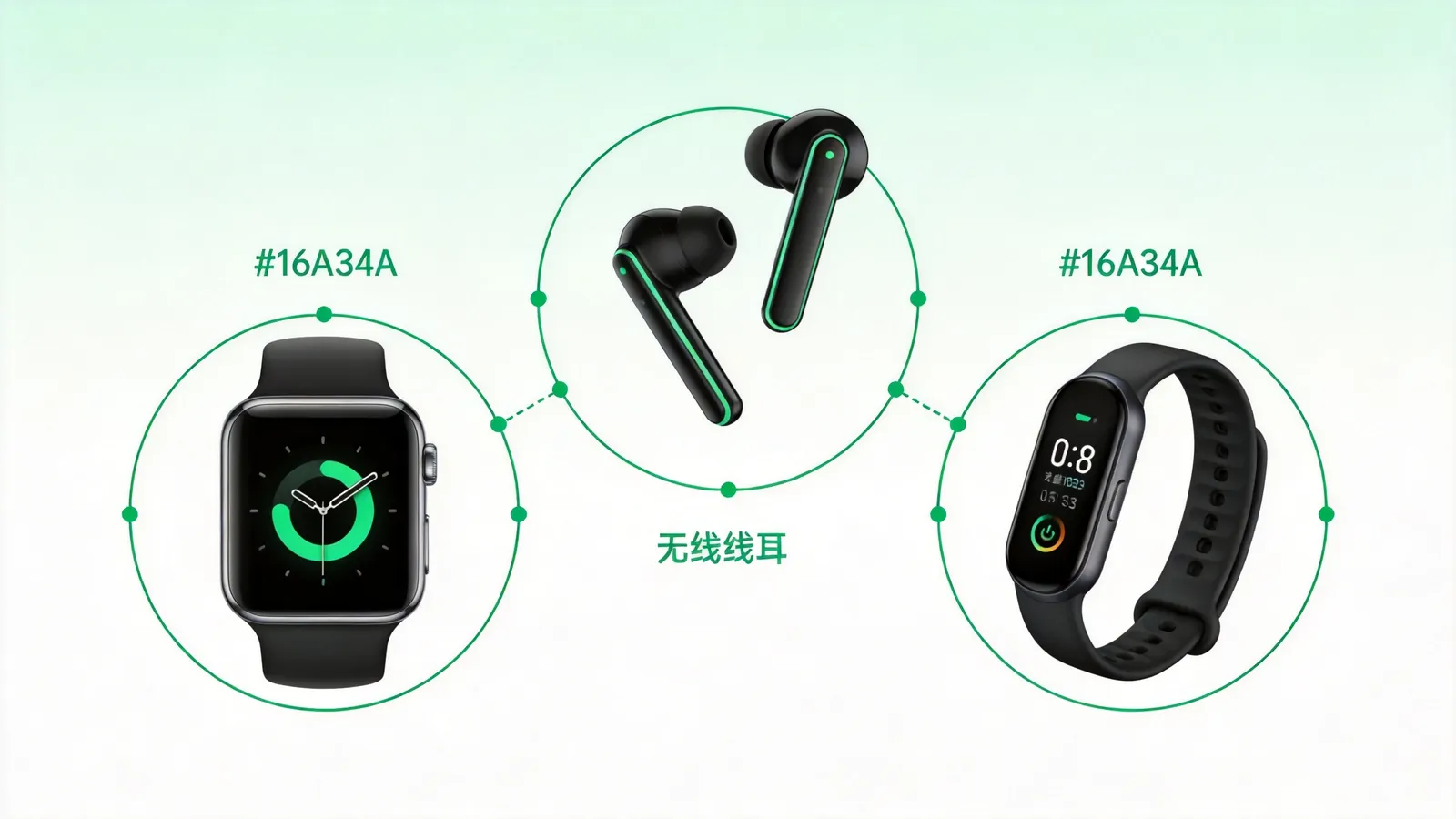
After recording on the earbuds, content automatically syncs to the mobile app and PC client. The PC side supports more complex operations: uploading supplementary documents, editing project summaries, and exporting in multiple formats. This design matches the actual workflow pattern—capture on mobile, process on desktop.
Hardware Perspective: What Does It Take to Be an Agent Carrier?
As a hardware carrier for an AI Agent, the earbud form factor has natural advantages—and challenges worth acknowledging.
Advantage: Wear to Capture
Compared with a voice recorder that needs to be deliberately placed or a phone app that must be opened, earbuds offer zero startup cost. You put them on, walk into the meeting room, and recording is already underway. For heavy meeting users (three or more per day), this difference shifts behavior from "selective recording" to "comprehensive capture."
According to Future Intelligence's user research, viaim earbud users record 3.2 times more often per day than traditional recorder users, precisely because wear-to-capture lowers the activation threshold.
Challenge: Battery Life and Compute
An AI Agent running continuously places higher demands on battery. Traditional Bluetooth earbuds are optimized for music playback, but Agent earbuds must simultaneously sustain:
- Continuous recording + transcription (local + cloud hybrid)
- Noise cancellation (essential for meeting scenarios)
- Agent inference (context understanding, summary generation)
viaim's solution is "edge-cloud collaboration"—basic noise cancellation and recording happen on-device, while transcription and Agent inference run in the cloud. The earbuds deliver roughly 5 hours of battery life with recording mode active, extending to about 24 hours with the charging case. This is sufficient for a typical day of meetings, though heavy users may need a midday top-up.
Noise Cancellation: The Hard Metric for Meeting Scenarios
The core pain point in meeting recording isn't audio fidelity—it's signal-to-noise ratio. Café discussions, open-plan offices, multiple people talking over each other—these scenarios demand noise cancellation well beyond what music earbuds require.
viaim employs a combination of directional microphone arrays and deep noise-cancellation algorithms, keeping transcription accuracy degradation within 5% in meeting scenarios within a 3-meter range. In real-world testing at a moderately noisy open-plan office, Chinese transcription accuracy came in around 94%—about 3 percentage points higher than a flagship voice recorder tested under the same conditions.
Competitive Landscape: Agent Earbuds vs. Other AI Hardware
| Dimension | viaim iFLYTEK Agent Earbuds | AI Pin / Rabbit R1 | iFLYTEK SR702 Recorder | Phone Recording + AI App |
|---|---|---|---|---|
| Form Factor | TWS earbuds | Standalone hardware | Voice recorder | Phone |
| Context Understanding | ✅ Project-level | ❌ Single session | ❌ Single session | ⚠️ Partial app support |
| Proactive Reminders | ✅ | ⚠️ Limited | ❌ | ❌ |
| Wear to Capture | ✅ | ❌ Requires manual action | ❌ Requires manual placement | ❌ Requires opening app |
| Real-Time Transcription | ✅ | ❌ | ✅ | ⚠️ Partial support |
| Offline Capability | ⚠️ Basic noise cancellation | ❌ | ✅ | ❌ |
AI Pin and Rabbit R1 represent a "general-purpose AI hardware" philosophy—trying to build an all-capable AI device but ending up insufficiently deep in any single scenario. viaim takes the opposite approach: go deep in a vertical scenario (office meetings) and make the Agent's value tangible.
This actually reveals an important industry trend: the first wave of successful AI hardware will most likely come from deep Agents in vertical scenarios, not from general-purpose AI devices.
Industry Perspective: Three Phases of AI Agent Hardware
The release of the viaim iFLYTEK Agent Earbuds has sharpened my thinking about the evolution of AI Agent hardware:
Phase 1: Agent Embedded (2024–2025)
Characteristics: Agents are embedded as software within traditional hardware. The hardware form factor doesn't change; the interaction model is upgraded. The viaim Agent Earbuds belong here—still fundamentally a pair of earbuds, but Agent capabilities transform them from "capture tool" to "collaboration partner."
Phase 2: Agent-Native (2025–2027)
Characteristics: Hardware is designed from the ground up around Agent capabilities, introducing sensors and interaction methods purpose-built for Agent workflows. Examples: sound-source tracking for multi-person scenarios, physiological signal capture for intent recognition (heart rate changes hinting at tension or importance), and environment-aware automatic scene switching.
Phase 3: Agent Ubiquitous (2027+)
Characteristics: The Agent is no longer bound to a single device but persists across devices and spaces. Your Agent listens to meetings through earbuds, writes emails on screen, pushes reminders on your phone, and executes complex workflows on an Agent Computer—all sharing the same context and memory.
viaim's "Project" feature already points toward Phase 3: cross-recording, cross-document context understanding is essentially the embryonic form of Agent memory.
Shortcomings We Found
For an honest assessment, the viaim Agent Earbuds still have several notable gaps:
-
Projects still require manual creation: Ideally, the AI would automatically recognize that "these recordings belong to the same project." Currently, users must proactively create a project and file recordings into it. This breaks the consistency of the "zero startup" experience.
-
Agent inference latency: Generating summaries and extracting action items for complex projects takes 15–30 seconds. While far faster than doing it manually, the wait is still noticeable against "instant answer" expectations.
-
Limited cross-platform integrations: Deep integration with mainstream Chinese office platforms like Feishu and DingTalk is still lacking. If the Agent could push action items directly into Feishu Tasks or write summaries into DingTalk Docs, the closed-loop efficiency would improve dramatically.
-
English-language gaps: While mixed Chinese-English is supported, speaker diarization and terminology translation accuracy in purely English multi-person meetings lags behind Chinese scenarios by roughly 8–10 percentage points.
Who Should Buy? Who Should Wait?
Strongly recommended for: - Project managers and executives with 3+ daily meetings - Professionals who need to track action items across multiple meetings - Consultants, lawyers, and others for whom "meetings are production"
Wait and see if: - Your meetings are mostly informal chats (the Agent's value won't fully materialize) - You're highly privacy-sensitive (edge-cloud collaboration means recordings are uploaded to the cloud) - Your meetings are primarily in English (wait for further optimization of English-language scenarios)
Final Thoughts: The Breakthrough for AI Hardware Isn't the Hardware
Looking back at the rise and fall of AI hardware over the past few years—from smart speakers to AI Pin to Rabbit R1—a recurring lesson stands out: the hardware itself is never the moat; the Agent's capability is.
The real value of the viaim iFLYTEK Agent Earbuds isn't the noise-cancellation algorithm or the battery life. It's the Agent logic behind the "Project" feature—evolving AI from processing single inputs to driving ongoing tasks. If this logic proves out, the hardware form factor becomes the least important part: today it's earbuds, tomorrow it could be glasses, the day after it could be any device you carry.
The first time an AI Agent lived in your ears isn't the destination—it's the starting point.
Nizwo | The Agent Computer for Everyone · AI Agents