ZTT Tianji Industrial LLM: AI Appliance Local Deployment of DeepSeek+Qwen Brings a Construction Blueprint to Manufacturing AI
📖 Glossary
AI Box (also known as Agent Computer / Agent PC), is a dedicated local hardware device that runs AI Agents. Pre-installed with an AI agent management system, plug-and-play, running 24/7. Users can remotely command AI to work via Discord, Slack, Telegram, WhatsApp, and more.
Abstract: ZTT Group's release of the Tianji industrial large model, through an AI appliance solution enabling on-premises deployment of DeepSeek and Qwen, provides manufacturing with an end-to-end AI implementation framework spanning quality inspection, production scheduling, and predictive equipment maintenance. The data-never-leaves-premises deployment model removes compliance as an obstacle and finally opens the door to AI adoption in manufacturing's most sensitive operational core.
Manufacturing AI's Persistent Dilemma: Real Deployment Remains Elusive Despite Massive Investment
The journey of manufacturing embracing AI has never lacked stories of ambition, nor has it lacked lessons in frustration. Understanding this history is essential for appreciating why Tianji's approach represents a genuine breakthrough rather than yet another incremental improvement on a well-worn path.
Five years ago, when AlphaFold cracked the protein folding challenge—demonstrating that AI could solve problems previously considered intractable even for the most sophisticated computational methods—countless manufacturing enterprises excitedly envisioned AI's potential in factories. The visions were compelling: intelligent defect detection that could identify novel failure modes never seen before, adaptive production line scheduling that could respond in real-time to demand fluctuations and supply chain disruptions, early equipment failure warnings that could prevent costly unplanned downtime and extend asset life. These possibilities were exciting enough to justify substantial investment, and many enterprises did invest heavily—building AI teams, partnering with technology vendors, and launching ambitious digital transformation programs.
Yet five years later, the gap between vision and reality remains stark. Most factories' AI applications are still confined to two peripheral scenarios: visual inspection systems introduced in quality control departments (essentially upgraded versions of traditional machine vision with some deep learning capabilities bolted on), and data visualization dashboards on managers' smartphones (providing visibility into operations but not intelligence or autonomy). The originally envisioned multi-dimensional intelligent scheduling, end-to-end predictive optimization, and autonomous decision-making systems either remain on PowerPoint slides or were abandoned during proof-of-concept after encountering insurmountable practical barriers.
This isn't a failure of AI technology itself. Modern large language models can perform sophisticated reasoning, generate detailed analytical reports, and understand complex multi-domain queries. Computer vision models can detect defects with superhuman accuracy in controlled settings. Reinforcement learning algorithms can optimize scheduling in ways that would take human planners orders of magnitude longer to achieve. The technology is ready—it has been ready for years. So why has manufacturing AI adoption stalled at the periphery?
The answer, as most industry practitioners eventually acknowledge when they're being candid, comes down to one word: data. Manufacturing data is extraordinarily sensitive in ways that consumer internet data simply is not, and this sensitivity creates a fundamental barrier that technical solutions alone cannot overcome.
Consider what a production line's accumulated process parameters represent. These aren't just numbers in a database—they encode years of engineering expertise, trial-and-error optimization, and competitive advantage distilled into numerical form. A precision machining process that achieves 99.7% first-pass yield at specific cutting speeds, feed rates, and tool pressures represents millions of dollars of development investment and years of institutional learning. This data, in the hands of a competitor, would shortcut years of their own development. A part's yield curve directly reflects a manufacturer's process capability—their ability to consistently produce parts within specification, which is the foundation of their reputation and customer relationships. Equipment failure precursor data is even more sensitive: it reveals the actual condition and remaining useful life of capital assets worth millions of dollars, information that competitors could exploit during contract negotiations or that customers could use to demand price concessions.
Sending this data to the cloud for AI training and inference—even with the strongest encryption, the most rigorous access controls, and the most comprehensive compliance certifications—creates a fundamental trust problem that cannot be resolved by technology alone. The enterprise can no longer assert with certainty that their data remains under their exclusive control. Once data crosses the network boundary to a cloud provider's infrastructure, the enterprise must trust not just the provider's current security measures but their future measures, their employees' behavior, their government's legal frameworks, and their business continuity. For manufacturing executives whose competitive advantage is built on decades of accumulated proprietary knowledge, this represents an unacceptable level of risk that no SLA can fully mitigate.
This psychological and practical barrier has created a peculiar phenomenon: manufacturing enterprises invest heavily in AI yet achieve only peripheral impact, because the core production processes where AI could deliver the most value are precisely the processes where data sensitivity prevents cloud-based AI from operating. It's like hiring a brilliant consultant but refusing to let them see your actual operations—they can advise on general principles but can't optimize your specific processes. The result is AI that lives at the margins rather than the center of manufacturing operations.
Tianji Industrial LLM: A Complete Solution That Keeps Data In-House
Breaking this persistent deadlock is ZTT Group's newly released Tianji industrial large model—and the solution's elegance lies in its simplicity rather than its complexity. Sometimes the most impactful innovations are not about pushing the boundaries of what's possible but about removing the barriers that prevent existing capabilities from being deployed where they're most needed.
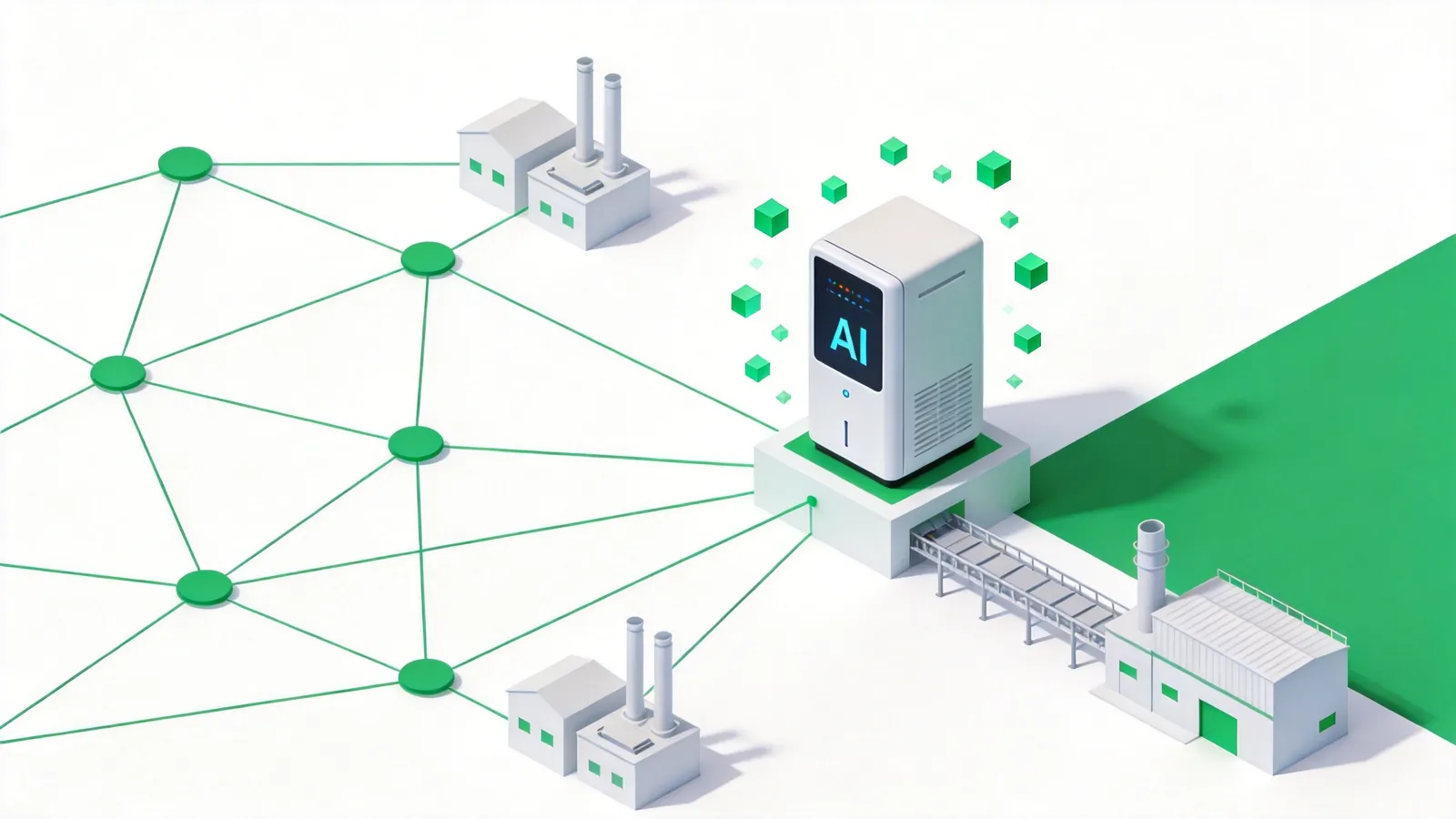
Tianji's approach is straightforward: a server-sized appliance, a suite of pre-trained industrial models, an optimized inference engine, and a management interface—all running entirely on-premises, with data never leaving the enterprise network. This isn't a stripped-down or simplified version of a cloud solution; it's an independent, complete AI system designed from the ground up for local deployment. The appliance form factor is intentional—it signals that this is infrastructure that belongs in the factory, not in a remote data center. When a plant manager can walk up to the server rack and physically verify that their AI system is running on-site, the psychological barrier of data sovereignty dissolves in a way that no compliance certification can achieve.
What makes Tianji technically distinctive is its innovative two-layer model architecture that combines the strengths of two complementary large language models in a unified framework. This isn't simply running two models side by side; it's a deeply integrated system where each model's capabilities enhance the other's.
The first layer leverages DeepSeek's powerful reasoning capabilities. DeepSeek has earned significant recognition in the AI community for its exceptional performance in complex logical deduction, multi-step task planning, and cross-modal understanding—capabilities that are particularly valuable in industrial settings where information comes in diverse formats and reasoning must chain across multiple domains. In the context of industrial applications, these capabilities translate into the ability to understand unstructured and semi-structured requirements described in natural language—such as maintenance logs written in informal technical jargon by experienced technicians, quality reports combining text descriptions with tabular data and reference images, or verbal instructions from senior operators that contain implicit domain knowledge gained through years of hands-on experience. DeepSeek can parse these diverse inputs, construct logical chains of reasoning that connect disparate information sources, and generate actionable outputs that integrate multiple perspectives.
The second layer incorporates Qwen's domain-specific industrial knowledge. Alibaba's years of accumulated industrial expertise—spanning manufacturing process knowledge, quality management frameworks, equipment maintenance protocols, and supply chain optimization strategies—are embedded into Qwen's model weights through specialized fine-tuning on industrial corpora. This gives Tianji the ability to understand domain-specific terminology and context that general-purpose models would miss entirely. When a technician reports "lathe No.5 spindle abnormal noise during high-speed finishing passes," Tianji can interpret this description in its full technical context—understanding what a spindle is and its role in the machining process, what abnormal noise patterns typically indicate (bearing degradation, imbalance, resonance, lubrication failure), what high-speed finishing implies about cutting forces and vibration characteristics, and what historical failure modes match this symptom profile in the specific context of lathe operations.
The fusion of these two layers creates a system that is both broadly capable and deeply knowledgeable—able to reason about novel situations using DeepSeek's general intelligence while grounding that reasoning in established industrial expertise from Qwen's domain knowledge. This is not simply running two models in parallel and picking the better output; the architecture includes intelligent routing that directs queries to the most appropriate model layer and fusion mechanisms that combine outputs from both layers when complex problems require both reasoning power and domain expertise. For example, when analyzing a quality defect, DeepSeek might handle the logical reasoning about possible causes while Qwen provides the domain-specific knowledge about which causes are most likely in the specific manufacturing context, and the fusion layer integrates both perspectives into a ranked list of probable root causes.
Perhaps most importantly from an adoption perspective, Tianji doesn't require enterprises to train models from scratch or even to have AI expertise on staff. ZTT provides pre-trained models targeting three major industrial scenarios—quality management (defect detection, root cause analysis, process optimization), production scheduling (resource allocation, order sequencing, capacity planning), and equipment maintenance (failure prediction, health assessment, maintenance scheduling)—each calibrated with extensive manufacturing data from diverse industrial settings. Enterprises need only perform lightweight fine-tuning using their own operational data, a process that can be completed in hours rather than weeks and requires no data science expertise. The fine-tuning interface is designed for manufacturing engineers, not AI researchers—it asks questions in domain language ("which defect types are most critical for your operation?") rather than ML jargon ("what learning rate schedule do you prefer?"). This dramatically lowers the barrier to entry for enterprises that have the data but lack the AI talent.
Landing in Three Major Scenarios: From Concept to Factory Floor
Tianji's true significance doesn't lie in the technical sophistication of its models but in its ability to make AI genuinely operational in manufacturing's core processes—where the highest value and the greatest data sensitivity coincide. Let's examine each of the three targeted scenarios in depth.
Quality Management Scenario: From Detection to Causation. Traditional visual inspection systems, even those enhanced with deep learning, operate on a fundamentally limited paradigm: they can identify defects that resemble patterns they were trained on, but they struggle with novel or unexpected failure modes. A system trained to detect surface scratches, dimensional deviations, and color inconsistencies will flag these known defect types reliably, but a previously unseen contamination pattern or a subtle material degradation signature will often go undetected—or worse, be misclassified as a known defect type, leading to incorrect root cause analysis and ineffective corrective actions.
Tianji's quality management module goes beyond defect detection to defect causation analysis—the ability to work backwards from a defect observation to identify the most likely root causes in the manufacturing process. Leveraging DeepSeek's cross-modal reasoning capability, the system can start from a defect image and integrate it with textual process data, historical patterns, and domain knowledge to construct causal hypotheses. A photograph of a part surface showing irregular pitting, for example, doesn't just get classified as "surface defect category 7"—the system combines the visual evidence with process parameters (what was the coolant temperature during machining? what was the tool wear state? what batch of raw material was used?), historical defect patterns (have similar defects occurred before on this product line? what were the identified causes?), and equipment condition data (is the coolant filtration system overdue for maintenance?) to construct a causal hypothesis. It might determine that the pitting is consistent with contaminated coolant from the central filtration system, and cross-reference this with maintenance logs showing the filter was last replaced six weeks ago against a recommended interval of four weeks.
This causal inference capability transforms quality management from reactive defect detection into proactive defect prevention. When root causes can be identified quickly and automatically—rather than requiring days of manual investigation by quality engineers who must interview operators, review process logs, and conduct physical inspections—the feedback loop between defect detection and process correction shrinks from weeks to hours. This compounding effect means that quality improvement accelerates over time, as each defect detection event contributes to a growing understanding of cause-effect relationships in the production process. Over months of operation, the system builds a comprehensive causal model of the production process that enables increasingly precise predictions about which process adjustments will prevent specific defect types—effectively automating the accumulation of quality engineering expertise that traditionally takes decades of human experience to develop. In some deployments, the system has identified previously unknown correlations between seemingly unrelated process parameters and defect rates—such as the relationship between ambient humidity (which affects cooling rates) and dimensional accuracy in precision casting, or the link between incoming material batch variations and downstream surface finish quality. These discoveries represent genuine additions to the enterprise's manufacturing knowledge, not just faster execution of known procedures.
Production Scheduling Scenario: From Manual Expertise to Optimized Algorithms. The vast majority of factories, even highly automated ones with sophisticated MES (Manufacturing Execution Systems), still rely on human planners for production scheduling decisions. This isn't because scheduling algorithms don't exist—they do, and have for decades, with well-established optimization techniques from operations research. It's because real-world scheduling is far more complex than academic formulations suggest, and human planners implicitly account for factors that are difficult to formalize in algorithmic models.
These informal factors include operator preferences and skill variations (certain operators are more productive on specific machines), equipment quirks and recent maintenance history (a machine that was recently repaired may need a warm-up period or has reduced capacity), customer relationship priorities that transcend stated delivery dates (a strategic customer's order might need to be expedited even if it's not the highest priority on paper), and material availability uncertainties that procurement systems don't always capture accurately (the ERP says 500 units are in stock, but physical count shows 470 due to scrap or miscount). Human planners navigate this complexity through years of accumulated judgment—what researchers call "tacit knowledge" that's difficult to articulate but essential for effective scheduling.
Tianji's scheduling optimization module doesn't attempt to replace human judgment entirely—instead, it augments it by handling the computational complexity that exceeds human cognitive capacity while preserving the human planner's role as the final decision-maker. The module incorporates the full range of scheduling factors: order priority matrices (incorporating not just stated urgency but customer strategic value, contractual penalties, and relationship importance), material availability forecasts (with uncertainty ranges and safety stock considerations), equipment capacity models (accounting for planned maintenance windows, recent reliability trends, and machine-specific performance characteristics), personnel scheduling constraints (skills matrices, shift preferences, regulatory rest requirements, and training needs), and deadline optimization (with cascading dependency tracking for multi-step processes where upstream delays propagate downstream).
What takes a skilled planner hours or even days to work through—considering thousands of possible order combinations, resource allocations, and timing options, while balancing competing objectives and constraints—Tianji's optimization engine can evaluate in seconds. The generated schedules aren't presented as black-box recommendations but as explainable plans where the system can articulate why specific allocations were chosen and what trade-offs were made. This transparency is essential for planner adoption—if the system can explain its reasoning ("Order A was scheduled on Machine 3 because Machine 1 is due for maintenance tomorrow and Order A requires two consecutive days, while Machine 3 has a maintenance window that accommodates the full run"), planners can validate it against their experience and develop trust over time.
Crucially, the system supports iterative refinement—a feature that distinguishes it from rigid optimization approaches. A planner can modify the generated schedule to incorporate considerations the algorithm missed ("Customer X's CEO is visiting next week, we need their order ready regardless of priority scoring") and the system will re-optimize around this constraint while maintaining overall efficiency. This human-in-the-loop approach combines algorithmic optimization power with human judgment and relationship awareness, creating a partnership where each party contributes what it does best.
Equipment Maintenance Scenario: Making Predictive Maintenance Actually Work. Predictive maintenance has been the "next big thing" in manufacturing for over a decade, yet truly operational implementations that deliver consistent, reliable predictions remain surprisingly rare. The reasons are instructive and go beyond mere technical challenges.
Accurate prediction requires massive, high-quality, longitudinally extensive equipment operational data—and this data is precisely what enterprises are most reluctant to share, especially with external AI providers or cloud platforms. The irony is painful: the data needed to prevent equipment failures is the same data that organizations are most protective of. Equipment condition data reveals not just current health status but degradation trajectories, maintenance effectiveness, and remaining useful life estimates—all information that has significant commercial implications. A competitor who learns that your critical production line's main stamping press is showing early signs of bearing degradation could time their sales outreach to your customers for maximum effect. A customer who learns that your CNC fleet is operating at reduced capacity due to aging servos could use this information to negotiate lower prices or threaten to switch suppliers. The sensitivity of equipment data extends beyond competitive intelligence—it also has insurance implications, as equipment health data could affect premium calculations or coverage terms. Sharing this data with a cloud AI provider means potentially exposing the actual condition of capital assets worth millions of dollars to parties outside the organization, including competitors who might infer production capacity constraints or customers who might use the information in price negotiations.
Tianji's equipment maintenance module eliminates this barrier entirely by operating 100% on-premises. All data used for model training and inference stays within the factory's network boundary, from initial sensor readings through model predictions to maintenance recommendations. Raw sensor data from equipment—vibration signatures, temperature profiles, current consumption patterns, acoustic emissions, oil analysis results—is preprocessed at the edge and fed into the local model. Health assessments, degradation trend analyses, and failure probability predictions are displayed only on the factory's internal systems, accessible only to authorized maintenance personnel.
The local deployment model also enables a degree of model customization and continuous improvement that would be impractical in a cloud environment. Because the model runs on the enterprise's own hardware, it can be continuously updated with the latest operational data without any data transfer latency or bandwidth constraints. This means the model's predictions improve daily as it ingests more recent data, creating a virtuous cycle where better predictions lead to better maintenance decisions, which produce cleaner operational data, which further improves prediction accuracy. Over time, the model develops an increasingly nuanced understanding of each specific piece of equipment's behavior patterns—including seasonal variations (equipment may behave differently in summer heat versus winter cold), load-dependent degradation rates (heavy usage accelerates wear differently than light usage), and the effectiveness of different maintenance interventions (which types of maintenance actually extend equipment life versus merely addressing symptoms).
Furthermore, local deployment enables real-time inference that cloud-based solutions struggle to match. When a critical piece of equipment starts showing anomalous vibration patterns that could indicate imminent failure, the difference between detecting this in milliseconds (local inference) versus seconds or minutes (cloud inference with network latency and queue waiting times) could be the difference between a controlled shutdown and a catastrophic failure that damages the equipment and potentially injures workers. In safety-critical manufacturing environments, this latency advantage is not merely an operational convenience—it's a safety requirement.
Pricing and ROI: Manufacturing Can Calculate This Investment
Any technology solution, regardless of its technical elegance, must ultimately answer one question that matters more than all others in manufacturing: how much does it cost, and what's the return? Manufacturing decision-makers are famously pragmatic—they don't buy technology for its novelty; they buy it for its measurable impact on productivity, quality, or cost.
Tianji AI appliance's pricing structure follows the conventional hardware + software licensing model that manufacturing procurement teams are familiar with and can evaluate using standard capital budgeting frameworks. The base hardware comes in multiple configurations ranging from entry-level (suitable for single production line deployments with moderate data volumes) to flagship (designed for multi-line, multi-plant environments with high data throughput requirements), with prices spanning from tens of thousands to hundreds of thousands of yuan. Software licensing follows an annual subscription model, priced according to functional modules activated (quality management, production scheduling, equipment maintenance can be licensed independently or as a bundle) and inference computing power allocated.
This pricing isn't inexpensive by manufacturing technology standards, but it's absolutely not astronomical either—particularly when evaluated against the alternative of building equivalent capabilities from scratch, which would require hiring AI engineers (a scarce and expensive talent pool), purchasing GPU hardware, securing cloud computing contracts, navigating the compliance approvals that have historically stalled manufacturing AI projects, and maintaining the system over time. The total cost of a DIY approach, including opportunity cost of delayed deployment, typically exceeds the Tianji appliance cost by 3-5x.
The real question isn't absolute cost but ROI—return on investment. And here, manufacturing's data-rich environment provides a significant advantage: most of the variables needed to calculate ROI are already being tracked in existing quality management systems (QMS), manufacturing execution systems (MES), and enterprise asset management (EAM) platforms.
For the quality management scenario, the investment return curve depends on three primary value streams. First, reduced manual re-inspection costs: when AI-driven defect detection and root cause analysis reduces the escape rate of defects to downstream processes or customers, the labor cost of manual re-inspection decreases proportionally. Many factories employ dedicated inspection teams whose primary function is to catch defects that automated systems miss—if the automated system catches more, the manual inspection burden decreases. Second, reduced customer complaint and rework losses: each defect that escapes to a customer generates not just direct rework or replacement costs but also administrative overhead (investigation, corrective action reports, customer communication), potential contractual penalties, and reputational damage that affects future business. Even modest improvements in defect escape rates—going from 0.5% to 0.3%, for example—can generate substantial savings when multiplied across thousands of parts per day. Third, accelerated root cause analysis: when defect causes are identified in hours rather than days (or sometimes weeks), the production impact of quality issues is minimized, reducing the duration of elevated scrap rates, the material waste associated with producing defective parts, and the production capacity lost while the root cause is being investigated.
For enterprises with established quality management systems and reliable historical data, these three value streams can be quantified with reasonable precision. When Tianji's total cost of ownership (hardware amortization plus annual licensing) is mapped against projected savings across these three streams, many manufacturing enterprises find that ROI payback occurs within 12 to 18 months—a timeframe that meets most corporate investment hurdle rates.
The equipment maintenance scenario offers an even more straightforward ROI calculation that resonates strongly with finance departments. Under traditional reactive maintenance (fix it when it breaks), the cost of unplanned downtime is well-documented in most manufacturing organizations. This includes not just the direct repair costs (parts, labor, expedited shipping) but also production loss (idle labor costs, missed shipment deadlines, expediting fees for catch-up production), quality impact (restart scrap when equipment comes back online, process re-qualification requirements), and cascading effects on downstream operations (if the failed machine feeds parts to other machines, those machines may also idle). The average cost per unplanned downtime event varies dramatically by industry and equipment type, but for critical production equipment in precision manufacturing, figures of tens of thousands of yuan per hour are common—and for some semiconductor or pharmaceutical manufacturing equipment, the cost can exceed hundreds of thousands per hour.
If Tianji's predictive maintenance capability can prevent even 30% of unplanned downtime events—a conservative estimate for systems with adequate historical training data—the annual savings will typically exceed the total cost of the system within the first year. This makes the ROI case compelling even for finance departments that are skeptical of AI investment projections. The key is framing the investment not as a technology bet but as an insurance policy against the well-documented cost of unplanned downtime, with the added benefit of optimizing maintenance scheduling (shifting from time-based to condition-based maintenance) which further reduces unnecessary preventive maintenance costs.
Data Never Leaves Premises: The Ultimate Answer to the Compliance Question
For manufacturing enterprises operating in heavily regulated sectors—pharmaceutical manufacturing (GMP compliance, FDA 21 CFR Part 11 requirements for electronic records), aerospace (AS9100 quality management, ITAR restrictions on technical data), food processing (HACCP hazard analysis, FDA food safety requirements), chemical manufacturing (REACH chemical regulations, OSHA process safety management)—the compliance dimension of AI adoption isn't merely a consideration; it's often a veto criterion that overrides all other factors.
Regulatory frameworks in these sectors increasingly require demonstrable, auditable control over data residency, processing, and access. It's not sufficient to claim that data is "secure in the cloud"—regulators often require proof that data has never left specific jurisdictional boundaries, that processing has occurred only on authorized and validated systems, and that complete audit trails exist for all data access, transformation, and decision-making. Cloud-based AI, regardless of its security certifications or compliance attestations, introduces a trust boundary that many regulatory frameworks simply do not accommodate. The fundamental issue is that cloud deployment introduces a third party into the data processing chain, and regulators in many industries view third-party involvement with suspicion unless it can be comprehensively validated and controlled.
Tianji's local deployment model resolves this challenge at the most fundamental level—physically. When all data processing from generation through storage through inference occurs on hardware that the enterprise owns and operates within its own facilities, compliance audit becomes a matter of physical inspection rather than contractual assurance. The enterprise can demonstrate, with certainty, that their AI systems operate within the same security perimeter as their other critical manufacturing systems. There's no need to verify cloud provider compliance, review third-party audit reports, or establish complex data processing agreements—the AI system is simply another piece of equipment in the factory, subject to the same physical access controls and security policies as any other machine on the production floor.
Model explainability—another growing regulatory requirement, particularly under the EU AI Act and similar emerging regulations—is also more tractable in a local deployment environment. When the inference engine runs on-premises, complete logging of model inputs, intermediate reasoning steps, and outputs can be implemented without concern for the bandwidth, cost, or privacy implications of shipping detailed logs to a cloud provider's observation platform. This logging capability enables the kind of forensic analysis that regulators increasingly expect: if an AI-driven quality decision is questioned (why was this batch approved or rejected?), the enterprise can trace exactly what data the model received, what reasoning it performed, and what conclusion it reached. This level of transparency is essential for regulated industries where AI decisions may need to be justified in audits, investigations, or legal proceedings.
When regulatory inspectors arrive for a compliance audit—whether it's an FDA inspector reviewing pharmaceutical manufacturing records, an aviation safety authority reviewing quality assurance processes, or an environmental regulator reviewing chemical production monitoring—the enterprise can simply point to the local server and state with complete confidence: "All AI decisions are made within this building. Data has never left our network. Every inference is logged. Every decision is traceable." This level of assurance is something that cloud solutions, regardless of their sophistication or security certifications, simply cannot provide with equivalent certainty. Peace of mind in compliance isn't just about meeting requirements—it's about knowing, with certainty, that you can prove you meet them at any moment.
The Market Gap in Lightweight Deployment: Kaihe's Differentiated Opportunity
Tianji's solution launch has demonstrated that local deployment is not just possible but practical for manufacturing AI—validating the approach and establishing market confidence in a way that years of industry discussion could not. However, it has also exposed a significant structural gap in the market that deserves careful analysis: Tianji's target customers are medium-to-large manufacturing enterprises, leaving the vast majority of Chinese manufacturers—small and medium enterprises (SMEs)—without a viable local AI deployment option.
Understanding this gap requires appreciating the scale and diversity of China's manufacturing landscape. While the headline-grabbing manufacturers are the massive state-owned enterprises and multinational corporations operating mega-factories with thousands of workers, the backbone of Chinese manufacturing is millions of SMEs. These smaller factories produce components, sub-assemblies, and finished goods across every conceivable industry—from precision machining shops with a dozen CNC machines to textile workshops with a few production lines, from electronics assembly operations with 50 workers to food processing facilities serving local markets. They employ the majority of manufacturing workers and contribute the largest share of manufacturing GDP. And they face the same fundamental challenges as larger manufacturers: quality variability, scheduling inefficiency, and equipment reliability—just at a smaller scale that makes enterprise-grade solutions impractical.
The problem is that Tianji's solution, as well-conceived as it is for its target market, is structurally inaccessible for most SMEs for several compounding reasons. The pricing, starting at tens of thousands of yuan for hardware alone, exceeds the technology budgets of many small factories where annual IT spending might be a fraction of that amount. The deployment requirements—a dedicated server room with appropriate cooling and power, IT staff for ongoing maintenance, network infrastructure for edge device connectivity—assume organizational capabilities that SMEs typically lack (many small factories don't have a dedicated IT person at all). And the licensing model, with annual fees based on compute allocation, creates ongoing cost commitments that cash-flow-sensitive small businesses find difficult to justify to their owners or boards.
This market gap is precisely where Kaihe B1 finds its strategic opportunity. As a lightweight Agentic Computer, B1 provides a "one size smaller" solution that addresses the same fundamental needs—local AI deployment, data sovereignty, operational intelligence—but at a scale and price point appropriate for SMEs that enterprise-grade solutions like Tianji cannot economically serve.
Within the three-scenario framework that Tianji has defined (quality management, production scheduling, equipment maintenance), Kaihe B1 can serve smaller-scale deployments using more compact models and lower computing resources. A single production line, a small workshop, or a family-owned factory with a few dozen machines—these are environments where B1's capabilities are not just adequate but optimally matched to the scale of operations. The ARM architecture provides the energy efficiency necessary for 24/7 operation without significant electricity cost impact (a critical factor for cost-conscious SMEs), and the compact form factor means B1 can be deployed without dedicated server room infrastructure—it can sit on a shelf in the factory office, connected to the local network.
Most importantly, Kaihe B1's pricing—thousands rather than tens of thousands of yuan—represents a threshold that SMEs can cross without the organizational deliberation, board approvals, and budget reallocations that larger investments require. A factory owner can purchase a B1, deploy it on a single line, and evaluate the results within weeks. If the value is proven (and for quality management in particular, results are often visible within the first month), scaling to additional lines is straightforward—just add another unit. This "start small, prove value, then scale" adoption pattern is exactly what SMEs need—and exactly what enterprise-grade solutions like Tianji cannot easily provide due to their minimum deployment requirements.
From a longer-term perspective, Tianji and Kaihe represent complementary routes in the industrial AI local deployment market that together address the full spectrum of demand. Tianji goes deep, providing sophisticated AI capabilities for complex scenarios in large enterprises that have the resources and scale to fully leverage them—multi-plant deployments with thousands of sensors, complex supply chain optimization across dozens of production lines, and deep integration with enterprise ERP and MES systems. Kaihe goes broad, covering the fundamental needs of SMEs with accessible, affordable, and immediately deployable solutions—single-line quality monitoring, basic scheduling optimization, and simple equipment health tracking. Together, these two approaches address the complete market from the largest automotive plants to the smallest precision machining shops.
When even the smallest factories begin using AI to solve quality problems, optimize schedules, and predict equipment failures—that's when manufacturing AI adoption will have truly crossed the chasm from early adopters to mainstream deployment. The construction blueprint exists; the tools are available at every scale; what remains is deployment, learning, and the gradual accumulation of evidence that AI in manufacturing is not just a promise but a proven, practical, and profitable reality. Tianji has drawn the blueprint; Kaihe is making it accessible to everyone. The era of manufacturing AI that stays on the factory floor—where it belongs—has finally begun.
KaiheAiBox · AI Agent Zone